Datura, also known as the Devil’s Trumpet
I teased everyone the other day by showing a photo of a datura seed pod and making them guess what it was. I did promise that I would write about the Datura plant in that post though – so here it is.
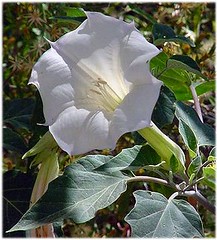 Depending on what area of the world you are growing Datura it can be classed as a perennial or a tropical annual – meaning that it only survives the winter months in warm zones. It’s hardy to USDA Zone 9b: to -3.8° C (25° F). The plant grows 18″ to 24 ” in height, but has a tendency to spread out, so if you grow Datura allow at least a four foot diameter around the plant for growth.
All parts of plant are poisonous if ingested and handling the plant may cause skin irritation or allergic reaction. While the flowers have a lovely cross of lily to Jasmine scent the leaves have a repugnant scent when lightly brushed with the fingers. The foliage is Silver/Gray with a Velvet/Fuzzy-Texture.
The datura plant has also been used for divination in Native American milieux, to find one’s totem animal, for communing with birds, to allow one to see ghosts, and like all the tropane-containing plants, is said to have gone into flying ointments. Daturas and brugmansias contain the extremely dangerous tropane alkaloids atropine, hyoscyamine, and scopolamine.
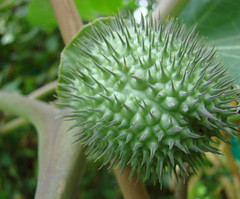 Some species of Datura bloom at night. Mine tend to bloom in the late afternoon on ward with the flowers closing in bright light. They do need full sun to grow properly even if they tend to only show their beauty at night. The flowers are large and lush and tend to face upward. They bloom from early summer to mid Fall.
Some of the seed pods must escape my notice each fall and I always have new seedlings come up in the early summer of the following year. Therefore hardiness is not really a concern of mine as I know they reseed generously.