As the Garden Grows

What's blooming today?

  • Home
  • Blog
  • Archives
  • Links
  • About
  • Join GTS Meme
  • Guest Blogger
  • Contact

You are here: Home / Archives for Home and Lifestyle / Health

Gardening tips for you! Part 2

by Tricia

More Organic Gardening Tips (don’t miss Part 1)

26. Mulch! The rain and irrigation water runs off the land, eroding and depleting your unprotected soil.

27. Residential users of synthetic fertilizers and pesticides apply more pounds per acre of these chemicals then farmers do. As these pollutants run off, they harm aquatic life and contaminate the food chain. If you keep your soil healthy, you won’t require chemical fertilizers.

28. Some mulching benefits are protection of roots from the sun’s heat, and protection of plant crowns from winter cold.

29. To prevent diseases and pest infestation , avoid piling mulch against tree trunks. Spread mulch out as far as the drip line.

30. For effective weed control use a layer of coarse mulch 3″ or more in depth. Some hardy grasses may need to be rooted out for successful removal.

31. For a good start, water the ground thoroughly before and after applying a mulch cover.

32. Use plants in your landscape that are either native to your area, or were imported from areas with similar climate and soil. They require a lot less water and care, and won’t die off in the winter.

33. Compost is what happens when leaves, grass clippings, vegetable and fruit scraps, wood chips, straw, and small twigs are combined, then allowed to break down into a soil-like texture. Use it instead of commercial fertilizers.

34. Formal gardens are for you if you love symmetry. They work best around a focal point like a fountain, sculpture, specimen tree, or group of plants.

35. Some flowers, including sweet peas, iris, foxglove, amaryllis, lantana, lupines, clematis, datura, poinsettia, and oleander, are poisonous.

36. When buying annuals or perennials, select plants that are budded but not yet in bloom, so their energy the first two or three weeks in your garden will be directed toward making larger and stronger plants with better-developed root systems.

37. To increase water conservation, look for drought-resistant plants. Usually these plants have silver leaves, deep taproots and small leaves. Succulents are also able to withstand dry weather.

38. When planting, take into consideration the plant’s size at maturity. Layer by height and bloom time for emphasis and constant color.

39. Soaker hoses deliver water directly to the base of the plant, reducing moisture loss from evaporation. Early morning is the best time of day to water.

40. Compost balances both acid and alkaline soils, bringing PH levels into the optimum range for nutrient availability. It contains micro nutrients such as iron and manganese that are often absent in synthetic fertilizers.

41. Avoid frequent, deep cultivation, which can damage plant roots, dry out the soil, disturb healthy soil organisms, and bring weed seeds to the surface where they will germinate.

42. Use the least-disruptive and least-polluting protections against a pest. Try the following methods as applicable: first physical removal, barriers, and traps; next, biological controls; then, appropriate botanical and mineral pesticides.

43. Red, orange, and yellow in your landscape will draw the eye and bring objects closer.To make a small garden feel larger, place warm colors in the front of the space and cool colors in the back.

44. Cover street noise – sound pollution can be minimized by the use of water features, such as a waterfall, or a pond with a fountain jet. Wind chimes also help, as can bird feeders that attract songbirds.

45. Newly planted trees need supplemental water to avoid transplant shock, so water deeply on a weekly basis throughout the growing season.

Browse compost tumblers, reel mowers and garden carts online at Clean Air Gardening.

46. Give order to your garden by defining the boundaries with fences, stone walls, or hedges. Include paths for movement.

47. Less than 2 percent of the insects in the world are harmful. Beneficial insects such as ground beetles, ladybugs, fireflies, green lacewings, praying mantids, spiders, and wasps keep harmful insects from devouring your plants. They also pollinate your plants and decompose organic matter.

48. Plant newly purchased plants during the late evening or on a cloudy day. They have a much better chance of surviving if planted during cloudy, rainy weather than dry, sunny weather.

49. Compost introduces and feeds diverse life in the soil, including bacteria, insects, worms, and more, which support vigorous plant growth.

50. Bright light washes out the cool colors, blue, green, and purple. They are best used in shaded areas for maximum impact.

I’ll post more soon!


Filed Under: Garden Tips, Health, Home and Lifestyle, Organic Tagged With: Garden Tips, Gardening tips, Health, Home and Lifestyle, Organic

Green Tea

by Tricia

I enjoy a nice cup of Green tea when I’m sitting in my garden on a nice fall day. Sometimes I have one to warm me up after I’ve come inside after working in the garden for hours. Does anyone else enjoy green tea too?

I’ve actually been drinking Green Tea for several years now. It’s caffeine free, and studies have shown that it might help fight or prevent certain types of cancer. It is also said to aid in digestion.

What types of green tea do you drink? I often drink Japanese green tea. Since I try several different types of green tea I’ve been looking it up on the internet. I found a site that sells Japanese green tea online and has a lot of information about the various types of green teas, brewing methods, and storage information too.

As I was browsing the site I found a product called Matcha. This looks like it could be good! It’s powdered green tea. It may even have more health benefits than traditional forms of green tea. I must look into this.

Does anyone else enjoy a good cup of green tea or do you drink it for it’s health benefits?

Filed Under: Health, Home and Lifestyle, Recreation, Shopping Tagged With: Entertainment and Rec, Green Tea, Health, Home and Lifestyle, Matcha, Shopping

Raspberries

by Tricia

Did I tell you that I grow raspberries?

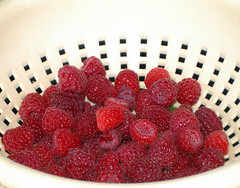
Fresh Raspberries Now doesn’t that look yummy?

The raspberry bushes are one of the few plants left in the yard by the original owners. I’ve changed pretty much everything else. Well, there wasn’t much to begin with, but I knew during that first summer, as I picked a colander full of raspberries almost each day, that the most of the bushes would be staying.

Originally, there had been perhaps more than 50 raspberry bushes in the back right hand corner of the yard. Lovely for the fruity benefits, but not so great when I decided to landscape during the spring of 2002 in order to begin my lovely rose garden. I only left about 15 plants when I created what is now my raised garden beds. In the years since, the plants have started to multiply, and I think there are likely 25 bushes out there.

Growing Raspberries:

Would you like to grow your own raspberries in your yard? Here’s how.

Nothing caps a summer evening better than a raspberry smoothie, or a bowl of fresh raspberries and cream. Ripe berries sprinkled on cereal in the morning is always nice too. Because of their delicious uses and ease of growing, the perennial raspberry ought to be in every garden.

The most commonly grown raspberry is the red, but the purple and black type make interesting variations on the raspberry theme. All can be grown in most zones and they are self fertile. To make the most of your raspberry patch check with your local nursery or county extension to make sure that the variety that you want to buy will thrive in your area.

Planting:

Moisture and plenty of rich organic matter in the soil are essentials. When deciding on a location, look for a spot that gets some protection from the blustery cold winds of winter. To improve the soils ability to retain moisture, work in plenty of well rotted manure or sphagnum peat moss.

Set the bushes in the ground as soon as you bring them home from the nursery. If roots appear dried out, soak them in water for an hour or two before planting. Red raspberries can be planted two or three inches deeper than at the nursery. black and purple varieties should be planted at the same depth. Space plants three feet apart and rows five to eight feet apart. (Needless to say my plants are much closer together than that in my tiny backyard.)

Raspberry bushes My raspberry plants are sheltered behind my neighbors garage. In this photo you can see them beginning at the Japanese Maple with the row going back towards another neighbors house.

Care and Feeding:

After the canes have been set out, cut back central canes to a height of six inches, then mulch to conserve moisture.

When plants are dormant in early spring remove weak and spindly canes. Then remove any suckers that have grown up between the rows. If properly pruned raspberry canes are self supporting. Cut back your black raspberry varieties to 18 to 24 inches; purple and red varieties to 30 to 36 inches. the amount and the quality of the fruit will be greatly improved if lateral branches are trimmed back to at least four to six buds.

In the Autumn remove all old, spent canes and destroy them.

Insects and Diseases:

Raspberries are hardly immune from disease and insect attack, but problems will be few if you practice good garden hygiene. Purchase only healthy disease resistant plants from a trust worthy nursery or garden center.

Make sure that old canes are removed and destroyed so insect larvae and fungus spores don’t overwinter. If a plant appears doomed because of disease, remove it immediately so that the other plants don’t become affected.

Now that you know how to grow your own raspberries I think I’ll go fix myself a small bowl of raspberries. Mmmmm delicious.

Filed Under: Fruit, Health, Organic, Perennials, Plant Profiles Tagged With: care, Fruit, garden, growing, Growing raspberries, Health, Organic, Perennials, Plant Profiles, planting, Raspberries, Raspberry

  • « Previous Page
  • 1
  • …
  • 11
  • 12
  • 13

Subscribe


Never miss a post
Subscribe to our RSS feed!
It's FREE! rss feed

Free Newsletter

As the Garden Grows
by Email - FREE!


Follow me on Twitter!

Suggested Sites

Eavestrough Cleaning Toronto

Categories

Recent Posts

  • Top Three Tips For Choosing The Right Patio Furniture For Your Home
  • The 4 Things To Know About Perennial Garden Design
  • Painful Plants: Five Houseplants That Can Cause Injury
  • An Outbreak Shouldn’t Mean A Break Out: 3 Insect Repellants Gentle Enough For Your Skin
  • 5 Ideas To Make Your Garden POP
  • 6 Simple Ways To Make Your Home Eco-Friendly
  • How To Redesign Your Garden To Make It Safe For Your Children
  • Starting A Career As A Professional Gardener
  • 6 Time Saving Tips For Gardening
  • Top Tips On Redesigning Your Garden For The Summer

What they’re Saying

  • Rodhe Stevens on Landscaping Tips On A Limited Budget
  • Edmund Wells on Benefits of using mulch on the garden
  • Surjith on An Outbreak Shouldn’t Mean A Break Out: 3 Insect Repellants Gentle Enough For Your Skin
  • Pamela on The 4 Things To Know About Perennial Garden Design
  • dog on The quality of your pet food is important

Pages

  • About
  • Archives
  • Become a Guest Blogger For As the Garden Grows
  • Blog
  • Categories
  • Contact
  • Disclosure
  • Do Follow Bloggers Blogroll
  • Green Thumb Sunday
  • I am Canadian Blogroll
  • Join GTS Meme
  • Links
  • Privacy Policy
  • Q & A
  • Toronto Bloggers Blogroll
  • What’s Growing

Search

My Garden

Member of
Garden Voices

Tags

backyard Beautiful bloom blooming blooms Bulbs cold Entertainment and Rec flower flowers garden garden bed garden beds gardener gardening green Green Thumb Green Thumb Sunday grow growing GTS home Home and Lifestyle House In The Garden leaves my garden photo photos plant plants purchase rain rose roses Shopping snow spring summer Toronto water weather winter Wordless Wednesday WW

Site Ratings


Visitors since 2006


Meta

  • Log in
  • Entries feed
  • Comments feed
  • WordPress.org

Connect with me

  • Facebook
  • Google Plus
  • Pintrest
  • Twitter
  • RSS

Copyright © 2026 · News Child Theme on Genesis Framework · WordPress · Log in