As the Garden Grows

What's blooming today?

  • Home
  • Blog
  • Archives
  • Links
  • About
  • Join GTS Meme
  • Guest Blogger
  • Contact

You are here: Home / Archives for In The Garden / Landscaping

Cheap Fall Landscaping Ideas

by Trish

The changing of the trees into their brilliant gradients of reds, oranges and yellows can only mean that fall is here again. To most people, fall brings pleasant thoughts of Halloween, fresh apple cider, leaf piles and pumpkin pie. For many, it can also stir a desire to do some fall landscaping. With nature in the height of its colorful glory, there are so many ways to accentuate your home during the fall.

Fall-Blooming Flowers

This time of year, you can find great selections of flowers that bloom profusely in autumn. Chrysanthemums, ornamental kale, pansies and even marigolds are just a few of the available choices that look good and don’t cost much. Each of these plants comes in an enormous variety of colors and bloom sizes, so don’t be afraid to get creative. Some autumn flowers, such as chrysanthemums and pansies, will bloom clear up to the first frost. Many will even survive the winter and provide you with equally lovely color in the early spring.

Gourds

You can’t have fall without gourds. Some decorative gourds are very small, but there are also large varieties that make fantastic fall landscape accents. Pumpkins are also popular choices for their cheerful orange color and slow decomposition. Another fun idea for using gourds as landscape decorations is to paint them. Gourds with long, curved necks can be painted to look like geese, while others can be painted with faces or designs. Because painting doesn’t involve any dangerous objects, it’s a great alternative to letting the kids carve pumpkins!

Autumn Accents

More than anything, it’s the little things that remind you of fall the most. To spruce up your lawn in the fall spirit, try adding some hay bales and cornstalk bundles. They’re great for arranging your gourds around, as well as any flower containers you have. In fact, you can even plant your flowers directly into the hay bales! Just cut a hole into it, add a little soil and put the plant’s root ball inside. Make sure it stays moist.

Baskets

Baskets are closely associated with fall’s bounty. They’re also inexpensive and can be easily found at thrift and dollar stores, garage sales and antique shops. Furthermore, baskets can be found in all kinds of sizes, colors and shapes. You can place anything inside of a basket as decoration, too. Gourds, dried flowers, colorful leaves and fresh-picked apples are just a few ideas. If you have a garden, you can also use them to transport your harvest for a delicious autumn meal. Did you remember to grow sweet potatoes for Thanksgiving dinner?

Whether you’re planning a fall festival or just enjoy changing your landscaping with the seasons, Lawn Connections Landcapers in Keller can help.


Filed Under: Autumn Tasks, Landscaping Tagged With: apples, autumn, baskets, blooming, changing leaves, chrysanthemums, cornstalk bundles, dried flowers, fall, flowers, gourds, Halloween, hay bales, landscaping ideas, marigolds, oranges, ornamental kale, pansies, reds, trees, yellows

Water gardening tips and ideas

by Tricia

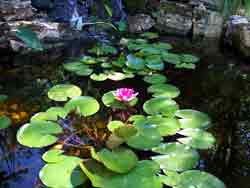
lily-pond-water-garden2.jpg Perhaps you’ve been wanting to do something different with your backyard this year.

Rather than just doing the standard garden, you would like to do something more unique. After giving it some thought, you have decided that water gardening might be a unique concept.

What is Water Gardening Anyway?

You are met with confusion when you tell your family and friends about your plan to attempt water gardening. Your friends and relatives don’t understand that water gardening is using water and plants in such a way as to give a garden-like effect. One of the easiest forms of water gardening is creating a small pond in your backyard and adding plants to it.

The first step in creating a backyard pond is to decide how big a pond you would like to have. To begin with, it is best if you make a pond that is only slightly larger than a moderately-sized birdbath. The size of the pond can always be made larger later.

Once you’ve dug a hole in your backyard or within your garden you will need to find a liner for your pond. Simply filling up the new hole with water won’t work as the water will drain back into the ground. Visit your local garden center to find a liner. For small ponds you’ll probably be looking for a formed hard plastic pool. Purchase it and then take it out to the hole you already dug and make adjustments to the hole so that the liner will fit in snugly.

Once you have the liner ready, make sure that it easily fits into the hole that you have made in your lawn. Place it in the hole, and fill it with water. Your small pond is now ready for water gardening! The next step is adding plants to your new pond, let’s consider using water lilies.

Water lilies are very lovely and make for beautiful water gardening. Perhaps you have seen water lilies on display at your garden center during the summer months. They have a unique root system which supports itself on the surface of the water, and they are available in a variety of different colors. It is, however, important to note that water lilies are delicate and only thrive in warm weather.

Water Lilies are just one example of the type of plants that can be used in a water garden. There are all kinds of water loving plants that would be suitable for a water garden. It just depends upon what type of climate you live in and what type of water you are using.

One other thing that you should keep in mind in regards to water gardening is mosquitoes. Standing water attracts mosquitoes as they usually lay their eggs in still waters. You’ll probably want to look into some ideas for keeping mosquitoes away from your pond. Skimming the water daily to remove larvae could work. Ask at your garden center as I’m sure they’ll have some great ideas for you.

Filed Under: Garden Maintenance, Garden Tips, Home and Lifestyle, Landscaping Tagged With: backyard, birdbath, climate, concept, dig a hole, display, easy plants, effect, Family, fill, gardening, ground, larvae, lawn, lilies, mosquito larvae, mosquitoes, plastic, pond, pond liner, pool, pre-formed liner, purchase, root, summer, surface, system, water, water garden, water gardening, water lilies, water loving plants, weather

How to attract butterflies to your garden

by Tricia

Back in 2002/2003 when my husband and I landscaped our backyard and created our raised bed garden I’d wanted to grow plants that would attract butterflies and birds to the garden. I spent the winter researching plants that would thrive in my area and that would attract butterflies. If they happened to have scent that was just a bonus!

Butterflies sip from the nectar of many flowers and their larvae eat the leaves of plants such as milkweed, so when planning a garden meant to attract butterflies you should keep all of their life stages in mind.

It’s also important that your butterfly garden be organic. You can’t use pesticides that kill a wide variety of insects as you’ll likely end up killing the butterflies that you desire.

Habitual zones and places where areas of the landscape meet with the tree lines are favorite safe places for them. They also search for areas that can shelter them from high winds, summer storms and rains. Shrubs and trees are good choices for plants that will provide them protective shelter. It is also helpful to find out what kinds of butterflies are native to your area so you can find appropriate plants for them.

Some plants that attract Anise Swallowtail and the Black swallowtail butterflies are fennel, parsley and dill.

Lupine flowers are a favorite with Fritillary butterfly and Snapdragons are a great choice of attracting butterflies that are native to your own area.

Gardens that offer a safe haven for butterflies will not only attract passing butterflies but likely encourage them to stay longer or to return frequently. Most butterflies are active in the mid to late summer, so it is important that you also have plants available to them during that time.

A home made butterfly feeding station might also be a great idea. You can make a feeder by using a small jar, a lid with a small hole drilled in the center and a piece of cotton to plug the hole in the lid. The nectar is made with 9 parts water and one part sugar. Very similar to hummingbird nectar actually. In fact if you have hummingbird feeders in your garden they might suffice as an additional area for butterflies as well.

Butterflies do not drink water from birdbaths, however they will drink water that puddles on large rocks or from areas where water has gathered on the soil after a rain storm.

As your plants mature you’ll likely see more and more butterflies visiting your garden each year. I know that’s been the case with our garden. We have quite the variety of wildlife that seek out our garden.

Here’s a list of plants that attract butterflies:

Annual Plants and Flowers

  • Anethum graveolens dill
  • Bidens alba shepherd’s needles
  • Coreopsis tinctoria calliopsis
  • Coriandrum sativum coriander
  • Cosmos bipinnatus cosmos
  • Cosmos sulphureus orange cosmos
  • Foeniculum vulgare Florence fennel
  • Gomphrena globosa globe amaranth
  • Helianthus annuus common sunflower
  • Petroselinum crispum parsley
  • Phaseolus vulgaris common bean
  • Tithonia rotundiflora Mexican sunflower
  • Zinnia elegans zinnia
  • Zinnia haageana Mexican zinnia

Perennial Plants

  • Achillea millefolium common yarrow
  • Allium tuberosum garlic chives
  • Asclepias curassavica scarlet milkweed
  • Asclepias tuberosa butterfly weed
  • Aster tataricus Tatarian aster
  • Clerodendrum indicum tubeflower
  • Conoclinium coelestinum mistflower
  • Coreopsis verticillata whorled coreopsis
  • Coreopsis grandiflora coreopsis
  • Cuphea hyssopifolia Mexican false heather
  • Cuphea ignea cigar plant
  • Cuphea micropetala tall cigar plant
  • Echinacea purpurea purple coneflower
  • Echinops ritro small globe thistle
  • Erythrina herbacea coral bean
  • Eupatorium fistulosum Joe Pye weed
  • Gaillardia pulchella blanket flower
  • Gamolepis chrysanthemoides African bush-daisy
  • Glandularia puchella moss verbena
  • Hedychium coronarium ginger lily
  • Helianthus angustifolius narrow-leaved sunflower
  • Helianthus tuberosus Jerusalem artichoke
  • Heliopsis helianthoides oxeye sunflower
  • Lycoris squamigera surprise lily
  • Melissa officinalis lemon balm
  • Monarda didyma beebalm
  • Monarda punctata spotted horsemint
  • Narcissus spp. daffodil
  • Pentas lanceolata pentas
  • Phlox paniculata garden phlox
  • Pycnanthemum floridanum Florida mountainmint
  • Rudbeckia fulgida var. sullivantii orange coneflower
  • Rudbeckia hirta black-eyed Susan
  • Ruellia brittoniana Mexican petunia
  • Russelia equisetiformis firecracker plant
  • Salvia lyrata lyreleaf sage
  • Salvia coccinea scarlet sage
  • Salvia guaranitica blue anise sage
  • Salvia ‘Indigo Spires’ Indigo Spires sage
  • Salvia leucantha Mexican bush sage
  • Scabiosa columbaria butterfly blue
  • Sedum spectabile showy sedum
  • Tagetes lemmonii mountain marigold
  • Verbena bonariensis purpletop verbena

Shrubs

  • Buddleja davidii butterfly bush
  • Caesalpinia pulcherrima peacock flower
  • Cephalanthus occidentalis buttonbush
  • Cestrum nocturnum night blooming jasmine
  • Choisya ternata Mexican orange
  • Clethra alnifolia sweet pepperbush
  • Duranta erecta golden dewdrop
  • Hamelia patens firebush
  • Heliotropium arborsecens common heliotrope
  • Hibiscus Rosa-sinensis Chinese hibiscus
  • Hypericum frondosum golden St. John’s wort
  • Justicia brandegeana shrimp plant
  • Lantana camara lantana
  • Lantana montevidensis trailing lantana
  • Leonotus leonurus lion’s ear
  • Malvaviscus penduliflorus Turk’s cap
  • Odontonema strictum firespike
  • Pittosporum tobira Japanese mockorange
  • Plumbago auriculata leadwort
  • Prunus angustifolia Chickasaw plum
  • Rhododendron austrinum Florida flame azalea
  • Rhododendron canescens pinxter azalea
  • Rosa laevigata Cherokee rose
  • Salvia elegans pineapple sage
  • Salvia greggii Autumn Sage
  • Salvia mexicana Mexican sage
  • Senna pendula Cassia bicapsularis

Trees

  • Cassia roxburghii Ceylon senna
  • Citrus meyeri Meyers lemon
  • Citrus sinensis sweet orange
  • Coccoloba uvifera sea grape
  • Fortunella spp kumquat
  • Jatropha integerrima peregrina
  • Sassafras albidum sassafras
  • Vitex agnus-castus hemp tree
  • X Citrofortunella microcarpa calamondin

Vines

  • Antigonon leptopus Mexican creeper
  • Aristolochia elegans Calico flower
  • Campsis radicans trumpet creeper
  • Clerodendrum splendens flaming glorybower
  • Cuscuta spp dodder
  • Dolichos lablab hyacinth bean
  • Helianthus debilis beach sunflower
  • Ipomoea quamoclit cypress vine
  • Lonicera japonica Japanese honeysuckle
  • Lonicera sempervirens coral honeysuckle
  • Passiflora caerulea blue passionflower
  • Passiflora incarnata maypop
  • Passiflora racemosa red passionflower
  • Phaseolus coccineus runner bean
  • Pseudogynoxys chenopodioides Mexican Flame Vine

It’s certainly not to late in most areas to start a few of these plants or perhaps buy some seedlings or potted plants from a nursery.

Get started on your butterfly garden now.

Filed Under: Garden Buzz, Garden Tips, Landscaping, Living Green, Pets and Wildlife Tagged With: anise swallowtail, Asclepias, Aster, attract butterflies, attracting butterflies, bean, black swallowtail, black swallowtail butterflies, bush, butterflies, butterfly, butterfly garden, Coreopsis, Cuphea, dill, feeder, fennel, globe, Helianthus, high winds, hummingbird, Joe Pye, larvae, lily, lupine flowers, milkweed, Monarda, nectar, parsley, phlox, planning a garden, plants, rudbeckia, safe haven, sage, scent, sedum, shelter, sheltered area, shrubs and trees, snapdragons, Spires, summer, summer storms, Sunflower, variety, Zinnia

  • « Previous Page
  • 1
  • 2
  • 3
  • 4
  • 5
  • 6
  • Next Page »

Subscribe


Never miss a post
Subscribe to our RSS feed!
It's FREE! rss feed

Free Newsletter

As the Garden Grows
by Email - FREE!


Follow me on Twitter!

Suggested Sites

Eavestrough Cleaning Toronto

Categories

Recent Posts

  • Top Three Tips For Choosing The Right Patio Furniture For Your Home
  • The 4 Things To Know About Perennial Garden Design
  • Painful Plants: Five Houseplants That Can Cause Injury
  • An Outbreak Shouldn’t Mean A Break Out: 3 Insect Repellants Gentle Enough For Your Skin
  • 5 Ideas To Make Your Garden POP
  • 6 Simple Ways To Make Your Home Eco-Friendly
  • How To Redesign Your Garden To Make It Safe For Your Children
  • Starting A Career As A Professional Gardener
  • 6 Time Saving Tips For Gardening
  • Top Tips On Redesigning Your Garden For The Summer

What they’re Saying

  • Rodhe Stevens on Landscaping Tips On A Limited Budget
  • Edmund Wells on Benefits of using mulch on the garden
  • Surjith on An Outbreak Shouldn’t Mean A Break Out: 3 Insect Repellants Gentle Enough For Your Skin
  • Pamela on The 4 Things To Know About Perennial Garden Design
  • dog on The quality of your pet food is important

Pages

  • About
  • Archives
  • Become a Guest Blogger For As the Garden Grows
  • Blog
  • Categories
  • Contact
  • Disclosure
  • Do Follow Bloggers Blogroll
  • Green Thumb Sunday
  • I am Canadian Blogroll
  • Join GTS Meme
  • Links
  • Privacy Policy
  • Q & A
  • Toronto Bloggers Blogroll
  • What’s Growing

Search

My Garden

Member of
Garden Voices

Tags

backyard Beautiful bloom blooming blooms Bulbs cold Entertainment and Rec flower flowers garden garden bed garden beds gardener gardening green Green Thumb Green Thumb Sunday grow growing GTS home Home and Lifestyle House In The Garden leaves my garden photo photos plant plants purchase rain rose roses Shopping snow spring summer Toronto water weather winter Wordless Wednesday WW

Site Ratings


Visitors since 2006


Meta

  • Log in
  • Entries feed
  • Comments feed
  • WordPress.org

Connect with me

  • Facebook
  • Google Plus
  • Pintrest
  • Twitter
  • RSS

Copyright © 2026 · News Child Theme on Genesis Framework · WordPress · Log in