As the Garden Grows

What's blooming today?

  • Home
  • Blog
  • Archives
  • Links
  • About
  • Join GTS Meme
  • Guest Blogger
  • Contact

You are here: Home / Archives for In The Garden

Creating the Perfect Lawn From Seed

by Trish

The perfect lawn doesn’t just happen. Rather, it is the result of hard work, patience and common sense. However, as long as the basic rules are followed, even a novice can achieve excellent results.


One of the keys to a perfect lawn grown from seed is soil preparation. First, the site has to be dug over and cleared of any detritus, stones and weeds. Weeds fall into two categories – annual weeds and perennial weeds. Annual weeds are easy to clear as they can be got rid of by hoeing or just in the act of turning over the earth and disturbing the roots. Perennial weeds are, however, a different matter, and require more care. When digging over the site, take care to remove all traces of roots as well as obvious weeds such as dandelions. The reason for this is that if you leave just one bit of root, no matter how small, it will probably return with a vengeance a few months down  the line and spoil the look of your new lawn.

When you are satisfied the area is weed-free, you can set about ensuring that you have a level surface on which to sow the seed. If you are dealing with a large area, you may find it easier to mark it out into sections and do one at a time. However you do it, it is useful to have a spirit level that you can place wherever desired to check that you haven’t created any slopes and that any hollows or bumps have been evened out. The best tool to use for flattening and levelling is a garden rake, which can also be used to break down any lumps of earth to form the fine tilth that you require.

At this point, you can take a breather, as you need to leave the prepared bed for two to three weeks to allow any weeds to germinate. When they do, treat them with a weedkiller and rake off after a couple of days. Then, apply a base dressing comprising of a micro-granular or compound granular fertilizer and leave for a few more days.

Now it’s time to sow the seed. Sowing is a relatively simple business, provided you do it on a dry, windless day, but before you even buy your seed, bear in mind what your lawn is going to be used for. If it is a family lawn that is going to bear the brunt of any manner of indignities, you require a different type of seed to someone who is going to plant a lawn for a putting or bowling green. Make sure you get the right seed mix by going to a reputable seedsman. It may cost a little more than the local garden centre, but his advice will prove to be well worth any extra cost in years to come.

Scatter the seed in the proportions (grams per square metre) advised by your seedsman or on the box. To avoid sowing unevenly and to make sure you have sufficient seed, mark the plot out into sections of one square metre with a little sand. If you don’t do that, you may run out of seed before you’ve covered the whole site.

Finally, spray the area with water. It’s vital to keep it moist over the first ten to fifteen days, so the seeds will germinate. Depending on whether you sow in the spring or the autumn, the best sowing times, you can either rely on the weather or have to do it yourself, but don’t let it dry out. When the grass has reached a height of about five centimetres, you can cut it to about two to three centimetres with a rotary mower.

Written on behalf of the seed specialists King Seeds
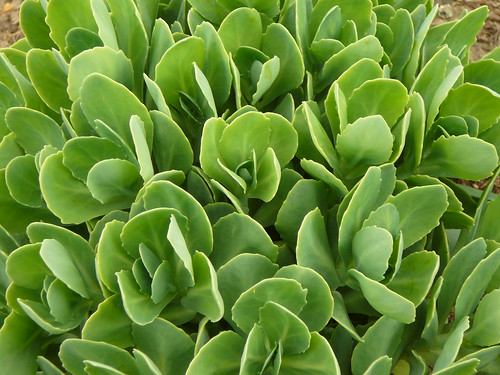


Filed Under: Lawn Care Tagged With: germinate, lawn, seed, soil preparation, sow seed, water, weeds

The Secret Life of Carnivorous Plants

by Trish

Carnivorous plants do exist, and they exist on every continent in the world except Antarctica. A carnivorous plant is a plant that receives most of its nutrients by consuming animals or insects.

Carnivorous plants are not the most commonly discussed plants, and many people don’t even know that they truly do exist. The following information will help you learn more about carnivorous plants and give you insight into their truly unique world.

 Carnivorous plants come in two main groups.

The Venus Flytrap, pitcher plants, and Waterwheel are three of the most popular carnivorous plants, but there are over 600 types of carnivorous plants in the world, and every single of one of them can be placed in one of two groups. These groups are based on the plant’s trapping technique. There are passive trap carnivorous plants, in which the plant receives its food by having an animal or insect get stuck to it or fall into its digestive system. And then there are active trap carnivorous plants, in which the plant actively locates its pretty in order to eat it.

 Carnivorous plants have five basic trapping techniques.

In order to survive, carnivorous plants receive most of their nutrients from animals and insects, and in order to get these nutrients, they need to trap their prey. There are five basic types of trapping mechanisms that carnivorous plants use. The first is known as a pitfall trap, in which prey is trapped in a rolled leaf and then consumed. The second trap is known as a lobster-pot trap, in which the prey is forced to move towards a plant’s digestive organ. The third trap is known as a flypaper trap, in which a plant emits a sticky substance that will trap any small animal or insect that lands on it. The fourth trap is known as a bladder trap, in which a plant has an internal vacuum-like organ that sucks prey down into its digestive system. The fifth and final trap is known as snap trap, in which plants rapidly move their leaves in order to stun or kill their prey.

 Carnivorous plants prefer nutrient dense soil.

The majority of carnivorous plants can be found in nutrient-dense soil. Most of the plants prefer to live in soggy soil, preferably near bogs. But there are some that also prefer warmer and drier areas and can be found near deserts.

 Carnivorous plants will not eat humans.

As children we always heard about man-eating plants, but carnivorous plants will not eat humans, so have no fear. For the most part, most carnivorous plants rely on small insects, such as flies and mosquitoes. If a carnivorous plant is located near water, it may eat small fish or frogs. On the rare occasion, some carnivorous plants have also been known to eat birds. But carnivorous plants pose absolutely no threat to humans, so you don’t have to fear for your life if you come across one.

 Most people don’t know much about carnivorous plants, but they truly are an amazing species. If you ever have the chance, you should try and watch a carnivorous plant in action. It truly is a sight to see.

Mariana S works for Franklin Pest Control, Indiana’s trusted exterminators.

Filed Under: In The Garden, Plant Profiles Tagged With: active, Carnivorous plants, continent, eats animals, insects, passive, pitcher plant, trap, venus flytrap, waterwheel

Growing Cattleya Orchids as House Plants

by Trish

Growing Cattleya Orchids as House Plants

Are you planning on growing orchids in your backyard or in a green house?  Why not choose the Cattleya ?  They are very easy to grow. However, if you decide on planting them in your window sill, you may find that very challenging.

What are cattleyas?

Cattleyas are beautiful orchids with large, attractive flowers which sometimes carry a fragrance. Their flowers vary in color and pattern and the size can measure as much as 8 inches across. There are numerous species. In wildlife, cattleyas grow high on trees in the forests. They have thick roots which attach the plants firmly to the tree. Being exposed to the elements, the roots are able to tolerate the long periods when there is no rain. Because they vary in size from small (suitable for window sills) to large; growing more than 4 ft. tall, you might want to choose carefully if you plan on growing them inside.  They love light, so you wouldn’t want a plant that takes up all your window space, would you?

Light

Cattleya orchids flourish in bright light. The condition of the leaves is an indication of whether or not your cattleya plants are getting the right amount of water. Leaves that are firm and have an apple green colors mean that the plants are getting the right amount of light.  Hard, yellow or brown colored leaves suggest too much light, while limp, dark green leaves is an indication of inadequate amount of light, which can also cause the plant not to flower.

If you keep your Cattleya on your patio in summer, they will thrive. If indoors, place them in an area near to windows on the eastern or western side.  If they are outside, it is important that you shield them from the hot, noonday sun.

Water

Cattleyas grow from underground rhizome. During spring new bulbs appear. Cattleyas need lots of water during the growing season, but the bulbs should not be allowed to stay in the water.  As soon as the flowers begin to appear in the sheaths, reduce the water.  Too much water in the sheaths will cause the young flowers to rot.

Blooming

Most Cattleyas normally bloom once each year, some twice.  Flowers will stay between 1-3 weeks.  Once the first flower appears, the plants must be removed from the direct sun so that the bloom will last longer.  The flower buds will not develop unless the plant gets direct sunlight and cool temperatures in the evening.


Temperatures

Cattleyas don’t need specific temperatures to grow. They thrive best in temperatures ranging from 55 degrees in the nights to 90 degrees throughout the day.  During winter, the bloom cycle will start when evening temperatures are at 55 degrees or lower. They also need ample humidity and proper air circulation throughout the months of winter too.


Fertilizer

Fertilize your Cattleyas each week with weak fertilizer made for orchids.


Potting and Repotting

Repotting of cattleyas can be stressful for the plant, so they will take a season to improve. Therefore, repotting should only be done when necessary.  Cattleyas flourish best in most orchid mixes including clay pellets, pink bark, charcoal, perlite and any medium which drains well.  If you are repotting a Cattleya, ensure there is adequate space for the rhizome to produce a minimum of two bulbs.  The ideal repotting period is spring; that’s when the growing season begins.

Lucas Barnes writes for Plantdex, learn more about growing cattleya orchids.

Filed Under: In The Garden, Plant Profiles Tagged With: Beautiful, blooming, blooms, cattleya orchid, color, fertilizer, flowers, fragrance, green house, Houseplants, light, potting, repotting, temperature, water

  • « Previous Page
  • 1
  • …
  • 14
  • 15
  • 16
  • 17
  • 18
  • …
  • 202
  • Next Page »

Subscribe


Never miss a post
Subscribe to our RSS feed!
It's FREE! rss feed

Free Newsletter

As the Garden Grows
by Email - FREE!


Follow me on Twitter!

Suggested Sites

Eavestrough Cleaning Toronto

Categories

Recent Posts

  • Top Three Tips For Choosing The Right Patio Furniture For Your Home
  • The 4 Things To Know About Perennial Garden Design
  • Painful Plants: Five Houseplants That Can Cause Injury
  • An Outbreak Shouldn’t Mean A Break Out: 3 Insect Repellants Gentle Enough For Your Skin
  • 5 Ideas To Make Your Garden POP
  • 6 Simple Ways To Make Your Home Eco-Friendly
  • How To Redesign Your Garden To Make It Safe For Your Children
  • Starting A Career As A Professional Gardener
  • 6 Time Saving Tips For Gardening
  • Top Tips On Redesigning Your Garden For The Summer

What they’re Saying

  • Rodhe Stevens on Landscaping Tips On A Limited Budget
  • Edmund Wells on Benefits of using mulch on the garden
  • Surjith on An Outbreak Shouldn’t Mean A Break Out: 3 Insect Repellants Gentle Enough For Your Skin
  • Pamela on The 4 Things To Know About Perennial Garden Design
  • dog on The quality of your pet food is important

Pages

  • About
  • Archives
  • Become a Guest Blogger For As the Garden Grows
  • Blog
  • Categories
  • Contact
  • Disclosure
  • Do Follow Bloggers Blogroll
  • Green Thumb Sunday
  • I am Canadian Blogroll
  • Join GTS Meme
  • Links
  • Privacy Policy
  • Q & A
  • Toronto Bloggers Blogroll
  • What’s Growing

Search

My Garden

Member of
Garden Voices

Tags

backyard Beautiful bloom blooming blooms Bulbs cold Entertainment and Rec flower flowers garden garden bed garden beds gardener gardening green Green Thumb Green Thumb Sunday grow growing GTS home Home and Lifestyle House In The Garden leaves my garden photo photos plant plants purchase rain rose roses Shopping snow spring summer Toronto water weather winter Wordless Wednesday WW

Site Ratings


Visitors since 2006


Meta

  • Log in
  • Entries feed
  • Comments feed
  • WordPress.org

Connect with me

  • Facebook
  • Google Plus
  • Pintrest
  • Twitter
  • RSS

Copyright © 2026 · News Child Theme on Genesis Framework · WordPress · Log in