As the Garden Grows

What's blooming today?

  • Home
  • Blog
  • Archives
  • Links
  • About
  • Join GTS Meme
  • Guest Blogger
  • Contact

You are here: Home / Archives for Plant Profiles

Indoor Ferns

by Tricia

Growing and selecting ferns for indoors

Ferns will add interest to any room with their soft delicate appearance. The most familiar and popular varieties for indoor use are those native to tropical settings.

Outdoors, in natural conditions ferns grow on the forest floor in shady conditions, which means that indoors, ferns thrive in filtered, indirect light from northern exposures in the summer months, and an east facing window in the winter months. Fern enjoy temperature ranges of 65 to 80 F, with a drop of 5 to 10 degrees F overnight.

The root system of ferns are fibrous, meaning they are near the surface. This limits the size of pot in which you can plant your ferns into as they do best in shallow post of no more than 4 to 6 inches deep, larger depths for large ferns. Ferns need a well draining soil mix that contains a large amount of humus. A mix of 2 parts peat moss, 1 part loamy garden soil, and 1 part perlite works well.

Fertilize ferns on a regular basis, but only use 1/4 to 1/2 of the manufacturers recommendations as the ferns shallow root system could be damaged easily if over fertilized.

Soil should be kept evenly moist. Over watering will cause the fronds to turn yellow and wilt because the fibrous roots will be unable to function due to the lack of oxygen. Plants kept too moist might end up with root rot, and once damaged the plant might not recover. If you were to look at the root system you’ll see that a healthy root system has light brown to whitish growing tips. Dead or injured roots will be dark brown or black.

Ferns can also suffer when under watered. Under watering will cause wilting of the fronds. If you notice this symptom, feel the soil and if it’s dry water immediately. You can also thoroughly soak the pot by submerging it in water. Bubbles will come up from the dry soil. keep submerged until the bubbling cease, then drain.

Recommended indoor ferns:

  • Boston Fern (Nephrolepis) – long delicate fronds,light green foliage, variety of sizes, good for hanging basket. Propagate by division, runners or spores.
  • Birdsnest Fern (Asplenium) – does not resemble a typical fern since the fronds are broad, leathery, and shiny green. Each leaf is a single sprout from the roots and grows up to 2 feet long and 10 inches wide. This bold plant looks nice an any home or office setting.
  • Staghorn Fern (Platycerium) – Wide, flat leaves and resembles a stag’s horns. It is an unusual looking fern but easy to grow in sphagnum moss supported on a piece of wood. Although it is attractive in any room where there is good lighting, its unusual “container” is difficult to water in most locations so a greenhouse or plant room is ideal. This fern is slow growing but can grow up to 3 or 4 feet. Reproduce by division.
  • Table Fern (Pteris) – has medium green foliage. Some types have creamy white markings in the center of each leaflet. Depending on the variety, fronds will grow up to 3 feet. This fern fits into any indoor landscape. Propagate by spores or division.
  • Maidenhair Fern (Adiantum) – has lacy foliage with small, fan-shaped leaves, light to medium green in color. It grows rapidly, with some types reaching up to 26 inches in height. This fern requires high humidity. It will grow outdoors up until first frost and there are Maidenhair ferns native to Virginia which are hardy even in the mountains. Reproduce by spores and division.
  • Rabbit’s Foot or Ball Fern (Davallia) is excellent for hanging baskets because the rhizomes (fleshy stems) will grow around the sides of pots. It does well in shade and grows up to 18 inches. Reproduces by division or spores.


Filed Under: House Plants, Plant health, Plant Profiles Tagged With: best indoor fern, care of indoor fern, fern, House Plants, indoor fern, Plant health, Plant Profiles

Getting bulbs to bloom indoors

by Tricia

Did you know that every bulb contains the whole plant – this makes bulbs quite a unique plant form. Now, most people think of bulbs as being spring and or summer blooming plants but they can be planted in posts and exposed to specific conditions that will make them bloom in the winter. You’ve probably noticed or even purchased bulbs in bloom in the winter from florists or garden nurseries.

If you are purchasing already potted prepared bulbs you should make sure that the bulbs are in the tight-bud stage. If you purchase them already in full bloom the flowers will only last seven to ten days depending upon the conditions in the house.

You’ll find that forced bulbs open quickly in a warm home environment, if you’d like them to last longer try to keep them in a cool room or a cooler portion of a room. temperatures of 55 to 60 degrees F will add 5 or 6 days to the flowers. You could keep the plants in a regular room during the day and then move them to a cool garage or cooler room at night to make them last longer.

If you purchase potted bulbs and want to delay their bloom period keep them in a cool area that is 35 to 40 F as this will slow growth. These temperatures will allow the plants to be stored for up to two weeks without deterioration of quality. A refrigerator or unheated garage would provide just this environment. Watering is not crucial to the plant when you are storing them in cool conditions but when they are brought into warmer areas it is important to keep the bulbs from drying out. Light is also important for indoor bulbs. If it’s too dark, the plants will elongate toward any available light.

Look for potted forced bulbs in plain pots- these are usually of higher quality. Here is a list of the peak seasons for flowering potted plants:

  • Daffodils – Mid-January through April 1 (Usually plentiful.)
  • Tulips – Mid-January through mid-April
  • Hyacinths – January 1 through April 1
  • Crocus – January 10 through March (Beyond March 1, they bloom rapidly and grow leggy.)
  • Iris reticulata – January 15 through February 15
  • Grape hyacinths – February and March

If you purchase the forced bulbs in plain pots you can spruce them up by placing the pots into decorative baskets or slightly larger secondary decorative pots.

For best effect, combine pots of bulbs with other flowering and foliage plants to create a blooming garden. Mix tulips, hyacinths and crocuses with primroses or small cinerarias in baskets. Add pussy willow branches or small silk ornaments for a personal touch.

After the bulbs bloom, you can put the plant in a bright window, stop watering it and let the foliage dry out. The bulb can then be planted outdoors in the Spring and if planted in a bright sunny area at the proper depth for its type of bulb it should bloom in a year or two.

If replanting tulip or daffodil bulbs they should be planted at 6-8″ in depth, crocuses, grape hyacinths and iri reticulata should be planted at about 3 – 4″ in depth. Plant to the maximum depth in areas where winter temperatures are harsh. Replanted tulips and hyacinths will bloom for two or three years. Iris reticulata will return reliably. Crocuses, grape hyacinths, and daffodils will naturalize, and not only will bloom year after year, but will multiply to produce more bulbs and blossoms.

Filed Under: Bulbs, House Plants Tagged With: Bulbs, bulbs forced to bloom in winter, forced bulbs, House Plants, potted bulbs, replanting forced bulbs

Growing Datura

by Tricia

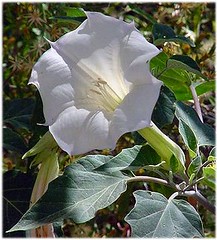
Datura, also known as the Devil’s Trumpet

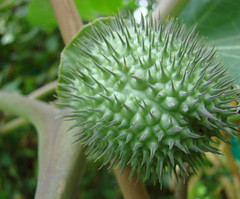
I teased everyone the other day by showing a photo of a datura seed pod and making them guess what it was. I did promise that I would write about the Datura plant in that post though – so here it is.

Datura - Devils Trumpet Depending on what area of the world you are growing Datura it can be classed as a perennial or a tropical annual – meaning that it only survives the winter months in warm zones. It’s hardy to USDA Zone 9b: to -3.8° C (25° F). The plant grows 18″ to 24 ” in height, but has a tendency to spread out, so if you grow Datura allow at least a four foot diameter around the plant for growth.
All parts of plant are poisonous if ingested and handling the plant may cause skin irritation or allergic reaction. While the flowers have a lovely cross of lily to Jasmine scent the leaves have a repugnant scent when lightly brushed with the fingers. The foliage is Silver/Gray with a Velvet/Fuzzy-Texture.

The datura plant has also been used for divination in Native American milieux, to find one’s totem animal, for communing with birds, to allow one to see ghosts, and like all the tropane-containing plants, is said to have gone into flying ointments. Daturas and brugmansias contain the extremely dangerous tropane alkaloids atropine, hyoscyamine, and scopolamine.

Datura Seedpod Some species of Datura bloom at night. Mine tend to bloom in the late afternoon on ward with the flowers closing in bright light. They do need full sun to grow properly even if they tend to only show their beauty at night. The flowers are large and lush and tend to face upward. They bloom from early summer to mid Fall.

Some of the seed pods must escape my notice each fall and I always have new seedlings come up in the early summer of the following year. Therefore hardiness is not really a concern of mine as I know they reseed generously.

Filed Under: Plant Profiles Tagged With: annual, datura, Datura flower, datura seed pod, growing Datura, hardy usda zone 9, photo, Plant profile, Plant Profiles

  • « Previous Page
  • 1
  • …
  • 42
  • 43
  • 44
  • 45
  • 46
  • …
  • 53
  • Next Page »

Subscribe


Never miss a post
Subscribe to our RSS feed!
It's FREE! rss feed

Free Newsletter

As the Garden Grows
by Email - FREE!


Follow me on Twitter!

Suggested Sites

Eavestrough Cleaning Toronto

Categories

Recent Posts

  • Top Three Tips For Choosing The Right Patio Furniture For Your Home
  • The 4 Things To Know About Perennial Garden Design
  • Painful Plants: Five Houseplants That Can Cause Injury
  • An Outbreak Shouldn’t Mean A Break Out: 3 Insect Repellants Gentle Enough For Your Skin
  • 5 Ideas To Make Your Garden POP
  • 6 Simple Ways To Make Your Home Eco-Friendly
  • How To Redesign Your Garden To Make It Safe For Your Children
  • Starting A Career As A Professional Gardener
  • 6 Time Saving Tips For Gardening
  • Top Tips On Redesigning Your Garden For The Summer

What they’re Saying

  • Rodhe Stevens on Landscaping Tips On A Limited Budget
  • Edmund Wells on Benefits of using mulch on the garden
  • Surjith on An Outbreak Shouldn’t Mean A Break Out: 3 Insect Repellants Gentle Enough For Your Skin
  • Pamela on The 4 Things To Know About Perennial Garden Design
  • dog on The quality of your pet food is important

Pages

  • About
  • Archives
  • Become a Guest Blogger For As the Garden Grows
  • Blog
  • Categories
  • Contact
  • Disclosure
  • Do Follow Bloggers Blogroll
  • Green Thumb Sunday
  • I am Canadian Blogroll
  • Join GTS Meme
  • Links
  • Privacy Policy
  • Q & A
  • Toronto Bloggers Blogroll
  • What’s Growing

Search

My Garden

Member of
Garden Voices

Tags

backyard Beautiful bloom blooming blooms Bulbs cold Entertainment and Rec flower flowers garden garden bed garden beds gardener gardening green Green Thumb Green Thumb Sunday grow growing GTS home Home and Lifestyle House In The Garden leaves my garden photo photos plant plants purchase rain rose roses Shopping snow spring summer Toronto water weather winter Wordless Wednesday WW

Site Ratings


Visitors since 2006


Meta

  • Log in
  • Entries feed
  • Comments feed
  • WordPress.org

Connect with me

  • Facebook
  • Google Plus
  • Pintrest
  • Twitter
  • RSS

Copyright © 2026 · News Child Theme on Genesis Framework · WordPress · Log in