As the Garden Grows

What's blooming today?

  • Home
  • Blog
  • Archives
  • Links
  • About
  • Join GTS Meme
  • Guest Blogger
  • Contact

You are here: Home / Archives for Plant Profiles

Black Eyed Susan

by Tricia

Growing Black-eyed Susans

A popular native plant
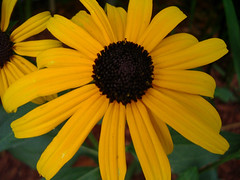
Rudbeckia fulgida Goldstrum

Name: Black-eyed Susan (Rudbeckia hirta)
Height: 1-3 feet (30 – 90 cm)
Blooming period: Summer to fall
Exposure: Full sun to partial sun
Moisture: average to dry; drought tolerant
Habitat: dry meadows, prairies, open woods
Range: Northeastern, and prairie areas of North America

The Rudbeckia is one of the most popular of the native wildflowers.

Black-eyed Susans are a must in the meadow or prairie garden. It’s prolific, long lasting blooms – yellow with dark centers – and its ease of cultivation make it a rewarding plant. Although it’s often listed as a biennial, black-eyed Susan will behave as a perennial if it’s happy and an annual if it’s not.

Maintenance and Requirements:

Black-eyed Susan thrives in tough conditions – in sandy or gravelly, nutrient-poor soil and long periods of drought. Don’t supplement the soil with fertilizer or organic material such as compost before planting, as you don’t want the soil to be too rich. If the soil is too rich there will be few blooms and and weaker stems. Acidic to neutral soil, clay or sand are best for this easy plant.

Propagation:

Easty to start from seeds, which ripen in fall, or divide mature plants in early spring or in fall.

Good Companions:

Black-eyed susan looks great with almost any of the native prairie and meadow species, but it looks particularly nice with airy white flowers such as flowering spurge (Euphorbia corallata), Pearly everlasting (Anaphalis margaritacea), and with the brilliant orange butterfly weed (Asclepias tuberosa), or the deep blue-purple of Delphinium exaltatum.

My own Black eyed susan plants (Rudbeckia fulgida ‘Goldsturm’) are planted near purple Salvia nemorosa, White phlox (Phlox paniculata ‘David’), and a Hosta Gold standard.

Related Species:

Brown-eyed Susans (R. triloba) has smaller blossoms, but they are more abundant than R. hirta, and the whole plant is bushier, with many branches. Sweet black-eyed Susan (R. subtomentosa) is much taller, to 6 feet (1.8 m). Green-headed coneflower (R. laniniata) is also very tall (3 to 8 feet /.9 to 2.4 m) and grows in the open shade of woodlands or in sun, blooming in summer.

Wildlife:

Nectar attracts butterflies and bees.


Filed Under: Perennials Tagged With: Black eyed susan, companion plants., growing tips, Perennials, planting, Rudbeckia hirta, similar species, soil

Souvenir de la malmaison rose

by Tricia

Join Green Thumb Sunday
Join

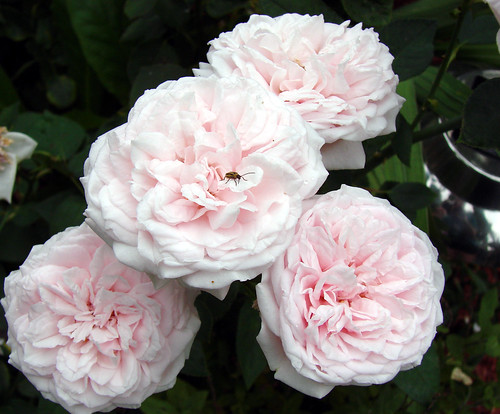
Souvenir de la malmaison rose

Souvenir is a happy rose these days.

She’s putting out these lovely clusters of quartered roses. I love it.

Oh and they smell so lovely. She’s a small rose bush, but she’s fairly hardy for me during the long cold winters.

Like the bug hanging out too?

Gardeners, Plant and Nature lovers can join in every Sunday, visit As the Garden Grows for more information.

Filed Under: Blooming today, Garden Buzz, Green Thumb Sunday, rose Tagged With: antique, Green Thumb Sunday, hardy, rose, scent, Souvenir de la malmaison rose

Growing native Bee Balm

by Tricia

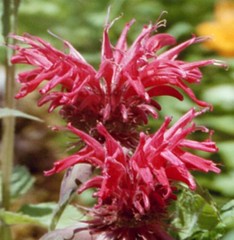
bee-balm_lg

Bee Balm Monarda Didyma

Description:

Striking red flowers that look like Jesters’ hats and last for weeks give this plant a slightly comical air. Its stem is square (characteristic of plants in the mint family) and its leaves are dark green, sometimes flushed with dark red. Quickly growing into a large, tall clump, bee balm is altogether a sturdy, colorful addition to the garden.

Maintenance and requirements:

Although bee balm prefers moist places in the wild, it can be grown in average moisture conditions in the garden.

Versatile in its light requirements, from partial shade to full sun, and also in its PH tolerance, from slightly acidic to neutral (pH 5.5 to 6.5), bee balm is very easy to grow. The only problem you might encounter is mold, which often covers the leaves in a whitish film, signaling that the plant is crowded and not getting enough air movement; divide plants every few years, and don’t spray eaves when watering. Deadhead to extend blooming.

Height: 2-5 feet (60 to 150 cm)

Blooming period: Early to mid-summer

Exposure: Partial shade to full sun

Moisture: Moist to average

Habitat: Moist woods, moist meadows

Range: North East – North America

Propogation:

Bee Balm is easy to start from seeds. Simply sprinkle seeds in pots or a bed in late fall or early spring (seeds do not need cold stratification). Or divide the plant in early spring, which is not only useful for propagation, but also helps keep the plant from getting too crowded in the center.

Good Companions:

At the woodland edge, plant bee balm with black-eyed susan (Rudbeckia hirta) and woodland sunflower (Helianthus divaricatus).

Related Species:

Wild Bergamot (M. Fistulosa)

Wildlife:

Bees, butterflies, and hummingbirds swarm this plant for nectar.

Misc.:

Also known as Oswego tea, because the plants were used by the Oswego Indians for a hot drink. Bruise its aromatic leaves for the scent of Earl Grey Tea.

I grow two of the hybrid species of Bee balm and I love them. Their care is exactly the same as that of the native species that I’ve described above. Enjoy!

Filed Under: Garden Buzz, Garden Tips, In The Garden, Perennials, Questions and Answers Tagged With: Bee Balm, garden, growing, Monarda Didyma, Native plants of North America, Perennials

  • « Previous Page
  • 1
  • …
  • 49
  • 50
  • 51
  • 52
  • 53
  • Next Page »

Subscribe


Never miss a post
Subscribe to our RSS feed!
It's FREE! rss feed

Free Newsletter

As the Garden Grows
by Email - FREE!


Follow me on Twitter!

Suggested Sites

Eavestrough Cleaning Toronto

Categories

Recent Posts

  • Top Three Tips For Choosing The Right Patio Furniture For Your Home
  • The 4 Things To Know About Perennial Garden Design
  • Painful Plants: Five Houseplants That Can Cause Injury
  • An Outbreak Shouldn’t Mean A Break Out: 3 Insect Repellants Gentle Enough For Your Skin
  • 5 Ideas To Make Your Garden POP
  • 6 Simple Ways To Make Your Home Eco-Friendly
  • How To Redesign Your Garden To Make It Safe For Your Children
  • Starting A Career As A Professional Gardener
  • 6 Time Saving Tips For Gardening
  • Top Tips On Redesigning Your Garden For The Summer

What they’re Saying

  • Rodhe Stevens on Landscaping Tips On A Limited Budget
  • Edmund Wells on Benefits of using mulch on the garden
  • Surjith on An Outbreak Shouldn’t Mean A Break Out: 3 Insect Repellants Gentle Enough For Your Skin
  • Pamela on The 4 Things To Know About Perennial Garden Design
  • dog on The quality of your pet food is important

Pages

  • About
  • Archives
  • Become a Guest Blogger For As the Garden Grows
  • Blog
  • Categories
  • Contact
  • Disclosure
  • Do Follow Bloggers Blogroll
  • Green Thumb Sunday
  • I am Canadian Blogroll
  • Join GTS Meme
  • Links
  • Privacy Policy
  • Q & A
  • Toronto Bloggers Blogroll
  • What’s Growing

Search

My Garden

Member of
Garden Voices

Tags

backyard Beautiful bloom blooming blooms Bulbs cold Entertainment and Rec flower flowers garden garden bed garden beds gardener gardening green Green Thumb Green Thumb Sunday grow growing GTS home Home and Lifestyle House In The Garden leaves my garden photo photos plant plants purchase rain rose roses Shopping snow spring summer Toronto water weather winter Wordless Wednesday WW

Site Ratings


Visitors since 2006


Meta

  • Log in
  • Entries feed
  • Comments feed
  • WordPress.org

Connect with me

  • Facebook
  • Google Plus
  • Pintrest
  • Twitter
  • RSS

Copyright © 2026 · News Child Theme on Genesis Framework · WordPress · Log in