As the Garden Grows

What's blooming today?

  • Home
  • Blog
  • Archives
  • Links
  • About
  • Join GTS Meme
  • Guest Blogger
  • Contact

You are here: Home / Archives for annual

Growing Datura

by Tricia

Datura, also known as the Devil’s Trumpet

I teased everyone the other day by showing a photo of a datura seed pod and making them guess what it was. I did promise that I would write about the Datura plant in that post though – so here it is.
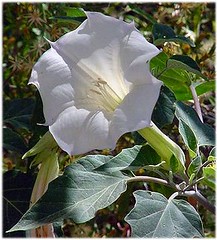
Datura - Devils Trumpet Depending on what area of the world you are growing Datura it can be classed as a perennial or a tropical annual – meaning that it only survives the winter months in warm zones. It’s hardy to USDA Zone 9b: to -3.8° C (25° F). The plant grows 18″ to 24 ” in height, but has a tendency to spread out, so if you grow Datura allow at least a four foot diameter around the plant for growth.

All parts of plant are poisonous if ingested and handling the plant may cause skin irritation or allergic reaction. While the flowers have a lovely cross of lily to Jasmine scent the leaves have a repugnant scent when lightly brushed with the fingers. The foliage is Silver/Gray with a Velvet/Fuzzy-Texture.

The datura plant has also been used for divination in Native American milieux, to find one’s totem animal, for communing with birds, to allow one to see ghosts, and like all the tropane-containing plants, is said to have gone into flying ointments. Daturas and brugmansias contain the extremely dangerous tropane alkaloids atropine, hyoscyamine, and scopolamine.
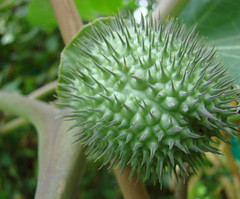
Datura Seedpod Some species of Datura bloom at night. Mine tend to bloom in the late afternoon on ward with the flowers closing in bright light. They do need full sun to grow properly even if they tend to only show their beauty at night. The flowers are large and lush and tend to face upward. They bloom from early summer to mid Fall.

Some of the seed pods must escape my notice each fall and I always have new seedlings come up in the early summer of the following year. Therefore hardiness is not really a concern of mine as I know they reseed generously.


Filed Under: Plant Profiles Tagged With: annual, datura, Datura flower, datura seed pod, growing Datura, hardy usda zone 9, photo, Plant profile, Plant Profiles

Favorite garden books?

by Tricia

I have a stack of gardening books that I keep handy in my living room.

I delve into the books for information to put into this blog or whenever I’m looking up a new plant and want to learn all about it before purchasing it, or in most cases after I’ve purchased it. Yes I’m an impulse plant purchaser.

I was wondering what kinds of gardening books my readers have at home? Here’s a list of what I have on hand:

  • Botanica’s Pocket – Annuals & Perennials
  • Ortho’s All about Azaleas, Camellias & Rhododendrons
  • 500 Popular Roses
  • 100 Easy to Grow native Plants for Canadian Gardens
  • The complete book of Garden Flowers
  • Readers Digest Illustrated Guide to Gardening in Canada
  • Complete Guide to Gardening (Better Homes and Gardens)
  • Botanica – The illustrated A-Z of over 10,000 plants

I think I’ve got a good start to my collection. What do you have that I should be sure to get for myself?

Filed Under: Books, Garden Books, Home and Lifestyle, In The Garden Tagged With: annual, Annuals, Azaleas, blog, book, Canada, Canadian, easy to grow, Favorite, flower, flowers, garden, Garden Books, gardening, gardening books, gardens, home, homes, information, living room, native plant, perennial, Perennials, plants, purchase, purchased, rose, roses

Annuals and Perennials

by Tricia

What are Annual, Perennial and Biennial plants?

The difference between annuals, biennials and perennials relates to the life cycles of the plants.

Annuals grow from seed to full maturity within one growing season. Marigolds, ageratums, and zinnias are typical annuals. They flower, set seed and die, all within a single year.

Biennials such as Canterbury bells and some foxgloves, complete their life cycles over two years, sometimes producing a few flowers in the first season, but most often just making foliage growth and establishing their root systems.

Perennials live longer than two seasons and may outlive many shrubs. In fact, strictly speaking, shrubs and trees are perennials, but when gardeners talk of perennials they generally mean plants that don’t develop permanent woody stems.

Perennials occur in several types. Some, such as Acanthus, are evergreen and don’t have a period of total dormancy, though few flower continually except in very mild climates.

Herbaceous perennials – those most common in temperate climate gardens – usually have a period of dormancy when they die back to a permanent rootstock. Most commonly this is during winter, but plants from hot dry areas many be dormant in summer or during periods of very low rainfall.

Some herbaceous perennials have developed the ability to use their roots or stems as food storage organs to enable them to survive extended periods of dormancy. Known as rhizomes and tubers, these storage roots can often be separated from the parent plant and grown on as new plants, in much the same way as bulbs and corms. Dahlias and alstroemerias are well-known tuberous plants, while bearded irises are probably the most widely grown rhizomatous plants. Some plants have specialized rhizomes known as stolons, which spread across the surface of the ground, or just below the surface, taking root as they spread.

Some perennials are treated as annuals, either because they cease to be attractive as they age, or because they are incapable of surviving cold winters. Petunias and impatiens, for example, may live for several seasons if protected from frost, but they become leggy and untidy, so they are usually replaced annually.

It is not uncommon for a genus to contain both annual and perennial species, such as the annual and perennial cosmos, or species with differing growth habits, like the fibrous and tuberous rooted irises and begonias.

In cultivation, the differences between annuals, biennials and the various types of perennials tend to become blurred. The important thing is how you use the plants, and with annuals and perennials you can give free rein to your imagination.

Filed Under: Annuals, Perennials, Plant Profiles, Questions and Answers Tagged With: annual, biennial, Bulbs, garden, herbaceous, perennial, plant, Plant Profiles, plants, rhizome, shrubs, tree, tuber

  • « Previous Page
  • 1
  • …
  • 4
  • 5
  • 6
  • 7
  • Next Page »

Subscribe


Never miss a post
Subscribe to our RSS feed!
It's FREE! rss feed

Free Newsletter

As the Garden Grows
by Email - FREE!


Follow me on Twitter!

Suggested Sites

Eavestrough Cleaning Toronto

Categories

Recent Posts

  • Top Three Tips For Choosing The Right Patio Furniture For Your Home
  • The 4 Things To Know About Perennial Garden Design
  • Painful Plants: Five Houseplants That Can Cause Injury
  • An Outbreak Shouldn’t Mean A Break Out: 3 Insect Repellants Gentle Enough For Your Skin
  • 5 Ideas To Make Your Garden POP
  • 6 Simple Ways To Make Your Home Eco-Friendly
  • How To Redesign Your Garden To Make It Safe For Your Children
  • Starting A Career As A Professional Gardener
  • 6 Time Saving Tips For Gardening
  • Top Tips On Redesigning Your Garden For The Summer

What they’re Saying

  • Rodhe Stevens on Landscaping Tips On A Limited Budget
  • Edmund Wells on Benefits of using mulch on the garden
  • Surjith on An Outbreak Shouldn’t Mean A Break Out: 3 Insect Repellants Gentle Enough For Your Skin
  • Pamela on The 4 Things To Know About Perennial Garden Design
  • dog on The quality of your pet food is important

Pages

  • About
  • Archives
  • Become a Guest Blogger For As the Garden Grows
  • Blog
  • Categories
  • Contact
  • Disclosure
  • Do Follow Bloggers Blogroll
  • Green Thumb Sunday
  • I am Canadian Blogroll
  • Join GTS Meme
  • Links
  • Privacy Policy
  • Q & A
  • Toronto Bloggers Blogroll
  • What’s Growing

Search

My Garden

Member of
Garden Voices

Tags

backyard Beautiful bloom blooming blooms Bulbs cold Entertainment and Rec flower flowers garden garden bed garden beds gardener gardening green Green Thumb Green Thumb Sunday grow growing GTS home Home and Lifestyle House In The Garden leaves my garden photo photos plant plants purchase rain rose roses Shopping snow spring summer Toronto water weather winter Wordless Wednesday WW

Site Ratings


Visitors since 2006


Meta

  • Log in
  • Entries feed
  • Comments feed
  • WordPress.org

Connect with me

  • Facebook
  • Google Plus
  • Pintrest
  • Twitter
  • RSS

Copyright © 2026 · News Child Theme on Genesis Framework · WordPress · Log in