As the Garden Grows

What's blooming today?

  • Home
  • Blog
  • Archives
  • Links
  • About
  • Join GTS Meme
  • Guest Blogger
  • Contact

You are here: Home / Archives for care

Helpful tips to avoid injuring yourself in the garden

by Tricia

Now that it’s July, you’ve probably finished most of your major gardening work for the summer, unless of course you are in the process of doing some landscaping. However, it’s always a good idea to use proper body mechanics while in the garden to avoid injury to your back or other joints.

Autumn will arrive soon enough and some of us will have more planting to do and other garden maintenance to prepare for winter so here’s some tips for you to help you avoid injuring yourself when you’re just trying to get a little gardening done.

Protect your joints

If you will be kneeling while working in the garden use knee pads, a knee cushion or a kneeler seat to protect your knee joints. Also remember to use tools with padded handles or easy spring loaded grips in order to minimize stiffness in your hands.

Take care when lifting!

We just finished mulching our garden – yes we were a little behind as usual! bags of garden mulch, soil and other garden supplies are heavy and can be difficult to carry. Use a wheelbarrow to move items from your car and place them close to the area where you will be using them. Another great idea is to open the bag, dumping the contents in the wheelbarrow or close to where you’ll be using it and then use a shovel to move small portions of the material to the garden.

Plan your tasks and conserve your energy

Just like in nursing and many other jobs it’s best to prepare everything that you’ll need before you start a task. Gather up all the gardening equiptment that you’ll need in a basket or container and carry it to the yard. This will save you trips and perhaps some time searching for tools once your already working in the garden.

I tend to bend or squat while working in the garden and I almost always end up with a sore back. Sit or kneel in one area and complete your gardening task – weeding, planting, pruning before moving to another area of the garden. This will also help conserve your energy and kneeling or using a kneeler seat will help your back too.

Moving heavy plants and other heavy objects

When it comes to landscaping your yard with new trees, shrubs or plants – perhaps large plants or ones in containers always try to move them with a wheelbarrow.

Tip the wheelbarrow forward as close to the plant as possible. Then gently rotate the pot or ball of plant onto the wheelbarrow. Slowly bring the wheelbarrow into standing position (keep your knees bend while you do this to easy your back). Carefully move the plant to it’s destination and reverse the process to get the plant off the wheelbarrow.

If you were thinking ahead and already dug a hole for the plant you might be able to move it right off the wheelbarrow and into it’s new hole!

If you have to lift a heavy item squat down, get a good grip and use your legs to lift. Don’t use your back or you’ll risk injuring your back. If there is someone else around to help you move heavy plants don’t hesitate to ask for help.

Work on one project at a time

I’m guilty of starting several projects at once and then feeling compelled to finish all of them before I stop gardening for the day. Don’t be like me – start one project at a time and finish it before moving on to another project whether it’s planting your annuals or planting seeds or seedlings or digging holes for your new roses. One job at a time.

Take a moment to decide which task needs to be given priority. Perhaps one task will take a lot longer than an other or your plants are desperately in need of care. Decide which job needs to be done first and start it. This can keep you from overdoing it and you might feel more satisfied with yourself when you complete the task rather than having several unfinished jobs on the go.

Listen to your body!

Yet another rule that I’m guilty of not following. I push myself in the garden even when I’m not feeling well or when my back is in full on spasms. I just will not go inside until I’m finished whatever I started. (I am getting a little better at listening this year as I try to plan smaller tasks).

Your body will tell you when it’s had enough. Listen to it. Muscles aching? Feeling tired? Sit back and take a break or stop your work for the day.

If you drink water while working in the garden you’ll remain well hydrated and well hydrated muscles will cramp less.

Don’t forget to stretch once you are done working in the garden. Stretching will help reduce muscle soreness and keep your more flexible. Once inside take a shower or a long soak in the bath tub to ease those muscles. Your body will thank you for it!



Filed Under: Garden Maintenance, Garden Tips, Health, Health and Fitness, Home and Lifestyle, In The Garden Tagged With: aching, aching back, annual, Annuals, autumn, bath, body, care, Container, cushion, dig, digging, drink, energy, equiptment, garden, garden injuries, garden injury, Garden Maintenance, gardening, Gather, hole, jobs, July, knee, kneeler, Landscaping, lift properly, lift with legs, lifting, maintenance, mulch, muscle, muscles, plan, plant, planting, plants, prepare, prepare tasks, process, project, projects, Protect, pruning, rose, roses, seat, seed, seedling, seedlings, seeds, shovel, shower, shrub, shrubs, soil, sore back, spring, squat, summer, task, tips, tired, tree, trees, use wheelbarrow, water, weed, weeding

Dreamy Hellebores

by Tricia

Join Green Thumb Sunday
Join

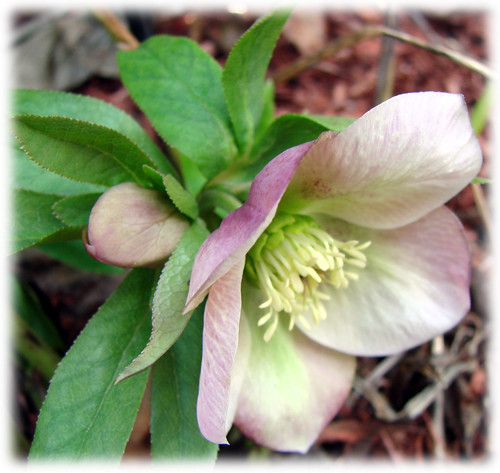
Hellebore

In about a month or so my Hellebores will start to emerge from their long winter slumber. Along with the crocus’ and my chives the hellebores are often one of the first flowers to emerge each spring. This flower is sometimes called the Christmas rose because in some areas it will bloom in late December. In this area, or at least in my garden it emerges in March, but doesn’t usually bloom until April.

There are approximately 20 species of Helleborus. The flowers have five petals (sepals) surrounding a ring of small cup like nectaries. The sepals remain on the plant rather than fall off as petals would on most flowers. Sometimes the sepals remain on the plant for many months.

Unfortunately many helleborus are considered poisonous. Now that we have a puppy who will more than likely enjoy the backyard frequently we might have to get rid of our hellebores. Of course we always keep a careful eye on our pup and if by chance we can train her to stay out of the garden beds we might be able to keep some of our more risky plants, but I’m not sure I want to take that chance.

Do you grow Hellebores?

Gardeners, Plant and Nature lovers can join in every Sunday, visit As the Garden Grows for more information. GTS participants remember to check in at As the Garden Grows each week so that we’ll know you made a new post!

Filed Under: Garden Buzz, Green Thumb Sunday, Perennials, Photography, Recreation, Toronto Tagged With: 5 petals, backyard, bed, Beds, bloom, care, chives, Christmas Rose, crocus, dormant, emerge, fall off, first flower, flower, flowers, garden, garden bed, garden beds, gardeners, green, Green Thumb, Green Thumb Sunday, grow, GTS, hellebore, hellebores, helleborus, my garden, pet, petals, photo, plant, plants, poisonous, post, sepals, spring, spring bloom, winter

Time to enjoy Thanksgiving and Christmas Cactus’

by Tricia

I have two cactus like plants. One is a Thanksgiving Cactus and the other is of the same species, Schlumbergera, and is known as a Christmas Cactus.

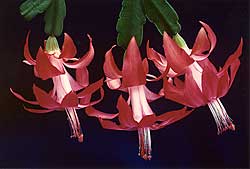
christmas cactus

General care for plants of the Schlumbergera species is to give them moderate to bright light in the Spring and Summer months. Lighting depends upon exactly which species you own.

I’ve found that these cactus can burn in direct bright sunlight so I generally put mine outside in the summer time in an area where they only get bright direct sunlight for a couple of hours. The rest of the lighting they receive is usually fairly bright but not direct.

Come mid-September this year I moved my two cactus’ to my enclosed front porch. The porch faces north so the light levels are very low from September through to April or so.

Generally, to get these plants to flower when they are supposed to flower you should put them in a cool dark place from Mid September through October and barely water them if at all during that time. At the end of October you can bring them out of the darkness and place them in a fairly bright area of your home and water them as you normally would.

Occasionally fertilizing the plants through summer and a weak dose of fertilizer shortly after you bring them out of dormancy might help them to flower as well.

I experimented a bit this year.

You see, my Thanksgiving Cactus is about 6 years old and it’s always been a fairly good flower producer. My Christmas Cactus on the other hand, which is treated almost exactly the same as the Thanksgiving Cactus, is rather stingy when it comes to flowering.

When my mother died in 2004 my sister and I each took one of the 50+ year old Christmas Cactus. We knew one flowered better than the other. Guess which one my sister got? She just has to look at it and it flowers! I’m so jealous!

This year instead of bringing the cactus’ to the cool dark basement in Mid-September I put them in the enclosed front porch as I said early. Their lighting was diminished and they got the benefit of the cool late summer nights while on the porch.

It was only two weeks ago when outside night time temperatures were starting to come close to zero or lower that I brought them inside to the dark basement.

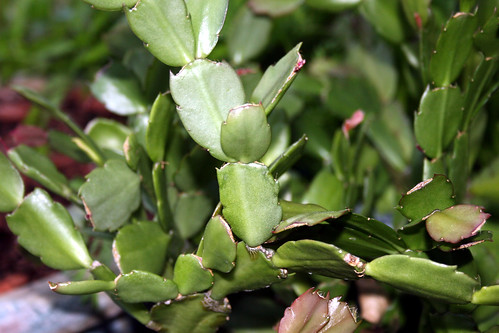
Checking on them today in the basement I noticed that both cactus have tiny flower buds on the tips of their thick succulent leaves. It looks like my experiment might have worked!

Now I do have to confess that I made a real rookie move that I should have known not to do.

The Christmas cactus is old and as a result it’s HUGE. Like 3+ feet in diameter. How can you bring that into the living room or kitchen and place it somewhere where it won’t be disturbed and where it will bloom prettily?

Christmas Cactus

I trimmed it! I really should have waited until the plant finished blooming before I trimmed off the newer growth. By trimming it before it flowered I might have destroyed it’s ability to bloom this year. Oh well … it’s not like I’m used to that Cactus blooming much anyway.

Of course I only trimmed a little bit off the edges. It’s still more than two feet in diameter. If you’d like to trim your Christmas or Thanksgiving cactus’ wait until they’ve finished blooming and then only trim a little bit of the soft newer green growth from the tips. Do not trim back to the older woody growth as that could damage the plant. Also, never trim too much off of any plant at one time as that could send it into shock.

I’ll let you know if the Christmas cactus blooms well, poorly or barely at all this year as a result of my experiment and my too early trimming!

I’ve brought both plants up and put them on tables or stands in my living room dining room and upon close inspections both have a fair number of buds. Perhaps the Christmas Cactus will bloom well, if early, this year?

Filed Under: House Plants, Perennials, Plant Profiles, Recreation Tagged With: basement, bloom, blooming, blooms, bright light, bud, buds, cactus, care, Christmas, Christmas Cactus, cool dark basement, cool down, dining room, dormancy, fertilize, fertilizer, flower, flowering, flowers, green, grow, growth, kitchen, leaf tips, leaves, light, lighting, living room, no water, october, period of darkness, photo, photos, plant, plants, Schlumbergera, September, spring, summer, sunlight, temperature, Thanksgiving, Thanksgiving cactus

  • « Previous Page
  • 1
  • 2
  • 3
  • 4
  • 5
  • Next Page »

Subscribe


Never miss a post
Subscribe to our RSS feed!
It's FREE! rss feed

Free Newsletter

As the Garden Grows
by Email - FREE!


Follow me on Twitter!

Suggested Sites

Eavestrough Cleaning Toronto

Categories

Recent Posts

  • Top Three Tips For Choosing The Right Patio Furniture For Your Home
  • The 4 Things To Know About Perennial Garden Design
  • Painful Plants: Five Houseplants That Can Cause Injury
  • An Outbreak Shouldn’t Mean A Break Out: 3 Insect Repellants Gentle Enough For Your Skin
  • 5 Ideas To Make Your Garden POP
  • 6 Simple Ways To Make Your Home Eco-Friendly
  • How To Redesign Your Garden To Make It Safe For Your Children
  • Starting A Career As A Professional Gardener
  • 6 Time Saving Tips For Gardening
  • Top Tips On Redesigning Your Garden For The Summer

What they’re Saying

  • Rodhe Stevens on Landscaping Tips On A Limited Budget
  • Edmund Wells on Benefits of using mulch on the garden
  • Surjith on An Outbreak Shouldn’t Mean A Break Out: 3 Insect Repellants Gentle Enough For Your Skin
  • Pamela on The 4 Things To Know About Perennial Garden Design
  • dog on The quality of your pet food is important

Pages

  • About
  • Archives
  • Become a Guest Blogger For As the Garden Grows
  • Blog
  • Categories
  • Contact
  • Disclosure
  • Do Follow Bloggers Blogroll
  • Green Thumb Sunday
  • I am Canadian Blogroll
  • Join GTS Meme
  • Links
  • Privacy Policy
  • Q & A
  • Toronto Bloggers Blogroll
  • What’s Growing

Search

My Garden

Member of
Garden Voices

Tags

backyard Beautiful bloom blooming blooms Bulbs cold Entertainment and Rec flower flowers garden garden bed garden beds gardener gardening green Green Thumb Green Thumb Sunday grow growing GTS home Home and Lifestyle House In The Garden leaves my garden photo photos plant plants purchase rain rose roses Shopping snow spring summer Toronto water weather winter Wordless Wednesday WW

Site Ratings


Visitors since 2006


Meta

  • Log in
  • Entries feed
  • Comments feed
  • WordPress.org

Connect with me

  • Facebook
  • Google Plus
  • Pintrest
  • Twitter
  • RSS

Copyright © 2026 · News Child Theme on Genesis Framework · WordPress · Log in