As the Garden Grows

What's blooming today?

  • Home
  • Blog
  • Archives
  • Links
  • About
  • Join GTS Meme
  • Guest Blogger
  • Contact

You are here: Home / Archives for caterpillars

Homemade Pest Control Solutions for Garden Pests

by Trish

There are different kinds of insects and bugs that can destroy your precious garden. Some of these insects and bugs can even be hazardous to your family’s health. Whether you find mosquitoes and flies in your backyard, or leaf-eating caterpillar and aphids in your garden, pest infestation is always a nuisance. For this reason, a lot of homeowners are taking into consideration different pest control solutions to address the problem.

If you are bothered and alarmed by the presence of harmful insects and bugs in your home and garden, you probably have considered using chemical pesticides to immediately take care of the problem, but before you apply that chemical bug spray, you must first consider that chemical pesticide toxicity can endanger your and your family’s health. Long-term exposure to the toxicity of such pesticides can increase the risk of developing liver and nerve damage, reproductive disorders, and tumors. Fortunately, there are natural pest control solutions that you can take advantage of. Organic method of eliminating pest is an excellent alternative to poisonous pesticides because natural products are safe to use around people, pets, and plants.

Homemade Concoctions For Pests In The Garden

Natural pest control solutions are very beneficial for many homeowners since it is less expensive as compared to buying and applying chemical pesticides. It is also safer for your garden, family, pets, and the environment. To promote a greener environment at home that is free from harmful insects and bugs, you can consider making some of these homemade concoctions for the following insects:

Soft-bodied Insects: Mites, Aphids, Mealy bugs, and Earwigs

If you have these insects in your garden, you can drive them away by mixing one tablespoon of canola oil and a few drops of ivory soap into a quart of water. Mix them well and pour it into a spray bottle. Use the mixture on plants since the oil will smother the insects. Another natural pest control solution is to sprinkle diatomaceous earth over the plants and around the edges of your garden beds. The diatoms have particles that are very small and sharp, but it is only harmful to soft-bodied insects and small exoskeletons of insects. The insects won’t develop immunity to such natural pest control solution since it is not a chemical pesticide.

Slugs and Deer

To drive slugs and deer out of your garden using natural remedies, you can use coffee grounds. Coffee grounds add nitrogen to the soil; thus, it promotes the acidity for acid loving plants. You can make caffeine spray which consists of different natural herbs including: yarrow, thyme, lavender, tansy, pennyroyal, rue, catnip and Artemisia. Get a cup of the herbal mixture and mix it with two tablespoons of used coffee grounds and two cups of water. Marinate the mixture for at least a day before straining and pouring it into a spray bottle.

Grubs

For this type of insect, you can use the natural pest control known as milky spore. The granules of this pest control are spread on the soil which will then infect the grubs with a disease that will kill them. This natural pest control will only affect grubs; thus, it is safe for beneficial insects and pets.

Leaf-eating caterpillars

This type of insect can eat away your garden’s healthy leaves. You can easily remove caterpillars manually from your garden. You can pluck them straight off the vine and put them in another area of the yard- away from your garden. You can also eliminate them through insecticidal soap or caffeine spray. To make an insecticidal soap, you have to mix one tablespoon of biodegradable, plant-based liquid soap, and a quart of water. Pour the mixture into a spray bottle and spray insects and bugs as needed. The soap can lead to the dehydration and extermination of soft-bodied insects.

Before using any of the solutions, you must be aware that some of the natural pest control solutions mentioned above may also kill beneficial insects. For this reason, you have to use these homemade concoctions selectively, and only spray on infected plants.

Kris Lim is a writer for home and garden websites where she offers tips and advice on how to improve gardens. She also occasionally writes Rove Pest Control reviews for the professional pest control company.


Filed Under: Garden Maintenance, Organic, pests Tagged With: aphids, backyard, caterpillars, deer, earwigs, eliminate pests, flies, garden, garden pests, grubs, homemade, mealy bugs, mites, mosquitoes, natural, Organic, pest control, slugs

Butterfly Milkweed

by Tricia

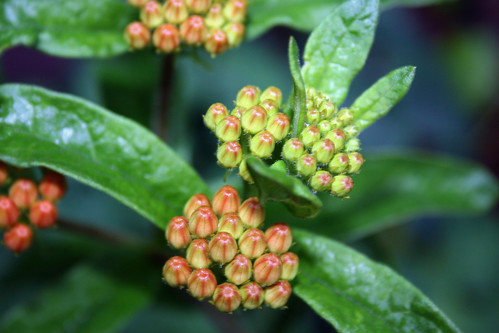
I noticed that my hybrid Butterfly Milkweed – Asclepias tuberosa – had started to form buds. I had noticed the developing buds about a week and a half ago as I took a walk in my garden checking on all the plants as I went.

Luckily I had my camera at hand and I was able to take a few nice photos of the developing buds:

Milkweed tuberosa buds

Butterfly weed is a herbaceous perennial that grows up to two feet in height. It dies back each winter and then re-sprouts in late spring from underground tubers.

Milkweed is slow to come up each spring. If you grow any form of milkweed you should always take care to mark the spot that it grows in each fall or at the very least try to remember where it was as it’s slow to make an appearance and you wouldn’t want to dig in the area and damage the plants roots.

Flower clusters of brilliant orange or red appear in midsummer. Once the blooms are spent attractive green pods develop. When the pods mature they open to release silky parachutes that drift away on autumn winds. This is how the butterfly weed propagates as the seeds of the butterfly weed are on these silky floating strands.

Each cluster has many flowers, several of these flowers will have an inner whorl of petals that are called the corolla and an outer whorl of sepals that is called the calyx. Butterfly Milkweed is a little different from other species of milkweed in that the sap is not milky nor are the leaves opposite.

Butterfly weed is a naturally occurring plant that grows east of the Rockies in North America. It’s preference is for well drained sandy soils.

If you’d like to grow these lovely flowers plant them in full sun to very light shade. Butterfly weed is hardy to USDA zones 4 – 10.

If you’d like to encourage butterflies to visit your garden this flower is a must as the caterpillars of Monarch butterflies feed only on milkweed foliage. Adult butterflies of many species enjoy sipping the nectar from the butterfly weeds blossoms.

I grow a few types of milkweed in my garden and every time I gaze out my kitchen window I see butterflies visiting many of my plants.

Filed Under: Blooming today, Garden Buzz, Perennials, Plant Profiles Tagged With: Asclepias tuberosa, bloom, blooms, buds, butterflies, butterfly, Butterfly weed, camera, caterpillars, flower, flowers, garden, green pod, leaves, milkweed, Monarch butterfly, my garden, North America, perennial, photo, plants, seeds, spring, summer bloom


Subscribe


Never miss a post
Subscribe to our RSS feed!
It's FREE! rss feed

Free Newsletter

As the Garden Grows
by Email - FREE!


Follow me on Twitter!

Suggested Sites

Eavestrough Cleaning Toronto

Categories

Recent Posts

  • Top Three Tips For Choosing The Right Patio Furniture For Your Home
  • The 4 Things To Know About Perennial Garden Design
  • Painful Plants: Five Houseplants That Can Cause Injury
  • An Outbreak Shouldn’t Mean A Break Out: 3 Insect Repellants Gentle Enough For Your Skin
  • 5 Ideas To Make Your Garden POP
  • 6 Simple Ways To Make Your Home Eco-Friendly
  • How To Redesign Your Garden To Make It Safe For Your Children
  • Starting A Career As A Professional Gardener
  • 6 Time Saving Tips For Gardening
  • Top Tips On Redesigning Your Garden For The Summer

What they’re Saying

  • Rodhe Stevens on Landscaping Tips On A Limited Budget
  • Edmund Wells on Benefits of using mulch on the garden
  • Surjith on An Outbreak Shouldn’t Mean A Break Out: 3 Insect Repellants Gentle Enough For Your Skin
  • Pamela on The 4 Things To Know About Perennial Garden Design
  • dog on The quality of your pet food is important

Pages

  • About
  • Archives
  • Become a Guest Blogger For As the Garden Grows
  • Blog
  • Categories
  • Contact
  • Disclosure
  • Do Follow Bloggers Blogroll
  • Green Thumb Sunday
  • I am Canadian Blogroll
  • Join GTS Meme
  • Links
  • Privacy Policy
  • Q & A
  • Toronto Bloggers Blogroll
  • What’s Growing

Search

My Garden

Member of
Garden Voices

Tags

backyard Beautiful bloom blooming blooms Bulbs cold Entertainment and Rec flower flowers garden garden bed garden beds gardener gardening green Green Thumb Green Thumb Sunday grow growing GTS home Home and Lifestyle House In The Garden leaves my garden photo photos plant plants purchase rain rose roses Shopping snow spring summer Toronto water weather winter Wordless Wednesday WW

Site Ratings


Visitors since 2006


Meta

  • Log in
  • Entries feed
  • Comments feed
  • WordPress.org

Connect with me

  • Facebook
  • Google Plus
  • Pintrest
  • Twitter
  • RSS

Copyright © 2026 · News Child Theme on Genesis Framework · WordPress · Log in