As the Garden Grows

What's blooming today?

  • Home
  • Blog
  • Archives
  • Links
  • About
  • Join GTS Meme
  • Guest Blogger
  • Contact

You are here: Home / Archives for fertilize

Lawn care tips from Spring through Autumn

by Tricia

Now that Autumn has arrived and the garden is winding down it might be time to think about the health of your lawn.

Here in Toronto there’s a ban on pesticide and insecticide use (not that I used them on my garden or lawn anyway as we are fully organic) so for some, it’s become harder to maintain the quality of their lawn.

The best defense against pests and weeds is a healthy turf, so I thought I’d post some lawn care tips that you can do now and in the spring to ensure that your lawn is healthy.

Autumn Lawn Care

Autumn is the best time to apply grass seed, repair damaged areas and thicken existing turf.

If you have weeds growing on your lawn take some time to carefully dig them out of the ground or if you are so inclined apply an appropriate weed killer to affected areas.

We usually aerate our lawn in the fall and late spring. Aeration will increase the amount of air, water and nutrients getting to the soil, which will strengthen grass roots and help create a healthier lawn. We use a simple two pronged tool that we can push into the earth with our foot, but I believe you can rent an aeration machine at your local hardware store.

A great time to fertilize and reseed the lawn is after aerating.

We also cut the grass at least once during this time of year (mower set to 2 – 3 inches) and give it a watering if it’s been dry.

Spring Lawn Care

If you live in a cool area that gets snow or a lot of moisture in the spring it’s best to stay off the lawn until the ground has dried and it’s firm to walk on.

Begin your spring lawn care by raking up dead grass, leaves and any other debris that might have accumulated throughout the winter season.

If your lawn is uneven or has “frost bumps” this is also a good time of year to roll out the bumps with a light roller.

Aerate the lawn – particularly in high traffic area and then apply a slow release lawn fertilizer. You might purchase a fertilizer with a crab grass preventer if that’s been a problem in previous years.

Spring through fall Mowing guidelines

As spring progresses you should apply grass seed either to the whole lawn or at least to thin areas. Remember a lawn with healthy thick turf will have fewer weeds.

Once the grass begins to grow and it’s time to mow it, remember to set your lawn mower to cut at a height of 2 to 3 inches and in the summer especially when it’s hot and dry outside raise the mower another 1/2 to raise drought resistance. Mowing short weakens the root system and gives weeds a chance to compete with the grass.

Mow in different directions and alter the pattern each time if you can. For example, go north-south, east-west, clockwise, counter-clockwise, diagonally, and so forth. This will cut more leaf surface on weeds that may tend to lean in the direction of mowing and may help the grass compete with them. It also reduces soil compaction and turf wear from the wheels.

Sharpen your mower blades at least once a year. Dull mower blades tear-off rather than cut grass blades. The torn leaves give the lawn a whitish caste and may leave it more vulnerable to disease problems.

It’s fine to leave the clippings on the lawn and if you have a mulching mower that will chop up the clippings further as it will speed up their decomposition. During the summer, clippings decompose and return nitrogen and other nutrients to your lawn. The decomposition is slower in cool weather.

Watering your Lawn

It’s best to water your lawn deeply, but infrequently rather than water regularly, but lightly – as infrequent and deep watering encourage deep roots.

Most lawns require approximately 1 inch of water per week. Use a rain gauge, coffee tin or aluminum pie plate to measure if the correct amount of water is being applied. High spots and south-facing slopes will need more water than other areas. Apply less water in shady areas that receive less than 4 hours of direct sunlight daily. Grass under large trees will need more water since the tree roots will consume water and the tree canopy may intercept rainfall.

Early morning watering is ideal as you’ll lose less water through evaporation. Watering in the evening or at night leaves the grass wetter long and can contribute to the development of diseases or fungus growth.

If you have a hot dry spell during the summer don’t be alarmed if your grass browns. It’s normal for it to go dormant during these kinds of conditions. It will come back nicely once the weather cools again.

Hopefully some of these tips will help you have a healthy lawn next year!


Filed Under: Autumn Tasks, Garden Tips, Home and Lifestyle, Lawn Care, Spring Tasks Tagged With: aerate, aeration, autumn lawn care, bumps, crab grass, damaged areas, fall lawn care, fertilize, fungus, grass, grass seed, healthy turf, Lawn Care, mow, mower, mowing, pull weeds, reseed, roller, sharpen blades, spring lawn care, thicken, watering, weeds

Some shots of my Amaryllis in bloom

by Tricia

Join Green Thumb Sunday

Join

Since I was telling you how I rescued my three Amaryllis from the basement in my last post I figured that it might be worthwhile posting some photos of the Amaryllis that I grow. I have no idea what kind I have, all I know is that I have two types. Two that I purchased as bulbs and grew on my own and one that I inherited from my parents. Unfortunately I don’t have any photos of my parents Amaryllis in bloom. If it blooms this year I must take a photo of it.

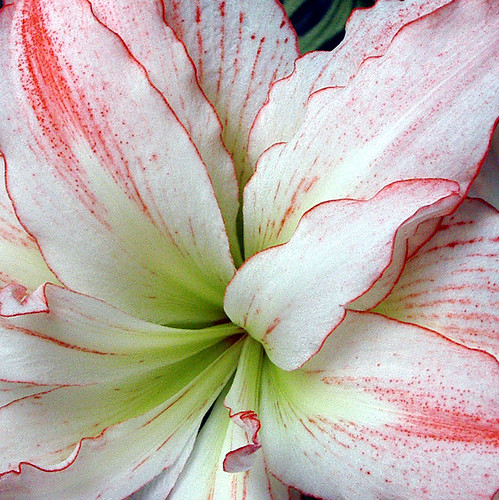
Here’s a close up of one of my Amaryllis blooms:
amaryllis

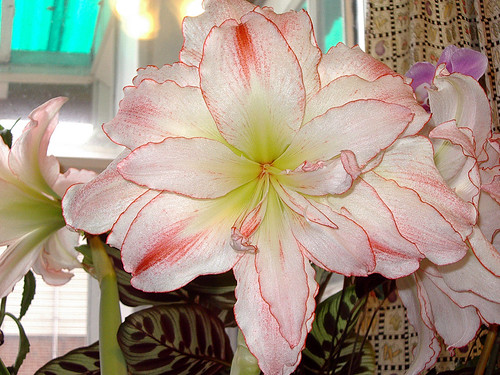
And for those that don’t grow Amaryllis, here’s a shot taken from a distance, just to show you how large the blooms are!

amaryllis

You can see one of my orchids blooming behind the Amaryllis just to the right. Orchid blooms are about two inches in diameter or perhaps a little smaller … so you can imagine just how big those Amaryllis blooms are!

Excuse the tacky curtains in the background! These pictures were taken in 2004 and those were the kitchen curtains that came with the house. They’ve since been replaced with cream white curtains.

The Amaryllis plants are starting to green up. You might remember that I said in my last post that when we brought them up from the basement they had new leaves on them, but that they were a pale green. Now that they’ve had a couple days of sunlight they are becoming greener. In a week or so I’ll start giving them a very weak dose of fertilizer and hope for blooms in two or three months.

Filed Under: Green Thumb Sunday, House Plants, Photography Tagged With: amaryllis, blooms, fertilize, flowers, Green_Thumb_Sunday, GTS, house_plants, kitchen_curtains, large_flowers, leaves, orchid, pale_green, plants, rescued

Growing Hydrangeas

by Tricia

Hydrangeas are a favorite shrub of many gardeners because of their eye catching blooms.

The majority of Hydrangeas originate from Asia and North America.

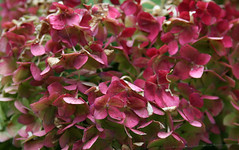
Hydrangea in October Hydrangea Macrophyllia (Mophead and Lacecap) are common in the Atlantic border states. They have big leaves, and their blooms come in colors of blue, lavender, pink and white. Other common hydrangeas are Paniculata or panicle hydrangea (PeeGee and family), Hydrangea arborescens (Annabelle) and Hydrangea quercifolia (Oakleaf). There’s also Hydrangea anomola-petiolaris (climbing hydrangea). You can find this last hydrangea growing on the northern side of buildings. Depending upon which variety you purchase, you could have blooms from Summer to Autumn.

If you’d like to have a garden that almost always has something in bloom, plant hydrangea near rhododendrons, azaleas and or forsythia and you’ll have blooms and color from spring through to fall. I also have my hydrangea growing near a lovely clump of peonies.

Some species of Hydrangea, the Macrophylia in particular, will bloom either pink or blue depending upon the PH of your soil. Acidic soil will produce blue or violet flowers, while a slightly alkaline to neutral soil will give you pink or white blossoms. Hydrangea blooms can range from 5 to 10 inches in diameter depending upon the species.

How to grow Hydrangeas:

  • Hydrangeas prefer light to medium shade, although large leafed hydrangeas seem to be able to handle full sun if they are given enough water.
  • Hydrangea’s need moist well draining soil.
  • Hydrangeas don’t require a lot of fertilizer. A good feeding in the spring is often sufficient. Compost or manure mixed into the soil near the plant will often be sufficient. You might also want to try Liquid Seaweed extract. It’s an organic fertilizer.

Pruning:

Big leaved Hydrangeas flower on old wood (previous seasons growth) so if you must prune only prune about a third of the weakest growth in early spring. Otherwise, prune immediately after your hydrangea has flowered.

You can visit this site to learn more about the proper care of your species of hydrangea. You might also want to visit the Hydrangea Forum at GardenWeb and talk with other hydrangea owners and gardeners.

Filed Under: Garden Tips, In The Garden, Organic, Perennials, Plant Profiles Tagged With: acidic_soil, Alkaline_soil, Annabelle, autumn, azalea, big_leaf, blooms, Blue, Blue_blossoms, climbing_hydrangea, compost, fertilize, forsythia, garden, grow, growing_hydrangea, Hydrangeas, hydrangea_anomola_petiolaris, hydrangea_arborescens, hydrangea_Macrophyllia, hydrangea_quercifolia, lacecap, lavender, manure, moist_soil, mophead, neutral_soil, Oakleaf_hydrangea, old_wood, Organic, panicle_hydrangea, Paniculata, peegee, peonies, pink, pink_blossoms, popular_hydrangea, prune, pruning, rhododendrons, seaweed, soil_ph, species, summer, white

  • 1
  • 2
  • 3
  • …
  • 5
  • Next Page »

Subscribe


Never miss a post
Subscribe to our RSS feed!
It's FREE! rss feed

Free Newsletter

As the Garden Grows
by Email - FREE!


Follow me on Twitter!

Suggested Sites

Eavestrough Cleaning Toronto

Categories

Recent Posts

  • Top Three Tips For Choosing The Right Patio Furniture For Your Home
  • The 4 Things To Know About Perennial Garden Design
  • Painful Plants: Five Houseplants That Can Cause Injury
  • An Outbreak Shouldn’t Mean A Break Out: 3 Insect Repellants Gentle Enough For Your Skin
  • 5 Ideas To Make Your Garden POP
  • 6 Simple Ways To Make Your Home Eco-Friendly
  • How To Redesign Your Garden To Make It Safe For Your Children
  • Starting A Career As A Professional Gardener
  • 6 Time Saving Tips For Gardening
  • Top Tips On Redesigning Your Garden For The Summer

What they’re Saying

  • Rodhe Stevens on Landscaping Tips On A Limited Budget
  • Edmund Wells on Benefits of using mulch on the garden
  • Surjith on An Outbreak Shouldn’t Mean A Break Out: 3 Insect Repellants Gentle Enough For Your Skin
  • Pamela on The 4 Things To Know About Perennial Garden Design
  • dog on The quality of your pet food is important

Pages

  • About
  • Archives
  • Become a Guest Blogger For As the Garden Grows
  • Blog
  • Categories
  • Contact
  • Disclosure
  • Do Follow Bloggers Blogroll
  • Green Thumb Sunday
  • I am Canadian Blogroll
  • Join GTS Meme
  • Links
  • Privacy Policy
  • Q & A
  • Toronto Bloggers Blogroll
  • What’s Growing

Search

My Garden

Member of
Garden Voices

Tags

backyard Beautiful bloom blooming blooms Bulbs cold Entertainment and Rec flower flowers garden garden bed garden beds gardener gardening green Green Thumb Green Thumb Sunday grow growing GTS home Home and Lifestyle House In The Garden leaves my garden photo photos plant plants purchase rain rose roses Shopping snow spring summer Toronto water weather winter Wordless Wednesday WW

Site Ratings


Visitors since 2006


Meta

  • Log in
  • Entries feed
  • Comments feed
  • WordPress.org

Connect with me

  • Facebook
  • Google Plus
  • Pintrest
  • Twitter
  • RSS

Copyright © 2026 · News Child Theme on Genesis Framework · WordPress · Log in