As the Garden Grows

What's blooming today?

  • Home
  • Blog
  • Archives
  • Links
  • About
  • Join GTS Meme
  • Guest Blogger
  • Contact

You are here: Home / Archives for peonies

Making a Raised-Bed Garden

by Tricia

Back in 2002 when we landscaped our yard and started our garden we decided to create a raised bed garden.

We decided on raised bed gardening for a number of reason. The main reason being the soil in our yard seemed to be composed of mostly sand and clay. It was dry and difficult to dig deeper than 6 inches or so. amending the soil to a suitable consistency would have taken too long.
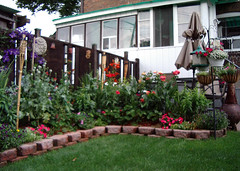
patio4 Raised garden beds are easy to build. They are also easy to plant new plants in, weed and maintain.

Other advantages of raised bed gardening that we considered before creating our garden were the fact that the soil would drain quickly in the spring when the snow melts, and the beds would warm up a little faster in the spring as well enabling us to either plant earlier in the season or giving the perennials and shrubs a head start.

So how can you make your own raised beds?

– We used easy wall garden stones (you can read the details of how we landscaped our garden here), but you can create your raised garden bed walls with:

– Concrete blocks, bricks, rocks, natural rot-resistant wood or wood that’s been treated with a safe preservative.

You might also need:

  • Sheet plastic and or a wood preservative if you create wood borders.
  • Measuring tape
  • Shovel
  • Spading fork
  • Rake
  • Hammer
  • Nails
  • Topsoil
  • Compost

Since our raised garden beds were meant to be permanent garden structures we also used gravel screening at the base of the easy wall stones to give the stones a good foundation and also to aid in drainage from the garden beds.

Temporary Raised Beds

If you’re still landscaping and trying to decide where you want to place your garden beds you might consider creating temporary raised garden beds. You can easily change your garden design each season using temporary raised garden beds.

All you really need to do to create a temporary raised bed is shovel garden soil into the area that you’ve planned for your raised bed. You might consider using Triple mix soil as it’s been blended with garden soil, topsoil and compost. Otherwise you can amend your garden spoil by adding top soil and compost to the mix yourself.

Permanent and temporary beds can be shaped in any way that you wish. You can create rectangular, curved, or even round beds.

The basics of building a raised garden bed is that it should be about 12 inches deep and usually no more than three to four feet wide.

Our beds are build around the edges of the garden so we only have access to each bed from one side, however you might think of making a round bed in the center of your lawn or placing two raised beds side by side with two to three feet of space between them for easy access. You’ll be able to access the garden beds from both sides so it will be even easier to care for than ours!

Be sure to remove any rocks, sticks or other debris from the garden bed as you create it. Rake the top of the bed smooth and flat when you are finished building up the soil.

Permanent raised garden beds:

When creating permanent raised garden beds you should use rot-resistant wood (cedar for example) or bricks, rocks, stones or cement blocks. As I said above your bed should be at least a foot deep and no more than three to four feet wide.

If you choose to use a rot resistant wood when creating your raised garden bed you might want to use an earth friendly preservative such as linseed oil or a borax based treatment to slow the rotting of the wood.

Raised beds can be build on the soil of your yard, but I’d recommend loosening the soil with a spading fork or shovel first.

Once you’ve completed building the walls of your raised beds fill with triple mix or top soil, garden soil and compost.

Planting Raised Beds

Now that you’ve created your raised beds you’ll be able to visualize how your garden will look when the beds are planted.

Depending upon what kind of garden you’ve planned you can plant vegetables, herbs or flowering plants in your raised beds.

As my regular readers know our raised beds have a mix of roses (over 60); shrubs – boxwood, Rose of Sharon, Rhododendron, and Azaleas; perennials – lavender, bee balm, saliva, Maltese cross, peonies and many more; and spring flowering plants and bulbs. We also grow tomatoes, carrots, peppers, herbs and leafy greens right in our raised beds along side the flowering plants. The mix of plants actually look quite nice together.

Most of your planting should be done during the spring and autumn months.

You might want to add some fertilizer to the soil around your new plants when you first plant them. We use natural fertilizers such as alfalfa pellets or brew some alfalfa tea or compost tea to use as fertilizer.

If you’ve built your raised garden beds along the perimeter of your yard or fence you’ll want to plant taller plants at the back of the raised beds and shorter plants near the front. If your raised bed is in the center of your yard you’ll likely want to plant the taller plants in the center/middle of the raised bed and surround them with shorter plants.

Just be sure not to compact the soil as you work in your raised beds planting your new plants.

Be sure to water your raised beds regularly. One of the cons of raised beds is that they dry out a little faster than other garden beds.

Every year, usually at the end of May or beginning of June we add some mulch to the garden beds.

We don’t do this earlier in the season as we like to turn the soil around the plants a little bit prior to adding mulch. turning the soil tends to keep slugs at bay. Perhaps their eggs die when exposed on top of the soil. Mulch too early and you might find your garden full of slugs.

Adding mulch to your garden beds adds organic material that will break down over time and help fertilize your soil. The seasonal benefit of mulching is of course that it helps conserve water by keeping the soil moist below the mulch and of course a layer of mulch two or three inches deep will keep weeds away too.

Use straw, shredded bark, shredded leaves or other materials for mulch.

Tips

As I said earlier we have a number of plants in our raised garden beds. I put some thought into what kind of plants I would grow so that I would pretty much have continuous blooms in my garden from late March to November and sometimes even early December.

A variety of bulbs and spring plants work well for early to late Spring. Choose some plants that bloom early and some that bloom later in the season.

Many of the spring blooming plants die down once the weather starts to warm up so they are planted near perennials and rose shrubs. So once they die down, the perennials appear or the roses begin to bloom and the space that the spring plants took in the garden is quickly filled by the growing perennials.

If you grow vegetables in the garden you can arrange to grow them in succession as well. Lettuce often does best in the spring or at least before the weather begins to get quite hot. Once your lettuce is done you might plant beans or another crop of vegetable that isn’t mature until late summer.

This is what our backyard looked like in July 2003 – just a little more than a year after we’d put in the raised garden beds –
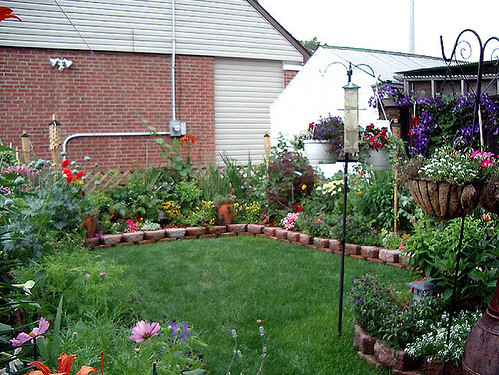
wideview2

Believe it or not, the garden is even fuller now as the plants have reached maturity. It’s beautiful and even more amazing that we did it ourselves.

You can do – get inspired!


Filed Under: Garden Maintenance, Garden Tips, In The Garden, Landscaping Tagged With: Alfalfa tea, Azaleas, backyard, Beds, Bee Balm, bloom, blooming, blooms, boxwood, bricks, building, Bulbs, compost, conserve water, dig, easy wall, fertilizer, flower, garden, garden bed, garden beds, garden design, gardening, gravel, grow, grow vegetables, growing, landscape, Landscaping, maintain, Maltese cross, mulch, Organic, peonies, perennial, Perennials, permanent raised garden bed, plant, planted, planting, plants, raised beds, raised garden bed, raised garden beds, rake, rectangular, rose, Rose of Sharon, screening, shovel, shrub, slugs, snow, spring, spring flower, temporary raised garden beds, tips, tomato, Topsoil, warm, weed, weeds

Spring garden maintenance complete and front boulevard planted

by Tricia

I’d like to thank everyone who stopped by to express their condolences on the loss of Chris’ cousin who was a very good friend of ours. I was supposed to be in another city and attending the visitations today, but I got really sick yesterday and our car broke down. So I’m home tonight … Chris can’t even drive back to pick me up as our car hasn’t been repaired yet. You can read a more detailed explanation of what happened on my main blog if you’d like.

So on to garden related stuff …

Last week, in preparation for Green Thumb Sunday, I went out into my yard and took pictures of most of the plants that were either coming up or that were blooming.

The garden looks very nice this year. Chris and I spent two days last weekend cleaning up the garden – trimming plants, getting rid of dead foliage, pruning roses and putting some compost that we picked up at a local park on Saturday thanks to Toronto’s Earth days’. (That’s a green recycling program where the city gives back the compost from the green garbage and other yard related wastes it’s picked up the year prior).

Needless to say my back took a beating and ached for a few days after I over did it in the garden. The effort payed off though as we had cooler temperatures and some rain last week and that really perked up the garden. Since the beds were tidier I could really see how my plants were progressing.

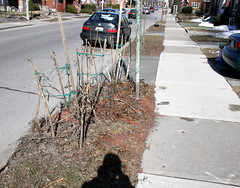
IMG_3325 Now you might remember a post I made about a month ago. It was the one where I showed photos of our front yard still covered in snow and photos of our planted boulevard that I had spent the day cleaning up.

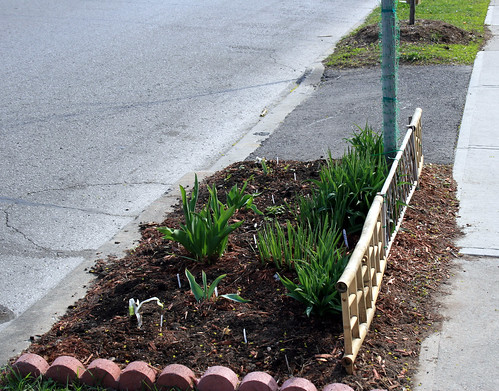
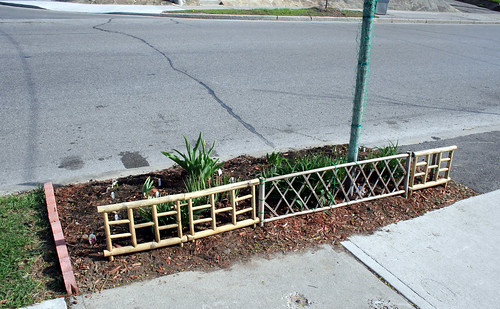
Well the front boulevard looks even nicer now! I planted some peonies that I’d purchased in early April as well as some Dahlias, Gay Feather and a few other plants to go along with the plants that have been growing there for a few years (iris, daylilies, malva, salvia, tulips) and we placed our short bamboo fence in front of it to finish off the look and protect the garden from the teens that like to stand outside my house talking before they go their separate ways after school.

This is what it looks like now:

IMG_3640

and from another angle:

IMG_3642

Just to give you a complete picture of how the front garden looks I’ll throw in a photo of the front flower beds too:

IMG_3637

Now most of my plants are in the backyard. In a day or two I’ll post some photos of how the backyard garden looks right now and maybe a few photos of what’s blooming.

I hope your gardens are doing well right now!

Filed Under: Family, Garden Buzz, Garden Maintenance, Home and Lifestyle, In The Garden, Spring Tasks Tagged With: April, backyard, backyard garden, bamboo, bamboo fence, bed, Beds, blog, bloom, blooming, boulevard, compost, condolences, cousin, dahlia, Dahlias, daylilies, earth days, effort, flower, flower bed, foliage, front yard, garbage, garden, Garden Maintenance, garden plants, gardens, gay feather, good friend, green, Green Thumb, Green Thumb Sunday, grow, growing, home, House, In The Garden, Iris, lilies, local park, maintenance, malva, peonies, photo, photos, picture, pictures, plant, planted, plants, preparation, pruning, pruning roses, purchase, purchased, rain, recycling, rose, roses, salvia, Saturday, sick, snow, spring, temperature, tidier, Toronto, tulip, tulips, visitations, yesterday

Everything in the garden is growing as it should!

by Tricia

Join Green Thumb Sunday
Join

It’s a beautiful day here in Toronto and I’m hoping to go outside shortly and get some gardening done. I still have to spring clean at least half of the back garden and all the roses need a trim.

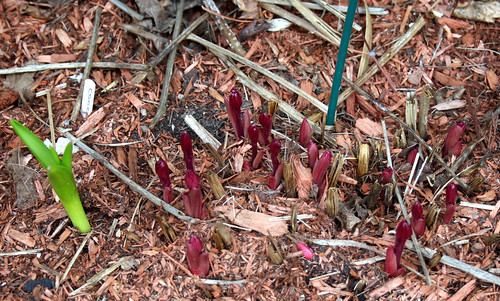
With all the snow cover we had over winter I don’t believe that I lost any plants, but I should have a final tally later today. Well if my tum stops hurting long enough for me to do some work that is. My Crohn’s is acting up bad this week.The other day I went outside and took some photos of the garden. We have five established Peonies and they’re all coming up:

IMG_3503

Soon we’ll have beautiful peony flowers.

I expect that shortly after that we might have our first hydrangea blooms. The hydrangea that I planted in our of our backyard garden beds last year appears to be thriving:

IMG_3494

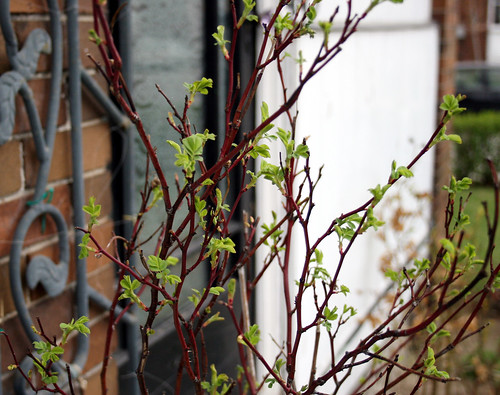
One of my favorite roses – Theresa Bugnet – is thriving in her planter by the front door:

IMG_3496

I can get away with growing Theresa in a planter since she’s hardy to zone 2 (I’m a USDA zone 5b or Canadian zone 6b). Most years we do put some burlap or another form of protection around her, but we didn’t this past winter. I’m happy that her planter had lots of snow around it for the coldest months.

I love this roses red branches. They stay red all year round, although they are most vibrant in the spring and fall.

How are your plants doing this week?

Gardeners, Plant and Nature lovers can join in every Sunday, visit As the Garden Grows for more information. GTS participants remember to check in at As the Garden Grows each week so that we’ll know you made a new post!

Filed Under: Garden Buzz, Garden Maintenance, Green Thumb Sunday, Photography, Recreation Tagged With: backyard, backyard garden, Beautiful, beautiful day, bloom, blooms, branch, bugnet, burlap, Canadian, canadian zone, Crohns, fall, flower, garden, garden bed, garden beds, garden roses, green leaves, grow, growing, GTS, hardy, hydrangea, hydrangea blooms, In The Garden, nature lovers, new leaves, peonies, peony, peony flowers, photo, plant, planted, planter, plants, protection, red branches, rose, roses, snow, snow cover, spring, tally, Theresa bugnet, Toronto, USDA, usda zone, week, winter, Zone5, zone5b, zone6b

  • « Previous Page
  • 1
  • 2
  • 3
  • 4
  • 5
  • Next Page »

Subscribe


Never miss a post
Subscribe to our RSS feed!
It's FREE! rss feed

Free Newsletter

As the Garden Grows
by Email - FREE!


Follow me on Twitter!

Suggested Sites

Eavestrough Cleaning Toronto

Categories

Recent Posts

  • Top Three Tips For Choosing The Right Patio Furniture For Your Home
  • The 4 Things To Know About Perennial Garden Design
  • Painful Plants: Five Houseplants That Can Cause Injury
  • An Outbreak Shouldn’t Mean A Break Out: 3 Insect Repellants Gentle Enough For Your Skin
  • 5 Ideas To Make Your Garden POP
  • 6 Simple Ways To Make Your Home Eco-Friendly
  • How To Redesign Your Garden To Make It Safe For Your Children
  • Starting A Career As A Professional Gardener
  • 6 Time Saving Tips For Gardening
  • Top Tips On Redesigning Your Garden For The Summer

What they’re Saying

  • Rodhe Stevens on Landscaping Tips On A Limited Budget
  • Edmund Wells on Benefits of using mulch on the garden
  • Surjith on An Outbreak Shouldn’t Mean A Break Out: 3 Insect Repellants Gentle Enough For Your Skin
  • Pamela on The 4 Things To Know About Perennial Garden Design
  • dog on The quality of your pet food is important

Pages

  • About
  • Archives
  • Become a Guest Blogger For As the Garden Grows
  • Blog
  • Categories
  • Contact
  • Disclosure
  • Do Follow Bloggers Blogroll
  • Green Thumb Sunday
  • I am Canadian Blogroll
  • Join GTS Meme
  • Links
  • Privacy Policy
  • Q & A
  • Toronto Bloggers Blogroll
  • What’s Growing

Search

My Garden

Member of
Garden Voices

Tags

backyard Beautiful bloom blooming blooms Bulbs cold Entertainment and Rec flower flowers garden garden bed garden beds gardener gardening green Green Thumb Green Thumb Sunday grow growing GTS home Home and Lifestyle House In The Garden leaves my garden photo photos plant plants purchase rain rose roses Shopping snow spring summer Toronto water weather winter Wordless Wednesday WW

Site Ratings


Visitors since 2006


Meta

  • Log in
  • Entries feed
  • Comments feed
  • WordPress.org

Connect with me

  • Facebook
  • Google Plus
  • Pintrest
  • Twitter
  • RSS

Copyright © 2026 · News Child Theme on Genesis Framework · WordPress · Log in