As the Garden Grows

What's blooming today?

  • Home
  • Blog
  • Archives
  • Links
  • About
  • Join GTS Meme
  • Guest Blogger
  • Contact

You are here: Home / Archives for pests

Basics of caring for house plants

by Tricia

Purchasing a house plant

Caring for houseplants must start the moment you buy them. Because many are native to hot or tropical climates, even the slightest exposure to cold can prove fatal. So, when you make your purchase at the garden centre or nursery, now that the cool weather has set in, ask for the plant to be put in a box or bag, or bring something yourself that you can protect the plant with for the journey home.

Most plants come with a label giving, often very basic, care advice. Some don’t even list the plants name which can be extremely frustrating for me. I try not to buy unlabeled plants but sometimes I just can’t resist and must have whatever plant I’m looking at. If I do purchase an unlabeled plant I try to search for plants that look like it on the internet, and I’m often successful in figuring it out.

Heat and Light

Read the label carefully on your plant before you purchase it. Do not buy a plant that needs bright light if you can’t give it a spot with bright light. It will only end in disappointment. When you get home, choose an appropriate spot for your new houseplant and leave it there. Like any other living thing it needs to settle and adjust to its surroundings. Occasionally a new plant will drop some leaves if your home is warmer or cooler than it’s used to. It will also do this if the lighting is different than where it had been before too. Avoid drafts or anywhere subject to dips in temperature, and steer clear of poorly lit areas. Lack of light can sometimes be fatal, but more often results in weak, leggy growth and a lack of flowering.

Flowering plants and those with variegated foliage generally need more light than plain green foliage plants. Cacti, succulents and carnivorous plants all need full sun, but they can be scorched by strong midday rays if they are grown right next to the glass of a south-facing window. Cunningly placed mirrors will come in useful to provide orchids with the bright indirect light they require.

Humidity

Humidity is very important to the health of most houseplants. In the winter our heating systems keep temperatures up, but also dry out the air – For many plants you will need to mist them several times each week in order to help replace the moisture in the air. You might want to purchase a humidifier to add moisture to the air in your house. There are large ones that can humidify the majority of a house. Other smaller ones are more suitable for humidifying a single room. If you have a room or two that you keep the majority of your plants in during the winter a small humidifier might be suitable for you.

Watering

The majority of house plants need to have slightly damp soil at all times, but this does not mean that you should water it every day. Over watering is the leading cause of houseplant death. It should be neither soggy nor dry. After watering, check that the compost is damp all the way through, with no surplus water, which you must ensure is drained away. Tap water is fine for most plants; it contains chalk that the plants need. However, orchids, carnivorous plants, azaleas and gardenias hate chalk, so use rain water or put tap water through a filter jug first, then boil it in the kettle, leaving it to cool before use.

Feeding

The most advisable method is to mix a long lasting, slow-release feed into the compost when potting or re-potting. Specialist plants, such as cacti and succulents, orchids and bromeliads, need very little food, while carnivorous plants do not need feeding because they catch their own grub.

Pests

All houseplants, no matter how well cared for, are susceptible to pests. Some of them are microscopic, so if your houseplant doesn’t look as healthy as it should, give it the once over with a magnifying glass. Look in leaf axils for mealybug, which looks like tufts of white fluff, and check on stems for tiny limpet-like scale insect. Inspect around young shoots and buds for greenfly.

You might not spot red spider mites because they are tiny to the point of being almost invisible. But you may well spot the damage they do as they suck the sap and cause premature leaf-drop, leaving groups of tiny pale dots on young leaves.

Compost can become home to jumping fleas called springtails (especially in over-watered peat-based composts) and vine weevil, whose grubs devour roots, tubers and bulbs. Spraying with an appropriate systemic treatment from your garden centre should eradicate nasties. Nematodes – minute parasites that kill the bugs – are also very effective.

When I notice pests on my plants such as spider mites or white fly I spray the plants with a mix of water and one or two drops of dish washing detergent. This soapy water mix often does wonders. I very rarely resort to using pesticides.


Filed Under: Home and Lifestyle, House Plants, In The Garden, pests, Plant health, Recreation, Shopping Tagged With: Entertainment and Rec, Home and Lifestyle, house plant care, house plant tips, House Plants, In The Garden, pests, Plant health, Shopping

Gardening tips for you! Part 1

by Tricia

Organic Gardening Tips

1. Mulch your flower beds and trees with 3″ of organic material – it conserves water, adds humus and nutrients, and discourages weeds. It gives your beds a nice, finished appearance.

2. Mulch acid-loving plants with a thick layer of pine needles each fall. As the needles decompose, they will deposit their acid in the soil.

3. The most important step in pest management is to maintain healthy soil. It produces healthy plants, which are better able to withstand disease and insect damage.

4. Aphids? Spray infested stems, leaves, and buds with a very dilute soapy water, then clear water. It works even on the heaviest infestation.

5. Compost improves soil structure, texture, and aeration, and increases the soil’s water holding capacity. It also promotes soil fertility and stimulates healthy root development.

6. Look for natural and organic alternatives to chemical fertilizers, such as the use of compost. Our use of inorganic fertilizer is causing a toxic buildup of chemicals in our soil and drinking water.

7. When buying plants for your landscape, select well-adapted plant types for your soil, temperature range, and sun or shade exposure.

8. Landscaping your yard is the only home improvement that can return up to 200% of your original investment.

9. Plant trees! They increase in value as they grow and save energy and money by shading our houses in the summer, and letting the sun shine through for warmth in the winter.

10. Think of trees and their locations as the walls and roofs of our outdoor rooms, when you are planning their locations and sizes.

11. Grass won’t grow? Find an appropriate ground cover for the exposed earth and fill the problem space, creating an interesting bed shape.

12. Plant vines on walls, fences, and overhead structures for quick shade, vertical softening, and colorful flower displays.

13. If gourmet cooking is in your plans, organically grown herbs make wonderful landscape plants. They flavor foods, provide medicinal properties, and offer up fragrances. And most thrive on neglect.

14. Shade gardens are low maintenance – they require less watering, slower growth, and fewer weeds to fight.

15. Everyone loves flowers! Annuals are useful for a splash of one-season color. But since replacing them each year is expensive, concentrate them in just a few spots.

16. There is no need to work the soil deeply when adding compost or soil amendments. Eighty five percent of a plant’s roots are found in the top 6″ of soil.

17. The best organic matter for bed preparation is compost made from anything that was once alive, for example leaves, kitchen waste, and grass clippings.

18. Dig an ugly hole when planting a tree or shrub. A hole with “glazed” sides from a shovel will restrict root penetration into the surrounding soil.

19. Planting from plastic containers? Carefully remove the plant and tear the outside roots if they have grown solidly against the container.

20. Think of mulching as “maintaining the forest floor”: add 1″ to 3″ of compost or mulch to planting beds each year.

21. Natural fertilizers, compost and organic materials encourage native earthworms. Earthworms are nature’s tillers and soil conditioners, and manufacture great fertilizer.

22. Bare soil should not be visible around a new planting. Always cover with a layer of mulch, any coarse-textured, loose organic material.

23. Think “biodiversity”. Using many different kinds of plants encourage many different kinds of beneficial insects to take up residence in your yard.

24. Organic pest control is a comprehensive approach instead of a chemical approach. Create a healthy biodiversity so that the insects and microbes will control themselves. Using natural products and building healthy soil is the best long-term treatment for pests.

25. Weeds? Spot-spray with common full-strength household vinegar, on a sunny day. It’s an organic weed killer that’s safe for you and the environment.

Stay tuned for part two!

Filed Under: Garden Maintenance, Garden Tips, Home and Lifestyle, Organic, pests Tagged With: Garden Maintenance, Garden Tips, Home and Lifestyle, Organic, pests

Creatures of the dark

by Tricia

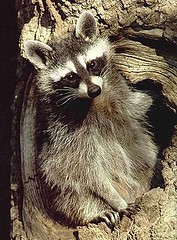
RaccoonMeet my little friend – isn’t he cute?

Right, uh huh …

It seems that this little creature – or one just like him, and I are destined to meet.

I tend to water in the evenings. Yes I know that isn’t always the best thing for garden plants but I really have had few problems develop by doing so. I water in the evening because I live next to two older ladies, uh, elderly ladies and they each come outside and water twice a day.

One in particular tends to follow me around, or worse she waits until I’m as far away from her as I can possibly be, and then she asks me a question or comments on the weather or some such thing.

“Huh, what? I can’t hear you?”

So I stop what I’m doing and walk over to where she is – usually on her porch – and get her to repeat whatever she had said. After a short conversation I try to get back to work, only to be interrupted several times. What should be a half hour job turns into a two hour job because of these ladies and other adjoining neighbors.

Having explained the background, hopefully you can see why I’ve taken to watering in the late evening, and even after dark?

My garden is small, but it’s full of plants, and as a result it can take more than two hours to water it adequately if I only water every second or third day. Most of the plants are in the backyard, therefore most of my time is spent in the back, in the semi-dark, and with the possibility of meeting up with Mr. and or Mrs. Raccoon. Oh and their kids too!

And that is what has been happening lately!

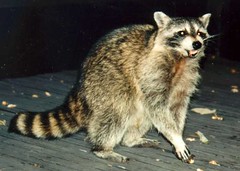
We have a raccoon that seems to think that the backyard is his or hers. It hangs out on the fence between our house and our other neighbors and watches me in the yard. I’m not all that happy with this situation. It’s not always there … sometimes it shows up after I’ve been watering for a while, like last night.

tea-party7 I heard scritch scritch scritch and looked over, and there on top of my neighbors covered patio was the raccoon. He or she was just about to climb onto my fence, and from there who knows where it would have gone. I turned quickly, hose in hand and dialed the nozzle to Jet and sent a stream flying at him! You should have seen him run!

Victory was mine! I felt like one of Charlies Angels with that move. My trusty water hose and nozzle saved the day.

Naturally after that adrenaline rush I was nervous. So much for my victory. It might come back!

So what did I do? No I didn’t stop watering. My garden was thirsty, but I do have to say, it probably didn’t get as much as it would have had the raccoon not made my heart pitter patter. I stood in my yard near the patio, not too far from the porch and safety inside the enclosed back room, and watered from there. I put the hose on a strong but wide stream and hit all the plants in the back corners and back borders. The plants closer to me got a little more accurate watering.

So how do I get the raccoons to stop hanging out in my yard? It’s not like there’s any garbage that they can get into in the back. They dig in a few of my plants now and then but otherwise don’t really cause any damage. Not so bad really … it’s just that I like being outdoors around the same time that they seem to come out and I don’t like meeting them face to face.

They’ve never been around this much. Before they used to just walk through our yard and move onto one of our neighbors yards – used ours like a freeway I guess. But I’ve been sick this year and haven’t been out as much – especially after dark, so I think this has given them a chance to stop and look around and say “Hey, this is a nice place to hang out”.

What’s your thoughts on raccoons hanging out in the backyard? Should I just stop going out there after dark and let them win? Unfortunately, that would mean braving my neighbors attention and everything taking two or three times longer than it should take to get done. Nope … I gotta figure out a way to scare the pesky raccoons away, because my neighbors are worse! Help!

Filed Under: Home and Lifestyle, pests, Pets and Wildlife, The neighborhood Tagged With: backyard, creature, damage, dark, encounter, fence, garden, hang out, hose, jet, meet, neighbor, pest, pests, Raccoon, scared, Toronto, watering

  • « Previous Page
  • 1
  • …
  • 3
  • 4
  • 5

Subscribe


Never miss a post
Subscribe to our RSS feed!
It's FREE! rss feed

Free Newsletter

As the Garden Grows
by Email - FREE!


Follow me on Twitter!

Suggested Sites

Eavestrough Cleaning Toronto

Categories

Recent Posts

  • Top Three Tips For Choosing The Right Patio Furniture For Your Home
  • The 4 Things To Know About Perennial Garden Design
  • Painful Plants: Five Houseplants That Can Cause Injury
  • An Outbreak Shouldn’t Mean A Break Out: 3 Insect Repellants Gentle Enough For Your Skin
  • 5 Ideas To Make Your Garden POP
  • 6 Simple Ways To Make Your Home Eco-Friendly
  • How To Redesign Your Garden To Make It Safe For Your Children
  • Starting A Career As A Professional Gardener
  • 6 Time Saving Tips For Gardening
  • Top Tips On Redesigning Your Garden For The Summer

What they’re Saying

  • Rodhe Stevens on Landscaping Tips On A Limited Budget
  • Edmund Wells on Benefits of using mulch on the garden
  • Surjith on An Outbreak Shouldn’t Mean A Break Out: 3 Insect Repellants Gentle Enough For Your Skin
  • Pamela on The 4 Things To Know About Perennial Garden Design
  • dog on The quality of your pet food is important

Pages

  • About
  • Archives
  • Become a Guest Blogger For As the Garden Grows
  • Blog
  • Categories
  • Contact
  • Disclosure
  • Do Follow Bloggers Blogroll
  • Green Thumb Sunday
  • I am Canadian Blogroll
  • Join GTS Meme
  • Links
  • Privacy Policy
  • Q & A
  • Toronto Bloggers Blogroll
  • What’s Growing

Search

My Garden

Member of
Garden Voices

Tags

backyard Beautiful bloom blooming blooms Bulbs cold Entertainment and Rec flower flowers garden garden bed garden beds gardener gardening green Green Thumb Green Thumb Sunday grow growing GTS home Home and Lifestyle House In The Garden leaves my garden photo photos plant plants purchase rain rose roses Shopping snow spring summer Toronto water weather winter Wordless Wednesday WW

Site Ratings


Visitors since 2006


Meta

  • Log in
  • Entries feed
  • Comments feed
  • WordPress.org

Connect with me

  • Facebook
  • Google Plus
  • Pintrest
  • Twitter
  • RSS

Copyright © 2026 · News Child Theme on Genesis Framework · WordPress · Log in