As the Garden Grows

What's blooming today?

  • Home
  • Blog
  • Archives
  • Links
  • About
  • Join GTS Meme
  • Guest Blogger
  • Contact

You are here: Home / Archives for pruning

Growing Hydrangeas

by Tricia

Hydrangeas are a favorite shrub of many gardeners because of their eye catching blooms.

The majority of Hydrangeas originate from Asia and North America.

Hydrangea in October Hydrangea Macrophyllia (Mophead and Lacecap) are common in the Atlantic border states. They have big leaves, and their blooms come in colors of blue, lavender, pink and white. Other common hydrangeas are Paniculata or panicle hydrangea (PeeGee and family), Hydrangea arborescens (Annabelle) and Hydrangea quercifolia (Oakleaf). There’s also Hydrangea anomola-petiolaris (climbing hydrangea). You can find this last hydrangea growing on the northern side of buildings. Depending upon which variety you purchase, you could have blooms from Summer to Autumn.

If you’d like to have a garden that almost always has something in bloom, plant hydrangea near rhododendrons, azaleas and or forsythia and you’ll have blooms and color from spring through to fall. I also have my hydrangea growing near a lovely clump of peonies.

Some species of Hydrangea, the Macrophylia in particular, will bloom either pink or blue depending upon the PH of your soil. Acidic soil will produce blue or violet flowers, while a slightly alkaline to neutral soil will give you pink or white blossoms. Hydrangea blooms can range from 5 to 10 inches in diameter depending upon the species.

How to grow Hydrangeas:

  • Hydrangeas prefer light to medium shade, although large leafed hydrangeas seem to be able to handle full sun if they are given enough water.
  • Hydrangea’s need moist well draining soil.
  • Hydrangeas don’t require a lot of fertilizer. A good feeding in the spring is often sufficient. Compost or manure mixed into the soil near the plant will often be sufficient. You might also want to try Liquid Seaweed extract. It’s an organic fertilizer.

Pruning:

Big leaved Hydrangeas flower on old wood (previous seasons growth) so if you must prune only prune about a third of the weakest growth in early spring. Otherwise, prune immediately after your hydrangea has flowered.

You can visit this site to learn more about the proper care of your species of hydrangea. You might also want to visit the Hydrangea Forum at GardenWeb and talk with other hydrangea owners and gardeners.


Filed Under: Garden Tips, In The Garden, Organic, Perennials, Plant Profiles Tagged With: acidic_soil, Alkaline_soil, Annabelle, autumn, azalea, big_leaf, blooms, Blue, Blue_blossoms, climbing_hydrangea, compost, fertilize, forsythia, garden, grow, growing_hydrangea, Hydrangeas, hydrangea_anomola_petiolaris, hydrangea_arborescens, hydrangea_Macrophyllia, hydrangea_quercifolia, lacecap, lavender, manure, moist_soil, mophead, neutral_soil, Oakleaf_hydrangea, old_wood, Organic, panicle_hydrangea, Paniculata, peegee, peonies, pink, pink_blossoms, popular_hydrangea, prune, pruning, rhododendrons, seaweed, soil_ph, species, summer, white

Helpful tips to avoid injuring yourself in the garden

by Tricia

Now that it’s July, you’ve probably finished most of your major gardening work for the summer, unless of course you are in the process of doing some landscaping. However, it’s always a good idea to use proper body mechanics while in the garden to avoid injury to your back or other joints.

Autumn will arrive soon enough and some of us will have more planting to do and other garden maintenance to prepare for winter so here’s some tips for you to help you avoid injuring yourself when you’re just trying to get a little gardening done.

Protect your joints

If you will be kneeling while working in the garden use knee pads, a knee cushion or a kneeler seat to protect your knee joints. Also remember to use tools with padded handles or easy spring loaded grips in order to minimize stiffness in your hands.

Take care when lifting!

We just finished mulching our garden – yes we were a little behind as usual! bags of garden mulch, soil and other garden supplies are heavy and can be difficult to carry. Use a wheelbarrow to move items from your car and place them close to the area where you will be using them. Another great idea is to open the bag, dumping the contents in the wheelbarrow or close to where you’ll be using it and then use a shovel to move small portions of the material to the garden.

Plan your tasks and conserve your energy

Just like in nursing and many other jobs it’s best to prepare everything that you’ll need before you start a task. Gather up all the gardening equiptment that you’ll need in a basket or container and carry it to the yard. This will save you trips and perhaps some time searching for tools once your already working in the garden.

I tend to bend or squat while working in the garden and I almost always end up with a sore back. Sit or kneel in one area and complete your gardening task – weeding, planting, pruning before moving to another area of the garden. This will also help conserve your energy and kneeling or using a kneeler seat will help your back too.

Moving heavy plants and other heavy objects

When it comes to landscaping your yard with new trees, shrubs or plants – perhaps large plants or ones in containers always try to move them with a wheelbarrow.

Tip the wheelbarrow forward as close to the plant as possible. Then gently rotate the pot or ball of plant onto the wheelbarrow. Slowly bring the wheelbarrow into standing position (keep your knees bend while you do this to easy your back). Carefully move the plant to it’s destination and reverse the process to get the plant off the wheelbarrow.

If you were thinking ahead and already dug a hole for the plant you might be able to move it right off the wheelbarrow and into it’s new hole!

If you have to lift a heavy item squat down, get a good grip and use your legs to lift. Don’t use your back or you’ll risk injuring your back. If there is someone else around to help you move heavy plants don’t hesitate to ask for help.

Work on one project at a time

I’m guilty of starting several projects at once and then feeling compelled to finish all of them before I stop gardening for the day. Don’t be like me – start one project at a time and finish it before moving on to another project whether it’s planting your annuals or planting seeds or seedlings or digging holes for your new roses. One job at a time.

Take a moment to decide which task needs to be given priority. Perhaps one task will take a lot longer than an other or your plants are desperately in need of care. Decide which job needs to be done first and start it. This can keep you from overdoing it and you might feel more satisfied with yourself when you complete the task rather than having several unfinished jobs on the go.

Listen to your body!

Yet another rule that I’m guilty of not following. I push myself in the garden even when I’m not feeling well or when my back is in full on spasms. I just will not go inside until I’m finished whatever I started. (I am getting a little better at listening this year as I try to plan smaller tasks).

Your body will tell you when it’s had enough. Listen to it. Muscles aching? Feeling tired? Sit back and take a break or stop your work for the day.

If you drink water while working in the garden you’ll remain well hydrated and well hydrated muscles will cramp less.

Don’t forget to stretch once you are done working in the garden. Stretching will help reduce muscle soreness and keep your more flexible. Once inside take a shower or a long soak in the bath tub to ease those muscles. Your body will thank you for it!

Filed Under: Garden Maintenance, Garden Tips, Health, Health and Fitness, Home and Lifestyle, In The Garden Tagged With: aching, aching back, annual, Annuals, autumn, bath, body, care, Container, cushion, dig, digging, drink, energy, equiptment, garden, garden injuries, garden injury, Garden Maintenance, gardening, Gather, hole, jobs, July, knee, kneeler, Landscaping, lift properly, lift with legs, lifting, maintenance, mulch, muscle, muscles, plan, plant, planting, plants, prepare, prepare tasks, process, project, projects, Protect, pruning, rose, roses, seat, seed, seedling, seedlings, seeds, shovel, shower, shrub, shrubs, soil, sore back, spring, squat, summer, task, tips, tired, tree, trees, use wheelbarrow, water, weed, weeding

Spring garden maintenance complete and front boulevard planted

by Tricia

I’d like to thank everyone who stopped by to express their condolences on the loss of Chris’ cousin who was a very good friend of ours. I was supposed to be in another city and attending the visitations today, but I got really sick yesterday and our car broke down. So I’m home tonight … Chris can’t even drive back to pick me up as our car hasn’t been repaired yet. You can read a more detailed explanation of what happened on my main blog if you’d like.

So on to garden related stuff …

Last week, in preparation for Green Thumb Sunday, I went out into my yard and took pictures of most of the plants that were either coming up or that were blooming.

The garden looks very nice this year. Chris and I spent two days last weekend cleaning up the garden – trimming plants, getting rid of dead foliage, pruning roses and putting some compost that we picked up at a local park on Saturday thanks to Toronto’s Earth days’. (That’s a green recycling program where the city gives back the compost from the green garbage and other yard related wastes it’s picked up the year prior).

Needless to say my back took a beating and ached for a few days after I over did it in the garden. The effort payed off though as we had cooler temperatures and some rain last week and that really perked up the garden. Since the beds were tidier I could really see how my plants were progressing.

IMG_3325 Now you might remember a post I made about a month ago. It was the one where I showed photos of our front yard still covered in snow and photos of our planted boulevard that I had spent the day cleaning up.

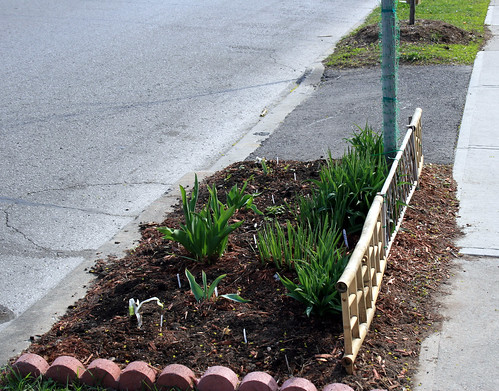
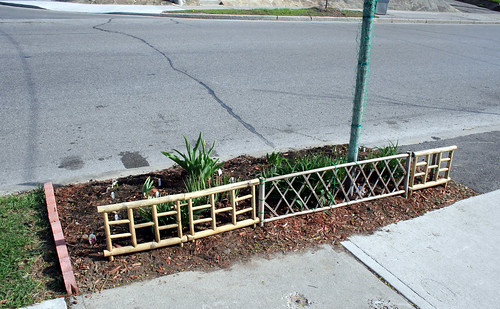
Well the front boulevard looks even nicer now! I planted some peonies that I’d purchased in early April as well as some Dahlias, Gay Feather and a few other plants to go along with the plants that have been growing there for a few years (iris, daylilies, malva, salvia, tulips) and we placed our short bamboo fence in front of it to finish off the look and protect the garden from the teens that like to stand outside my house talking before they go their separate ways after school.

This is what it looks like now:

IMG_3640

and from another angle:

IMG_3642

Just to give you a complete picture of how the front garden looks I’ll throw in a photo of the front flower beds too:

IMG_3637

Now most of my plants are in the backyard. In a day or two I’ll post some photos of how the backyard garden looks right now and maybe a few photos of what’s blooming.

I hope your gardens are doing well right now!

Filed Under: Family, Garden Buzz, Garden Maintenance, Home and Lifestyle, In The Garden, Spring Tasks Tagged With: April, backyard, backyard garden, bamboo, bamboo fence, bed, Beds, blog, bloom, blooming, boulevard, compost, condolences, cousin, dahlia, Dahlias, daylilies, earth days, effort, flower, flower bed, foliage, front yard, garbage, garden, Garden Maintenance, garden plants, gardens, gay feather, good friend, green, Green Thumb, Green Thumb Sunday, grow, growing, home, House, In The Garden, Iris, lilies, local park, maintenance, malva, peonies, photo, photos, picture, pictures, plant, planted, plants, preparation, pruning, pruning roses, purchase, purchased, rain, recycling, rose, roses, salvia, Saturday, sick, snow, spring, temperature, tidier, Toronto, tulip, tulips, visitations, yesterday

  • « Previous Page
  • 1
  • 2
  • 3
  • 4
  • 5
  • …
  • 8
  • Next Page »

Subscribe


Never miss a post
Subscribe to our RSS feed!
It's FREE! rss feed

Free Newsletter

As the Garden Grows
by Email - FREE!


Follow me on Twitter!

Suggested Sites

Eavestrough Cleaning Toronto

Categories

Recent Posts

  • Top Three Tips For Choosing The Right Patio Furniture For Your Home
  • The 4 Things To Know About Perennial Garden Design
  • Painful Plants: Five Houseplants That Can Cause Injury
  • An Outbreak Shouldn’t Mean A Break Out: 3 Insect Repellants Gentle Enough For Your Skin
  • 5 Ideas To Make Your Garden POP
  • 6 Simple Ways To Make Your Home Eco-Friendly
  • How To Redesign Your Garden To Make It Safe For Your Children
  • Starting A Career As A Professional Gardener
  • 6 Time Saving Tips For Gardening
  • Top Tips On Redesigning Your Garden For The Summer

What they’re Saying

  • Rodhe Stevens on Landscaping Tips On A Limited Budget
  • Edmund Wells on Benefits of using mulch on the garden
  • Surjith on An Outbreak Shouldn’t Mean A Break Out: 3 Insect Repellants Gentle Enough For Your Skin
  • Pamela on The 4 Things To Know About Perennial Garden Design
  • dog on The quality of your pet food is important

Pages

  • About
  • Archives
  • Become a Guest Blogger For As the Garden Grows
  • Blog
  • Categories
  • Contact
  • Disclosure
  • Do Follow Bloggers Blogroll
  • Green Thumb Sunday
  • I am Canadian Blogroll
  • Join GTS Meme
  • Links
  • Privacy Policy
  • Q & A
  • Toronto Bloggers Blogroll
  • What’s Growing

Search

My Garden

Member of
Garden Voices

Tags

backyard Beautiful bloom blooming blooms Bulbs cold Entertainment and Rec flower flowers garden garden bed garden beds gardener gardening green Green Thumb Green Thumb Sunday grow growing GTS home Home and Lifestyle House In The Garden leaves my garden photo photos plant plants purchase rain rose roses Shopping snow spring summer Toronto water weather winter Wordless Wednesday WW

Site Ratings


Visitors since 2006


Meta

  • Log in
  • Entries feed
  • Comments feed
  • WordPress.org

Connect with me

  • Facebook
  • Google Plus
  • Pintrest
  • Twitter
  • RSS

Copyright © 2026 · News Child Theme on Genesis Framework · WordPress · Log in