As the Garden Grows

What's blooming today?

  • Home
  • Blog
  • Archives
  • Links
  • About
  • Join GTS Meme
  • Guest Blogger
  • Contact

You are here: Home / Archives for seeds

Does your garden contain medicinal plants and herbs?

by Tricia

I’ve always found it fascinating how most herbs and a number of plants have been used throughout history to cure what ails us.

I actually have a number of books about herbs and their medicinal uses. I should dig them out and write about some of the more commonly found herbs from time to time. As I said, I’ve always had an interest in this, just as when I find that plants that we’ve always thought of as being ornamental turn out to actually be edible too.

Well, until I begin writing some articles about herbs you might be interested in visiting a site that I found that’s called Natural Herbalism. This site has articles that discuss various herbs, their uses, chemistry, the history of herbs, how to grow them, how to prepare them, herbal recipes and herbs that have specific uses for men, women, children and even pets.

It’s quite an informative site.

Take for example the article about Bayberry. Most of us think of Bayberry as an ornamental shrub, but it actually has medicinal properties. Did you know that you can make a tea by boiling the bark and root and that when the tea is drank it has stimulant properties that are effective against diarrhea. The root bark also contains a natural antibiotic and can be used to treat skin wounds or even used in a mouthwash to freshen breath and fight gum disorders such as gingivitis.

Many of us grow celery in the garden, and if we don’t grow it we often buy it in the grocery store. Did you know that celery is a diuretic and that oils from the seeds were thought in the past to relive the pain of arthritis and rheumatism. Celery has also been used to treat anxiety disorders and insomnia.

If you are curious about the medicinal uses of some of the other plants that you might grow in your garden visit Natural Herbalism and look them up. I found the articles quite interesting.


Filed Under: Garden Tips, Health, Health and Fitness, Herbs, Hobbies and Crafts, Plant History, Recreation Tagged With: articles, garden, grow, herb, herbal, herbal treatments, herbal uses, Herbs, history of herbs, infusions, interested, medicinal herbs, oil, plant, plants, recipes, seeds, shrub, skin, tea, topical

The birds are pigs!

by Tricia

My husband filled our two bird feeders on Wednesday evening. Both were empty as of sunset Friday.

I wish I had a photo to show you.

Once the feeders were filled the birds filled our yard. They were in the Rose of Sharon tree and sitting atop the tall roses. They were on the interlocking stones that we made our raised flower beds with. They were everywhere!

One of the bird feeders is quite large. It’s about a foot and a half tall and five or six inches in diameter. It holds a lot of seeds. Two days … just two days and it’s empty!

The other bird feeder is also about a foot and a half tall but it’s only two inches in diameter. It suits smaller seeds, the more expensive seeds like neger seeds. It’s empty too.

These birds are going to eat us out of house and home!

Filed Under: Home and Lifestyle, Pets and Wildlife, Recreation Tagged With: Beds, bird, bird feeder, bird seed, birds, birds eating seeds, flock of birds, flower, flower bed, Friday, home, hot, House, large, photo, Rose of Sharon, roses, seed, seeds

Butterfly Milkweed

by Tricia

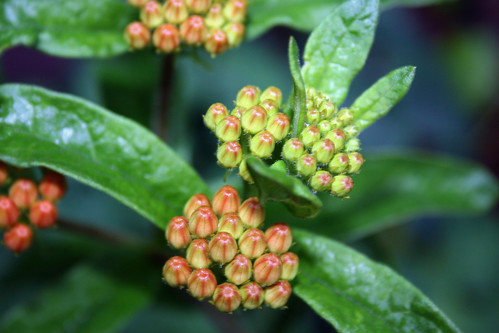
I noticed that my hybrid Butterfly Milkweed – Asclepias tuberosa – had started to form buds. I had noticed the developing buds about a week and a half ago as I took a walk in my garden checking on all the plants as I went.

Luckily I had my camera at hand and I was able to take a few nice photos of the developing buds:

Milkweed tuberosa buds

Butterfly weed is a herbaceous perennial that grows up to two feet in height. It dies back each winter and then re-sprouts in late spring from underground tubers.

Milkweed is slow to come up each spring. If you grow any form of milkweed you should always take care to mark the spot that it grows in each fall or at the very least try to remember where it was as it’s slow to make an appearance and you wouldn’t want to dig in the area and damage the plants roots.

Flower clusters of brilliant orange or red appear in midsummer. Once the blooms are spent attractive green pods develop. When the pods mature they open to release silky parachutes that drift away on autumn winds. This is how the butterfly weed propagates as the seeds of the butterfly weed are on these silky floating strands.

Each cluster has many flowers, several of these flowers will have an inner whorl of petals that are called the corolla and an outer whorl of sepals that is called the calyx. Butterfly Milkweed is a little different from other species of milkweed in that the sap is not milky nor are the leaves opposite.

Butterfly weed is a naturally occurring plant that grows east of the Rockies in North America. It’s preference is for well drained sandy soils.

If you’d like to grow these lovely flowers plant them in full sun to very light shade. Butterfly weed is hardy to USDA zones 4 – 10.

If you’d like to encourage butterflies to visit your garden this flower is a must as the caterpillars of Monarch butterflies feed only on milkweed foliage. Adult butterflies of many species enjoy sipping the nectar from the butterfly weeds blossoms.

I grow a few types of milkweed in my garden and every time I gaze out my kitchen window I see butterflies visiting many of my plants.

Filed Under: Blooming today, Garden Buzz, Perennials, Plant Profiles Tagged With: Asclepias tuberosa, bloom, blooms, buds, butterflies, butterfly, Butterfly weed, camera, caterpillars, flower, flowers, garden, green pod, leaves, milkweed, Monarch butterfly, my garden, North America, perennial, photo, plants, seeds, spring, summer bloom

  • « Previous Page
  • 1
  • …
  • 3
  • 4
  • 5
  • 6
  • 7
  • 8
  • Next Page »

Subscribe


Never miss a post
Subscribe to our RSS feed!
It's FREE! rss feed

Free Newsletter

As the Garden Grows
by Email - FREE!


Follow me on Twitter!

Suggested Sites

Eavestrough Cleaning Toronto

Categories

Recent Posts

  • Top Three Tips For Choosing The Right Patio Furniture For Your Home
  • The 4 Things To Know About Perennial Garden Design
  • Painful Plants: Five Houseplants That Can Cause Injury
  • An Outbreak Shouldn’t Mean A Break Out: 3 Insect Repellants Gentle Enough For Your Skin
  • 5 Ideas To Make Your Garden POP
  • 6 Simple Ways To Make Your Home Eco-Friendly
  • How To Redesign Your Garden To Make It Safe For Your Children
  • Starting A Career As A Professional Gardener
  • 6 Time Saving Tips For Gardening
  • Top Tips On Redesigning Your Garden For The Summer

What they’re Saying

  • Rodhe Stevens on Landscaping Tips On A Limited Budget
  • Edmund Wells on Benefits of using mulch on the garden
  • Surjith on An Outbreak Shouldn’t Mean A Break Out: 3 Insect Repellants Gentle Enough For Your Skin
  • Pamela on The 4 Things To Know About Perennial Garden Design
  • dog on The quality of your pet food is important

Pages

  • About
  • Archives
  • Become a Guest Blogger For As the Garden Grows
  • Blog
  • Categories
  • Contact
  • Disclosure
  • Do Follow Bloggers Blogroll
  • Green Thumb Sunday
  • I am Canadian Blogroll
  • Join GTS Meme
  • Links
  • Privacy Policy
  • Q & A
  • Toronto Bloggers Blogroll
  • What’s Growing

Search

My Garden

Member of
Garden Voices

Tags

backyard Beautiful bloom blooming blooms Bulbs cold Entertainment and Rec flower flowers garden garden bed garden beds gardener gardening green Green Thumb Green Thumb Sunday grow growing GTS home Home and Lifestyle House In The Garden leaves my garden photo photos plant plants purchase rain rose roses Shopping snow spring summer Toronto water weather winter Wordless Wednesday WW

Site Ratings


Visitors since 2006


Meta

  • Log in
  • Entries feed
  • Comments feed
  • WordPress.org

Connect with me

  • Facebook
  • Google Plus
  • Pintrest
  • Twitter
  • RSS

Copyright © 2026 · News Child Theme on Genesis Framework · WordPress · Log in