As the Garden Grows

What's blooming today?

  • Home
  • Blog
  • Archives
  • Links
  • About
  • Join GTS Meme
  • Guest Blogger
  • Contact

You are here: Home / Archives for tree

Helpful gardening tips

by Tricia

Here’s a a few handy gardening tips that you might find useful, particularly if you are new to gardening:

1. Do your homework. Visit public gardens, read magazines and books.

2. Amend the soil for success. Lighten clay loam soil with compost.

3. Design for surprise: place some curves in your design or interesting nooks that visitors to your garden have to enter to see what magically beautiful plant you have growing there.

4. If you inherit a garden: Wait a season to see what comes up. You may destroy something you want to save. We were lucky to have purchased our house in June. I was able to watch what grew that year and used the following winter to plan out my new garden.

5. Smart plant picks. Purchase plants that are drought tolerant or said to be easy to care for if you don’t want to spend too much time in the garden watering and pruning.

The Well-Designed Mixed Garden: Building Beds and Borders with Trees, Shrubs, Perennials, Annuals, and Bulbs

6. Mass appeal. Plant large areas with one flower in one color, such as purple phlox. You can always tell who’s a beginning gardener because they plant one of each plant. masses of three to five or more plants planted together in the garden bed make a much more satisfying display.

7. A wild prairie garden can be work until it gets established. If you want a natural looking garden find out what plants are native to your area and use them abundantly.

8. Japanese-style garden do’s. For dimension, build hills and cover them with moss.

9. Time-saving trick. Plant hosta around the base of trees and you won’t have to trim around them.

10. Get the kids to help. Most kids like helping in the garden. You may still end up doing more work than they do, but it’s a way to spend some quality time with them and also a way to get them outside.

11. Sure-fire critter repeller – build a fence with a gate if you want to keep out skunks, who don’t climb but can dig just fine) and other pets that might frequent your garden. Gates and fences don’t stop all critters but a fence might deter a few of them.

The Organic Gardener’s Handbook of Natural Insect and Disease Control: A Complete Problem-Solving Guide to Keeping Your Garden and Yard Healthy Without Chemicals



Filed Under: Books, Garden Books, Garden Buzz, Garden Maintenance, Garden Tips, Home and Garden, Landscaping, Organic, Recreation, Shopping Tagged With: Annuals, Beautiful, Beds, book, Bulbs, compost, drought, Entertainment and Rec, flower, garden, garden advice, garden bed, Garden Tips, gardener, gardening, gardens, growing, Health, home, Hosta, insect, perennial, Perennials, plant, planted, plants, pruning, purchase, Shopping, shrub, soil, style, tips, tree, water, watering

Annuals and Perennials

by Tricia

What are Annual, Perennial and Biennial plants?

The difference between annuals, biennials and perennials relates to the life cycles of the plants.

Annuals grow from seed to full maturity within one growing season. Marigolds, ageratums, and zinnias are typical annuals. They flower, set seed and die, all within a single year.

Biennials such as Canterbury bells and some foxgloves, complete their life cycles over two years, sometimes producing a few flowers in the first season, but most often just making foliage growth and establishing their root systems.

Perennials live longer than two seasons and may outlive many shrubs. In fact, strictly speaking, shrubs and trees are perennials, but when gardeners talk of perennials they generally mean plants that don’t develop permanent woody stems.

Perennials occur in several types. Some, such as Acanthus, are evergreen and don’t have a period of total dormancy, though few flower continually except in very mild climates.

Herbaceous perennials – those most common in temperate climate gardens – usually have a period of dormancy when they die back to a permanent rootstock. Most commonly this is during winter, but plants from hot dry areas many be dormant in summer or during periods of very low rainfall.

Some herbaceous perennials have developed the ability to use their roots or stems as food storage organs to enable them to survive extended periods of dormancy. Known as rhizomes and tubers, these storage roots can often be separated from the parent plant and grown on as new plants, in much the same way as bulbs and corms. Dahlias and alstroemerias are well-known tuberous plants, while bearded irises are probably the most widely grown rhizomatous plants. Some plants have specialized rhizomes known as stolons, which spread across the surface of the ground, or just below the surface, taking root as they spread.

Some perennials are treated as annuals, either because they cease to be attractive as they age, or because they are incapable of surviving cold winters. Petunias and impatiens, for example, may live for several seasons if protected from frost, but they become leggy and untidy, so they are usually replaced annually.

It is not uncommon for a genus to contain both annual and perennial species, such as the annual and perennial cosmos, or species with differing growth habits, like the fibrous and tuberous rooted irises and begonias.

In cultivation, the differences between annuals, biennials and the various types of perennials tend to become blurred. The important thing is how you use the plants, and with annuals and perennials you can give free rein to your imagination.

Filed Under: Annuals, Perennials, Plant Profiles, Questions and Answers Tagged With: annual, biennial, Bulbs, garden, herbaceous, perennial, plant, Plant Profiles, plants, rhizome, shrubs, tree, tuber

Rose of Sharon

by Tricia

Join Green Thumb Sunday


Join

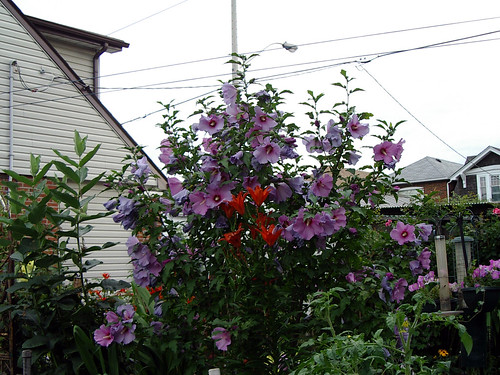
IMGP3182

This is a picture of our 4 year old Rose of Sharon tree. It’s absolutely packed with flower buds this year. It has more flowers this year than it ever has. It started blooming on Wednesday or Thursday of last week, and I expect that it will continue blooming for another three or four weeks.

The Rose of Sharon shrub is a member of the Hibiscus family. You might find it listed as Shrub althaea or Hibiscus syriacus.

The shrub can be trained into tree form by careful pruning. I prune mine in early spring. Rose of sharon can reach heights of between 6 – 10 feet or more. Mine is approximately 6 feet tall right now. It’s mother tree is in my neighbors yard and that tree is at least 10 feet tall.

The flowers are two to four inches in diameter, and they can be single, double, or semi-double. Rose of Sharon tend to bloom in late summer. Mine and my neighbors have bloomed as late as the beginning of August and as early as the second week of July. I assume that the gardening zone, harshness of the past winter, seasonal care, and the summer temperatures are all factors in when exactly this lovely tree blooms. Flower colors include white, pink, red, blue and violet bicolors.

The foliage can range from light to medium green in color. Some varieties have variegated leaves.

This shrub does well in Zone 6 and higher, but gardeners in Zone 5 areas might have success if they are willing to give the tree good winter protection. This tree seems to prefer full sun, but listings state that it will also tolerate partial shade. Mine is in full sun and you can see the beautiful results in the photo above. Well draining soil is a must.

As stated above this shrub can be trained to tree form with careful pruning. It can be used in hard to plant, narrow areas, plant in hedges, as screens, or as specimen plants. Young plants will need winter protection in cool areas.

Want to Join Green Thumb Sundays? Gardeners, Plant and Nature lovers can join in every Sunday, visit As the Garden Grows for more information.

Filed Under: Green Thumb Sunday Tagged With: bicolor, blooming, Blue, buds, double flower, full bloom, Green Thumb Sunday, hardy, hibiscus family, Hibiscus syriacus, photos, pink, Plant profile, purple, red, Rose of Sharon, rose of sharon blooms, rose of sharon flower, semi double flower, shrub, Shrub althaea, single flower, spring pruning, tree, violet, white

  • « Previous Page
  • 1
  • …
  • 9
  • 10
  • 11

Subscribe


Never miss a post
Subscribe to our RSS feed!
It's FREE! rss feed

Free Newsletter

As the Garden Grows
by Email - FREE!


Follow me on Twitter!

Suggested Sites

Eavestrough Cleaning Toronto

Categories

Recent Posts

  • Top Three Tips For Choosing The Right Patio Furniture For Your Home
  • The 4 Things To Know About Perennial Garden Design
  • Painful Plants: Five Houseplants That Can Cause Injury
  • An Outbreak Shouldn’t Mean A Break Out: 3 Insect Repellants Gentle Enough For Your Skin
  • 5 Ideas To Make Your Garden POP
  • 6 Simple Ways To Make Your Home Eco-Friendly
  • How To Redesign Your Garden To Make It Safe For Your Children
  • Starting A Career As A Professional Gardener
  • 6 Time Saving Tips For Gardening
  • Top Tips On Redesigning Your Garden For The Summer

What they’re Saying

  • Rodhe Stevens on Landscaping Tips On A Limited Budget
  • Edmund Wells on Benefits of using mulch on the garden
  • Surjith on An Outbreak Shouldn’t Mean A Break Out: 3 Insect Repellants Gentle Enough For Your Skin
  • Pamela on The 4 Things To Know About Perennial Garden Design
  • dog on The quality of your pet food is important

Pages

  • About
  • Archives
  • Become a Guest Blogger For As the Garden Grows
  • Blog
  • Categories
  • Contact
  • Disclosure
  • Do Follow Bloggers Blogroll
  • Green Thumb Sunday
  • I am Canadian Blogroll
  • Join GTS Meme
  • Links
  • Privacy Policy
  • Q & A
  • Toronto Bloggers Blogroll
  • What’s Growing

Search

My Garden

Member of
Garden Voices

Tags

backyard Beautiful bloom blooming blooms Bulbs cold Entertainment and Rec flower flowers garden garden bed garden beds gardener gardening green Green Thumb Green Thumb Sunday grow growing GTS home Home and Lifestyle House In The Garden leaves my garden photo photos plant plants purchase rain rose roses Shopping snow spring summer Toronto water weather winter Wordless Wednesday WW

Site Ratings


Visitors since 2006


Meta

  • Log in
  • Entries feed
  • Comments feed
  • WordPress.org

Connect with me

  • Facebook
  • Google Plus
  • Pintrest
  • Twitter
  • RSS

Copyright © 2026 · News Child Theme on Genesis Framework · WordPress · Log in