As the Garden Grows

What's blooming today?

  • Home
  • Blog
  • Archives
  • Links
  • About
  • Join GTS Meme
  • Guest Blogger
  • Contact

You are here: Home / Archives for venus flytrap

The Secret Life of Carnivorous Plants

by Trish

Carnivorous plants do exist, and they exist on every continent in the world except Antarctica. A carnivorous plant is a plant that receives most of its nutrients by consuming animals or insects.
Carnivorous plants are not the most commonly discussed plants, and many people don’t even know that they truly do exist. The following information will help you learn more about carnivorous plants and give you insight into their truly unique world.

 Carnivorous plants come in two main groups.

The Venus Flytrap, pitcher plants, and Waterwheel are three of the most popular carnivorous plants, but there are over 600 types of carnivorous plants in the world, and every single of one of them can be placed in one of two groups. These groups are based on the plant’s trapping technique. There are passive trap carnivorous plants, in which the plant receives its food by having an animal or insect get stuck to it or fall into its digestive system. And then there are active trap carnivorous plants, in which the plant actively locates its pretty in order to eat it.

 Carnivorous plants have five basic trapping techniques.

In order to survive, carnivorous plants receive most of their nutrients from animals and insects, and in order to get these nutrients, they need to trap their prey. There are five basic types of trapping mechanisms that carnivorous plants use. The first is known as a pitfall trap, in which prey is trapped in a rolled leaf and then consumed. The second trap is known as a lobster-pot trap, in which the prey is forced to move towards a plant’s digestive organ. The third trap is known as a flypaper trap, in which a plant emits a sticky substance that will trap any small animal or insect that lands on it. The fourth trap is known as a bladder trap, in which a plant has an internal vacuum-like organ that sucks prey down into its digestive system. The fifth and final trap is known as snap trap, in which plants rapidly move their leaves in order to stun or kill their prey.

 Carnivorous plants prefer nutrient dense soil.

The majority of carnivorous plants can be found in nutrient-dense soil. Most of the plants prefer to live in soggy soil, preferably near bogs. But there are some that also prefer warmer and drier areas and can be found near deserts.

 Carnivorous plants will not eat humans.

As children we always heard about man-eating plants, but carnivorous plants will not eat humans, so have no fear. For the most part, most carnivorous plants rely on small insects, such as flies and mosquitoes. If a carnivorous plant is located near water, it may eat small fish or frogs. On the rare occasion, some carnivorous plants have also been known to eat birds. But carnivorous plants pose absolutely no threat to humans, so you don’t have to fear for your life if you come across one.

 Most people don’t know much about carnivorous plants, but they truly are an amazing species. If you ever have the chance, you should try and watch a carnivorous plant in action. It truly is a sight to see.

Mariana S works for Franklin Pest Control, Indiana’s trusted exterminators.


Filed Under: In The Garden, Plant Profiles Tagged With: active, Carnivorous plants, continent, eats animals, insects, passive, pitcher plant, trap, venus flytrap, waterwheel

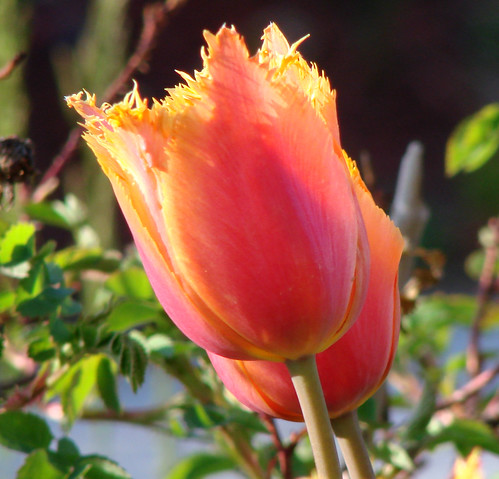
Fringed orange tulips put on quite the display!

by Tricia

Join Green Thumb Sunday

Join

Sorry for the delay posting this weeks GTS post. My Laptop is acting up … everything I do on it takes forever … it’s very slow … so, so much for uploading new photos! Arghhh! I emptied the recycle bin and I’m currently defraging the poor notebook – hopefully that helps.

In the meantime … my lovely orange fringed tulips are blooming. Remember I was just obsessed with them last year? They have such an eye catching fiery color that it’s hard not to become enamored of them.

DSC01847 copy

These flowers are blooming in my front flower beds and they’re putting on quite the display. They’re also taller this year than last year.

In fact, I think most of my tulips were quite a bit taller this year than in previous years. For example, these orange fringed tulips have a stem that’s at least 2.5 feet long. Might even be 3 feet high. Must have been all the snow cover we had over winter that did it.

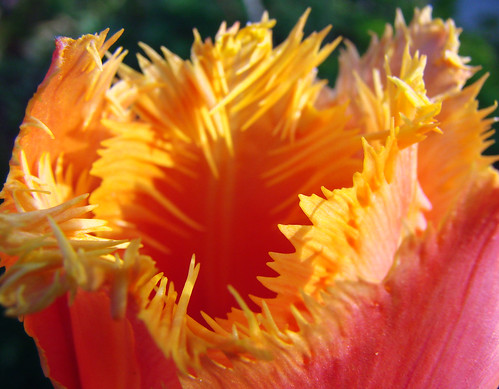
Here’s a close up of the top of the tulip and its fringes. Don’t the fringes almost look like teeth? You could mistake this tulip for one of those Venus Flytrap type of plants if all you saw was its fringes!

DSC01879 copy

I hope you’re having a great weekend. It’s cloudy and rainy here in Toronto, but it’s warmed up in the last week, although today isn’t all that warm.

Gardeners, Plant and Nature lovers can join in every Sunday, visit As the Garden Grows for more information. GTS participants remember to check in at As the Garden Grows each week so that we’ll know you made a new post!

Filed Under: Blooming today, Green Thumb Sunday, Photography Tagged With: 3 feet, Beds, bloom, blooming, color, display, fiery, fiery color, flower, flower beds, flowers, Fringed tulips, fringes, garden, gardeners plant, Green Thumb Sunday, grow, GTS, laptop, Lovely, notebook, orange, orange tulip, plant, plants, previous years, rainy, snow cover, stem, tall, teeth, Toronto, tulip, venus flytrap, very long stems, winter


Subscribe


Never miss a post
Subscribe to our RSS feed!
It's FREE! rss feed

Free Newsletter

As the Garden Grows
by Email - FREE!


Follow me on Twitter!

Suggested Sites

Eavestrough Cleaning Toronto

Categories

Recent Posts

  • Top Three Tips For Choosing The Right Patio Furniture For Your Home
  • The 4 Things To Know About Perennial Garden Design
  • Painful Plants: Five Houseplants That Can Cause Injury
  • An Outbreak Shouldn’t Mean A Break Out: 3 Insect Repellants Gentle Enough For Your Skin
  • 5 Ideas To Make Your Garden POP
  • 6 Simple Ways To Make Your Home Eco-Friendly
  • How To Redesign Your Garden To Make It Safe For Your Children
  • Starting A Career As A Professional Gardener
  • 6 Time Saving Tips For Gardening
  • Top Tips On Redesigning Your Garden For The Summer

What they’re Saying

  • Rodhe Stevens on Landscaping Tips On A Limited Budget
  • Edmund Wells on Benefits of using mulch on the garden
  • Surjith on An Outbreak Shouldn’t Mean A Break Out: 3 Insect Repellants Gentle Enough For Your Skin
  • Pamela on The 4 Things To Know About Perennial Garden Design
  • dog on The quality of your pet food is important

Pages

  • About
  • Archives
  • Become a Guest Blogger For As the Garden Grows
  • Blog
  • Categories
  • Contact
  • Disclosure
  • Do Follow Bloggers Blogroll
  • Green Thumb Sunday
  • I am Canadian Blogroll
  • Join GTS Meme
  • Links
  • Privacy Policy
  • Q & A
  • Toronto Bloggers Blogroll
  • What’s Growing

Search

My Garden

Member of
Garden Voices

Tags

backyard Beautiful bloom blooming blooms Bulbs cold Entertainment and Rec flower flowers garden garden bed garden beds gardener gardening green Green Thumb Green Thumb Sunday grow growing GTS home Home and Lifestyle House In The Garden leaves my garden photo photos plant plants purchase rain rose roses Shopping snow spring summer Toronto water weather winter Wordless Wednesday WW

Site Ratings


Visitors since 2006


Meta

  • Log in
  • Entries feed
  • Comments feed
  • WordPress.org

Connect with me

  • Facebook
  • Google Plus
  • Pintrest
  • Twitter
  • RSS

Copyright © 2026 · News Child Theme on Genesis Framework · WordPress · Log in