• Entertainment
  • Musicians
  • Recreation
  • Guitars
  • Playing Styles

Guitar Licks

Guitars, tips and great music discussions

  • Home
  • Blog
  • Archives
  • Links
  • About
  • Guest Blogger
  • Contact


You are here: Home / Archives for fret

Taking Guitar Lessons

December 12, 2007 by Chris

If your a guitar player who thinks that he or she knows it all, then you should just skip this post! Also, this post is VERY LONG as well!

Every once in a long while I come across a guitar player who thinks that they know it all. I think that we’ve all met a person like this who fits the category? I understand that in order to be a great player you have to have this invincible attitude or ego to obtain these lofty goals but come on, you can’t know everything. There is always someone out there that knows something that you don’t.

In my younger days, there were moments when I had this type of footprint attached to my persona. Sometimes upon entering a Brantford music store some musicians put down what ever they were playing and looked at it as if they didn’t know what this thing was that they had in their hands. Sometimes at a party or other social event guitarists would not play while I was playing or afterwards for that matter. This I thought was good for my ego, but later on I realized that we all were doing was just cheating ourselves out of a learning experience. After not playing for many years, I started to understand this problem.

While living in a dorm/frat house I started to play with many levels of musicians. I realized that some had these guitarists were playing these great little progressions that I had never heard of before and it spurred on my thirst for more musical knowledge. I made great efforts to stunt my level of playing and let other people shine. This approach made others relax and play without intimidation.

Fast forward to today, I think that it is time for me to take lessons again, not to figure out songs/styles but for technique. I know proper positioning, how to change chords efficiently, but I could use some work on understanding progressions better.

Another area is finger picking.

My classical picking is now at the level of a hack, but I can achieve the action and dexterity that I need to pull off a song or style without any noticeable problems. The classical stance is something that I do not use to any great extent but it does come in handy once in a long while.The real problem is with my thumb drone or an alternating bass picking style. The easiest way to understand this is to imagine a piano. You have the left hand working the bass or lower notes and the right hand doing the phrasing/melody. In guitar, your thumb is the bass and the rest of your fingers are the right hand playing the phrasing/melody.

Bruce Cockburn is the master of this in my eyes! It’s almost impossible to pigeon toe his style into one word but this is one of his many fortes. The best example of this is one Going to the Country which I have been trying to finger out or master for many years. I wish that the intro to the song was there to introduce to you to what I mean about his playing ability.

So now I am toying with the idea of taking lessons at the 12th Fret by a gentleman call Dave Martin. He specializes in picking, he loves the some style of picking that I do and best of all he has the same length of fingers that I have. While talking to him, he told me that he has come up against the same playing/technique problems that I have so it would be nice to have someone who has similar issues in this area.

They charge around $22.50 a 1/2 hour so I’ll try him out for a bit and see how it works out! I’ll get back to you later on the results and besides, he probably knows something that I don’t!
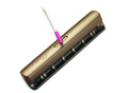
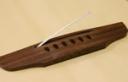
Filed Under: Bruce Cockburn, Guitars, Home and Lifestyle, Musicians, Playing Styles, Recreation, Songs to play Tagged With: Brantford, Bruce Cockburn, chords, dexterity, dorm, finger picking, footprint, fret, guitar lessons, guitar lessons in Toronto, guitar player, guitarist, hack, house, how to, intimidation, Intro, learn, learning experience, lofty goals, Music, music store, musical, musical knowledge, musician, Musicians, noticeable problems, play, playing, playing guitar, progress, progression, progressions, taking guitar lessons, the 12th Fret, thirst, younger days

My Fender Lead II

November 10, 2007 by Chris

I have been using my Fender Lead II as of late. I only have one guitar stand and I rotate the guitars that I put in it many times throughout the year.

I got this guitar off a exchange student from Japan around 1984-85. Oddly enough, this is a Student Guitar, meaning the body is smaller making it easier to play. He was a little low on funds and he wanted to know if I wanted to by it. At first I started to give him lessons and he was not that bad if memory serves me correctly.

While looking at my black Fender I started to wonder what year this baby was built so a Googling I will go!

fenderleadii.jpg

This site was the one that I ended up at. You can normally determine the age of your guitar by the serial numbers. Mine is “E0 09736” so it’s made in 1980, that makes it 27 years old! If you have a Fender guitar just sitting around the house, go and get it and find out how old your is. Get back us on that one if you have one.

I just love the sound of the X-1 single coil pick ups on this one. You can raise the pick ups by turning the 2 screws at either end of the pick up clock wise. This adjustment brings the pick up closer to the strings thus you get a stronger signal.

There is a phase reversal switch that works when you are in the middle position or using both pick ups at the same time. This switch is really nice to have at your disposal.

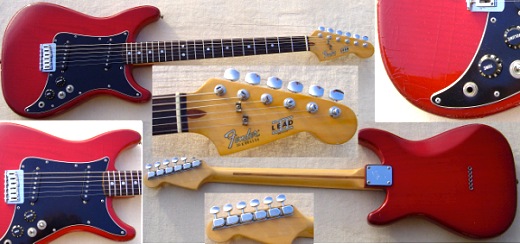
multiplefendlead2.jpg

I know I will try to get a picture of mine up here soon!It has 21 medium Jumbo frets with a 4 bolt neck piece. It has a “Soft V or C” profile neck, which means the part of the body which attaches to the neck section of the guitar. The neck itself is maple. The small headstock is a nice reminder of the past Fender guitars that were built between 1954-65. Oh, headstock is part where you tune the strings on the “head” of the guitar in case your unfamiliar with guitar terms.

The bridge, where you put the strings on the body of the guitar, is designed after a Fender Telecaster. Keith Richards plays this type of an axe.

As far as I know it was made at the Fender Fullerton California plant. It was also one of the last fender guitars to be made at this legendary location!

So hats off to my 27 year old gal and hope we’re together a lot longer!

Keep on Jammin’

Filed Under: Guitar Equipment, Guitars, My Equipment, My experiences, The early Years Tagged With: adjust, art, axe, c profile, design, exchange student, fender, fender guitar, fender guitars, fender lead, fender telecaster, fret, fun, googling, guitar, guitar stand, headstock, house, jammin, Keith Richards, legendary, lessons, middle position, Music, phase reversal switch, pick ups, picture, play, plays, screws, serial numbers, sing, single coil, sound, start, strings, Tim

Well, that was fun

October 8, 2007 by Chris

My wife and I are going to a blogging convention in Las Vegas in November, but we both need passports! If we don’t get them we won’t be able to fly into the United States.

I had to get photo copies of this that and the other thing Sunday night, get our photo’s from this Greek Photo Finish shop in the heart of Greek Town (The Danforth to Locals) run by this really nice little Asian couple on Monday. Gotta love the big city or what?

I went downtown one day last week. On that day I got up at 6:45 (early for me) so I could go see my old buddy Dave the Criminal lawyer guy downtown Toronto to do his part with the Passport legalities! When that was done I was going to go home pick up the wife, go back downtown to do the Passport paperwork stuff when it dawned upon me that, “Why don’t I just do it when I was downtown doing some paperwork stuff with Dave? So I did it, thus eliminating around 2 hours of driving downtown.

While driving home I picked up some earth worms for our pet turtles. Nice! Had to go there anyway at some point in time. I was busy that day. I also ended up getting the muffler replaced, now our car doesn’t sound like some kid’s street racing machine, that just got his ride pimped right!

While I was waiting for the car to be finished I walked up to my favorite store in the world, the 12th Fret and bought some new strings for my Fender Lead II. Walking into the store I was greeted by the presence of a new White Gibson SG Double neck, now that’s a greeting! It was about $3568.00 (Can) by the way in case your wondering.

While walking back to Speedy Muffler King to pick up the improved ride, I walked into this neat sidewalk patio and had a few light refreshing liquid beverages. The finger foods were nice too, as was the conversation with the owner an older Macedonians lady.

When I finally returned home I had a well deserved rest. What a busy day that was! Cheers!

Keep on Jammin’

Filed Under: Guitars, Home and Lifestyle, My experiences, Recreation, Shopping Tagged With: 12th Fret, blog, blogging, cafe, Canadian, Canadian Passport, car, criminal lawyer, Dave, downtown, fender, fret, Home, muffler, Passport Canada, patio, sound, Toronto, United States

OMG you gotta hear it to believe it

October 4, 2007 by Chris

Now I already have a good pick-up system in my Larrivee L-03 but when went into my favorite guitar store, the 12th Fret in Toronto, I feel madly in love with the L.R. Baggs IMix.

Now I have been looking to update my pick-up system in my L0-3 lately and found many systems in which to chose from. I have narrowed it down to two items. (1) the Fishman Ellipse Blend vs. (2) the LR Baggs IMix.

When I went in I talked to my favorite guitar guy Tim Cameron. Being the honest guy that he is he immediately directed me to a acoustic guitar pick up god named Nevin. I told him what I was looking for and told him that I was just looking to hear the differences between the two and he paid as much attention to me as if I was going to pick one up right then and there, now that’s service!

He brought me two guitars that had the pick-up systems already in them and put me in their little music room, plugged me in and let me got at them. Wow, was I impressed with both!

First I tried the Fishman Ellipse Blend. It had a real nice sound but I was detecting feed back. I know that I was in a little room but for some reason the feeling and sound was off to me. I realize I am knew at the finer subtleties of acoustic pick ups, but it was a gut feeling. It was very refreshing to see that you can adjust the position of the mic inside.

Then I tried the LR Baggs iMIX. The sound was full, responsive to very fine picking and it can overpower your senses, in my view that is.

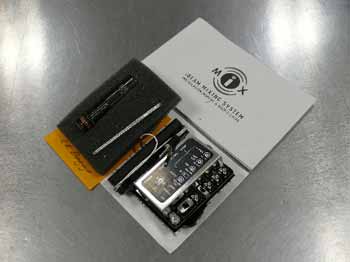
imix.jpg

Guitarist realize that since the sound of the acoustic guitar is very complex and fickle, so therefore it is a must to use more than a single pickup to attempt to sense it.

The iMIX uses the Baggs iBeam under-bridge pickup with a Baggs Element under-saddle piezo. The Element pickup senses the strings and provides the presence and feedback resistance of piezo while the iBeam reads the sound inside the guitar and adds natural fidelity, albeit with increased feedback sensitivity. The signals from the the two pickups are blended, in this case via the rotary blend control, on a side-mounted, Baggs iMIX Onboard, pre-amp. This pre-amp also features three slider controls for volume, treble and bass, plus a phase reverse switch for a measure of elementary feedback control. A fingertip pressure releases the battery from its compartment for a quick change when required.

iBeam

ibeam.jpg

Element

element.jpg

Now all that I have to do is get my wife on board!

Keep on Jammin’

Filed Under: Guitar Equipment, Guitars, My Equipment Tagged With: 12th Fret, acoustic guitar, acoustic pick ups, adjust, amp, bass, element, Fishman Ellipse Blend, fret, guitar pick, guitarist, guitars, ibeam, Larrivee, Larrivee L 03 guitar, LR Baggs IMIX, Music, pickups, sound, strings, Toronto

Guitar side ports

September 28, 2007 by Chris

guitarsideport1.jpg The one thing that I see in the evolution of the acoustic guitar today is its link with the past from Canada’s own, Glenn Gould.
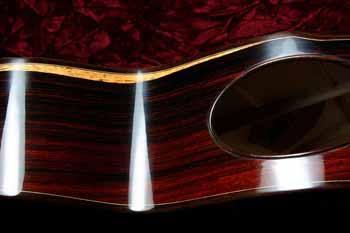
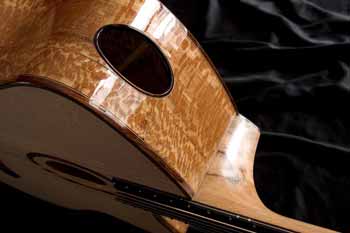
He used a unique approach while playing in his later years, around 1983, when he took away part of the piano body to let the sound come out of the instrument in a unorthodox way.

First of all, the guy was way ahead of his time. What he did was to remove the wooden cover section that is used to cover the piano keys. He removed this part entirely. He would also close the piano lid on his concert piano, allowing the sound to be sent through the missing cover section of the piano.

This allowed him to hear the subtle tones while playing his music.

This was best shown in his 1980’s work of the gloomy nature of life. The slowness of some of his canon’s reflect the need for this type of sound exposure that the musician needs to fully understand what the audience hears, but as a very unique approach.

Second of all, the guy went to places that no one probably ever thought of venturing. I wonder if the person who thought of the guitar side ports ever watched Glenn Gould Hereafter? If he did, I bet this is where he may have got the idea, but then again I could be dead wrong.

darksideport.jpg

I have been toying around with the idea of putting in a new state of the art pick up system in my Larrivee. The system is called the LR Baggs iMIX. It captures a lot of the character in my guitar with an active response to it. That means that the pickups pick up the aggressive or passive playing of the strings on the guitar.

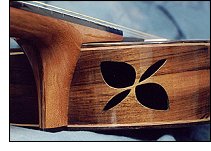
Now in order to place it in there, I must have it installed inside the body above the sound hole, closest to my face. That’s fine with me. The next question is what in the world do I do with the hole that the factory installed system sat in? It would look mighty funny just viewing a rectangular opening right there in my face. Do I just leave it there or what should I do with it? Here is my best option, I think.

I have always wanted both of my acoustic guitars to have pick ups so I can have a back-up on stage. So why not put my old pick up from the Larrivee into my old Aspen acoustic guitar. Perfect, I think? Unfortunately if I do this I will have this opening on the side of the body near my chest where the old system was. It would look so odd and out of place that I would be reluctant to let anyone look at my guitar. So while talking about my problem with the guitar tech at the 12th fret, he gave me this fabulous idea of the side port!

lightsideport.jpg

They could change the look of the old hole and create a fancy looking design in it’s place!

This will allow a small portion of the sound to come up directly to me acting like another sound hole or a monitor if you will. This will not effect the tonal qualities of my baby I have been told. The tech had one in this part of the workshop that he made and let me try it out. Not only did it look very cool and original, but it was nice to have some sound coming from a part of the guitar that I have never heard it coming from in the past.

Now all I have to do is convince my wife about this one, wish me and my Larrivee luck will you all?

Keep on Jammin’

Filed Under: Glenn Gould, Guitar Equipment, Guitar Maintenance, Guitars, History, Musicians, My Equipment Tagged With: 12th Fret, Acoustic, acoustic guitar, Canada, concert, fret, Glenn Gould, guitars, hole in guitar, instrument, Larrivee, LR Baggs IMIX, Music, musician, pick ups, play, playing, remove pickups, side ports, sound, strings

Michael Hedges

July 26, 2007 by Chris

This is a player who should be in everyones’ music collection. Michael Hedges is so innovative, crisp in the clarity of his unique style and most of all provides a very refreshing new experience. Just listening to the creative levels of his guitarmanship makes your mind wonder off towards a different level of consciousness. Just listen to the video and you will see what I am referring to.

Just off topic a bit but, I thought that I was the only one who was constantly tuning my guitar between songs. The beginning part is useful to a player who is attempting to play his style of playing, it certainly helped me out.

He refers to his style as “violet acoustic” which is a style that I might be considered to use frequently as well. Actually, aggressive acoustic is more appropriate. Michael Hedges has this gift to be able to dampen strings, which is called “Right hand string stopping” by classically trained guitarist. This is applied to the bass strings of the guitar by your thumb. Michael however, brought this to a new level of playing.

He insisted that you should dampen every individual note that is not worthy of hearing. Michael thought that letting a string ring out is like contaminating the chord structure of a song and not giving the listener the clarity of sound that you want them to hear, and I quote “It’s just, why let it ring by default of any thought? Be responsible! Don’t let things just go on because you started them.” This poses a huge problem for most guitarists. That is, it is very difficult to do this while flying around the fret board at warp speed.

The only way to achieve this level is to apply the old adage “slow down, I’m in a hurry”. Did ya ever hear of that one?

This means that you have to slow down so much that, when you play a piece fast at such slow speeds paying attention to every single minute detail, it allows you to play almost error free. I do this all the time when I practice and I may lose my marriage to my wife one day because of it. Her mind is so agile and crisp that she can do things flying around at MACH 5 and absorb things while executing it almost perfectly.

I have to give credit where credit is do so, thanx Brian @ RiffDreams for this great new guitar experience.

Keep on Jammin’

Filed Under: Guitars, Music, Musicians, Playing Styles, Video Tagged With: Acoustic, acoustic guitar playing, fret, guitarist, Michael Hedges, Music, open acoustic guitar tuning, open tuning guitar, practice, Riffdreams, Right hand string stopping, sound, strings

My 1979 Gibson RD-Artist

December 22, 2006 by Chris

Wow, is all that I have to say about this baby! It has a rounded like Gibson Explorer or Firebird body that is as heavy as a tank, seriously, come over and lift the thing! It has the wide neck with 22 frets that I love and has a great straight forward sound. It was one of the original guitars that had built in compression in it, oooooooohhh! When I got the balls as a high school kid, I took off the plastic cover that exposed it’s internal workings. It looked to me as the internal workings of a space ship. Opps, better not touch anything in there!

So my parents bought this guitar at Steve’s Music in Toronto. With me in tow, I tried out many guitars after getting over how many axes there was in this place. It was a toss up really between the RD and a Gibson ES-335, which is comparable to to RD if you read the WHOLE article below. I think that the main reason that I bought the RD was because it looked REALLY COOL! It still does.

Now for some boring technical reading, everyone comfortable yet?

Some time ago when the Gibson M-III was introduced to much fanfare, a lot of people could be overheard expressing awe at the possibilities of the switching system. But, as we’ve seen, this is only the latest example of Gibson’s long infatuation with complex switches. While the Les Paul Recording remains my personal favorite, it’s followed quickly by the often insulted RD Artist, occasionally referred to as the “Research & Development” Artist.

The RD line was originally conceived in 1975, officially introduced in 1977 and ultimately discontinued in 1982. The RD series was essentially Gibson’s response to the emerging success of companies like Alembic and B.C. Rich, which specialized in lots of switches with fancy electronic options. It’s curious to note that a Norlin subsidiary, the distributor L.D. Heater, of Portland, OR, handled B.C. Rich as well as Gibson guitars in the early ’70s. Early B.C. Riches used Gibson humbuckers obtained through L.D. Heater until Gibson found out. B.C. Rich switched to Guild and then DiMarzio pickups and took over its own distribution shortly thereafter. Maybe the RD was Gibson’s revenge?…

To execute this design, Gibson employed Robert Moog, of Moog synthesizer fame, and the man behind the last mach of the Gibson Maestro effects of that very same era.

The RD series was, admittedly, a little demented. First of all, its shape is sort of a retread Reverse Firebird, maybe the offspring of mating with a Guild Thunderbird (one which unfortunately didn’t inherit the built-in stand!). The maple body is comfortably contoured, though, and the neck solidly glued on for an overall pretty nice feeling guitar, sort of like an SG. Put a pillowcase over the body and you can get down with this baby.

The RD Artist was the top-of-the-line, with an unbound ebony fingerboard (the catalog said bound ‘board, but most if not all were not bound), block inlays, gold hardware, fancy bound pearl inlaid headstock and more comprehensive active features activated by a second large toggle switch. Pickups were two Gibson Series VI humbuckers with a threeway select, two volume controls, individual treble and bass tone controls, and a built-in preamp circuit with compression/expansion and bright/lead functions.

Unfortunately, Moog and Gibson didn’t just settle for a simple preamp switch like the B.C. Rich. Instead, we get another complex switching system on the Artist models. Here’s the skinny; bear with me.

The threeway pickup select and individual treble and bass tone controls are pretty clear and a very nice feature on any guitar. In the center position, the second threeway toggle switch is in neutral, making the guitar active but without the special circuits. In the forward position, the switch activates a bright/lead function which accentuates the treble frequencies. This works for both pickups.

In the back position, the active switch turns on a compression/expansion circuit. The compression function operates on the neck pickup only and reduces the fundamental attack time and “compresses” each note into a longer sustaining signal. In this mode, the output remains stable no matter how hard you play.

The expansion function (we haven’t moved the second toggle yet) operates on the bridge pickup only and “permits the player to play harder and louder without the note collapsing. Expansion offers a very fast, explosive response with a rapid decay,” says the Gibson literature.

Of course, either function works in the middle pickup selector position, too.

To read the full article go to Vintage Guitar Magazine and, look 1/2 way down the page. I too have just learned something as well!

Filed Under: Guitar Equipment, Guitars, My Equipment Tagged With: cool, fingerboard, fret, functions, guitar, guitars, heavy, learn, Music, pickups, RD Artist, sound, vintage

Just Jamming on my own!

September 15, 2006 by Chris

Well, now I was at a point where I was playing in school and at mass. I kept listening to songs on the radio over and over again. I was never a writer of songs, so I just listened to the guitar parts in every song. I remember trying to figure out the song in my head by paying attention to the low end of the song. What I mean is the bass part.

I put everything out of my mind and listened intensely at this. I hummed it in my head and tried to slow it down as well. Once I started out with the bass components, the chords just started to pop in place. My knowledge of chords was limited so, that is when I asked Mrs. Lord if she had anything more up her sleeve, so she gave me this book, and I dived into it. She had started me out on “The bar Chords”!

This was really cool because no one else in our class was doing it but me. This opened up some area that was fun for me! I tried to simplify what I was shown (imagine playing a B chord without barring the second fret) and tried making a more bassie/bottom end sound to the chord. That is when I started barring the chords the way everyone else does. This helped me obtain that rock sound that was being played on the radio at the time. For the longest time I tried to figure out how they got that sound, it must have been that big black thing with lights and knobs on it that I saw at the school concert.

How did everyone start out figuring songs at a young age, like this?

Filed Under: Guitars, My Equipment Tagged With: bar chords, bottom end, fret, General, guitar lessens, rock, school concert, sound

Connect with Us

  • RSS

Suggested Sites


Eavestrough Cleaning Toronto

Categories

Recent Posts

  • 5 Amazing Alternative Rock Albums Of The 90s
  • Want To Learn To Be A Musician?
  • How Can Ambitious Musicians Find Great Advice From Professionals?
  • Which Musical Instruments Are Hardest To Learn?
  • Things To Know When Beginning A Career In Music
  • Suicidal Tendencies Still Rocking After All These Years
  • Learning Guitar Basics Online

Recent Comments

  • Judy Green on The Old Gasworks was a Toronto institution for music lovers and bands
  • Frank Bolduc on The Old Gasworks was a Toronto institution for music lovers and bands
  • Tom Farr on 5 Amazing Alternative Rock Albums Of The 90s
  • DW on 5 Amazing Alternative Rock Albums Of The 90s
  • Nick Othen on 5 Famous People And Their Guitars

Subscribe

Never miss a post
FREE - Subscribe NOW!
Read our posts in your favorite RSS reader.
rss feed

OR

Subscribe to Guitar Licks by FREE Email Newsletter


Follow us on TWITTER!

Alltop, confirmation that I kick ass
Alltop Guitar news

Shopping

Gifts, Gadgets,
Books and More!

Site Ratings

Visitors


Meta

  • Log in
  • Entries feed
  • Comments feed
  • WordPress.org

Archives

Search

Pages

  • About
  • Archives
  • Become a Guest Blogger for Guest Licks
  • Blog
  • Canadian Bloggers
  • Contact
  • Disclosure
  • Do Follow Bloggers
  • Links
  • Privacy Policy
  • Toronto Bloggers

Blogroll

  • Guitar-Werks
  • Guitar Boomer
  • Eavestrough Cleaning Toronto

My Store

  • My Store

Other Sites

  • Amphibian Care
  • Reptile Logic
  • Guitar Licks and Tips
  • Tricia's Musings
  • You are in my world now

Tags

Acoustic amp band bands Brantford Bruce Cockburn Canada Canadian concert Entertainment fender funny General guitar Guitar Equipment guitarist guitar player guitars Home house Humor humour instrument jammin jazz John Mayer keyboard Live Music musician Musicians play playing Progressive Rock Pylis rock RUSH Songs to play sound strings Technology Toronto tour Video YES

Copyright © 2026 · News Pro Theme on Genesis Framework · WordPress · Log in