• Entertainment
  • Musicians
  • Recreation
  • Guitars
  • Playing Styles

Guitar Licks

Guitars, tips and great music discussions

  • Home
  • Blog
  • Archives
  • Links
  • About
  • Guest Blogger
  • Contact


You are here: Home / Archives for guitars

Guitar side ports

September 28, 2007 by Chris

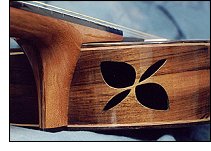
guitarsideport1.jpg The one thing that I see in the evolution of the acoustic guitar today is its link with the past from Canada’s own, Glenn Gould.

He used a unique approach while playing in his later years, around 1983, when he took away part of the piano body to let the sound come out of the instrument in a unorthodox way.

First of all, the guy was way ahead of his time. What he did was to remove the wooden cover section that is used to cover the piano keys. He removed this part entirely. He would also close the piano lid on his concert piano, allowing the sound to be sent through the missing cover section of the piano.

This allowed him to hear the subtle tones while playing his music.

This was best shown in his 1980’s work of the gloomy nature of life. The slowness of some of his canon’s reflect the need for this type of sound exposure that the musician needs to fully understand what the audience hears, but as a very unique approach.

Second of all, the guy went to places that no one probably ever thought of venturing. I wonder if the person who thought of the guitar side ports ever watched Glenn Gould Hereafter? If he did, I bet this is where he may have got the idea, but then again I could be dead wrong.
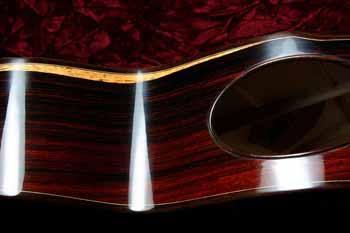
darksideport.jpg

I have been toying around with the idea of putting in a new state of the art pick up system in my Larrivee. The system is called the LR Baggs iMIX. It captures a lot of the character in my guitar with an active response to it. That means that the pickups pick up the aggressive or passive playing of the strings on the guitar.

Now in order to place it in there, I must have it installed inside the body above the sound hole, closest to my face. That’s fine with me. The next question is what in the world do I do with the hole that the factory installed system sat in? It would look mighty funny just viewing a rectangular opening right there in my face. Do I just leave it there or what should I do with it? Here is my best option, I think.

I have always wanted both of my acoustic guitars to have pick ups so I can have a back-up on stage. So why not put my old pick up from the Larrivee into my old Aspen acoustic guitar. Perfect, I think? Unfortunately if I do this I will have this opening on the side of the body near my chest where the old system was. It would look so odd and out of place that I would be reluctant to let anyone look at my guitar. So while talking about my problem with the guitar tech at the 12th fret, he gave me this fabulous idea of the side port!

lightsideport.jpg

They could change the look of the old hole and create a fancy looking design in it’s place!

This will allow a small portion of the sound to come up directly to me acting like another sound hole or a monitor if you will. This will not effect the tonal qualities of my baby I have been told. The tech had one in this part of the workshop that he made and let me try it out. Not only did it look very cool and original, but it was nice to have some sound coming from a part of the guitar that I have never heard it coming from in the past.

Now all I have to do is convince my wife about this one, wish me and my Larrivee luck will you all?

Keep on Jammin’


Filed Under: Glenn Gould, Guitar Equipment, Guitar Maintenance, Guitars, History, Musicians, My Equipment Tagged With: 12th Fret, Acoustic, acoustic guitar, Canada, concert, fret, Glenn Gould, guitars, hole in guitar, instrument, Larrivee, LR Baggs IMIX, Music, musician, pick ups, play, playing, remove pickups, side ports, sound, strings

More on my 1959 Fender Duo Sonic

August 30, 2007 by Chris

This baby was first introduced to us in mid 1956, the original Duosonic (two pickups) were Fender’s 3/4 size, student model, 22.5″ short scale beginners guitars.

With the switch in the middle position, the two pickups are in series, giving a humbucking pickup type sound. These short scale student models were made to the same high quality standards and materials that Fender used for its more expensive models. For this reason, Duo-Sonics are very well made.

In late 1964 both models moved to second generation, coinciding with the introduction of the Mustang. A buddy of mind, Serge Roy of Brantford has one of these puppies! The “II” designation was then added to the DuoSonic and MusicMaster names. These models are more like the Mustang (except the Mustang has a vibrato), than the original DuoSonic/MusicMaster models. The differences in the new generation were in the body shape, pickguard, and electronics.

It was available with either a 22.5″ or 24″ scale, but is most often found with the longer scale. The 24″ scale Duo-Sonic II, Musicmaster II, and Mustang of the September 1965 to October 1966 period are sometimes found with a slab rosewood fingerboard, usually of Indian rosewood.

Some Fender experts today speculate that the slab board necks were leftovers from 1962 Jaguars. Don’t tell Serge about this one,ok?

No matter what is said about this vintage instrument the only thing that matters is how it plays and sounds. I am truly blessed by having this little gem of a guitar and I know that. If you ever get the opportunity to play a 1959 Fender Duo Sonic you will know what I mean and remember this post!

Keep on Jammin’

Filed Under: Guitar Equipment, Guitars, My Equipment, My experiences Tagged With: 1959 Fender Duo Sonic, body shape, duo sonic, Electronics, fender, fingerboard, guitar, guitars, humbucking pickup sound, Indian rosewood, instrument, longer scale, Music, Musicmaster specs, MusicMasters, Mustang, pickguard, pickups, play, plays, rosewood, sound, sounds, student model, vintage, Vintage 1959 Fender Duosonic, vintage Fender Guitars

Tremolo Bars

August 2, 2007 by Chris

Has anyone ever wondered what the tremolo setup in their guitars look like, but was too afraid to take it apart. I’ve never had a guitar with a tremolo bar but my buddy did and one day he decided to show me.

My buddy in Brantford was a collector of guitars. He was rather talented, but was more into collecting them, then playing them. Nice hobby if you can afford it. I was very fortunate one evening to see a “59 Fender Strat” that he had picked up for his collection.

One night I was invited to bring my HiWatt and Gibson RD to his house with a couple of buddies to jam. I had come in, set up my amp and he gave me a beer. The boys always looked forward to jammin’ with me because I was one of the few guitar players who liked to challenge myself with different playing techniques. Most of the time they just watched and asked questions. That always drives me crazy! Then my buddy went over and brought out a guitar case and placed it in front of me.

When he opened the case, I felt my body shaking inside. It felt like someone had just opened up the “Ark of the Covenant” and was looking at the “10 Commandments” written by God and given to Moses on the mountain, inside!

I had never seen this legendary 59 Strat let alone had the ability to play it.

I just looked at it for a while and then he said “why don’t you plug it in?” I then picked it up and studied it intensely. After 10 minutes of viewing every angle and part of this mythical beast, I plugged it in and played for around 2 hours straight.

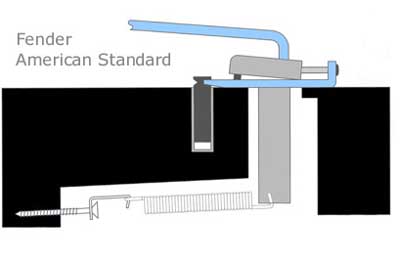
After I stopped playing I asked him “What does the Whammy (Tremolo) Bar system look like?”. He drew a quick picture on a pack of smokes and then asked me if I wanted to see this one’s? The guy who he had bought it from then took it from me and started to take off the back to expose the inner workings of it. It looked something like this:

fender-trem-as.jpg

Now to give you a better understanding how it works, I have a video for you.

So if you have one of these on your axe, you now have a better idea of how it works and how to roughly adjust it. I strongly recommend that you take the back cover off it and just take a look around just for an educational experience.

Remember by taking the cover off the back of your guitar to take a look, you won’t blow it up! This will make you more aware of your overall guitar and make you feel more comfortable with it. Knowledge is power and besides, it makes you look like you know what your talking about.

Take pictures and save them. Later on this may become a life saver if you do start adjusting it. This will allow you to see what it looked like before you started. Actually, take pictures of every stage of it. There is nothing worse then having a couple of screws left over when you think your done! It happens to the best of us!

Keep on Jammin’

Filed Under: Electronics, Guitar Equipment, Guitar Maintenance, Guitars, My experiences, Technology, Video Tagged With: 59 Fender Strat, adjust, amp, Brantford, diagram, fender, fender whammy bars, guitar, Guitar Maintenance, guitar player, guitar whammy bars, guitars, Hiwatt, how to, maintenance, picture, play, playing, tremolo, tremolo bars, tremolo setup, Video, whammy, Whammy bars

The Guitar Resource

June 16, 2007 by Chris

Just like every other guitar player on the planet, you realize that there is always someone out there that knows more then you do. You may spend your time, like I do, by searching, and then figuring out different styles to play that will help develop a unique sound that you can call your own. This does take a long time. Or, you can search the web for sites that can dramatically speed up this process.

Some great guitar sites even expose you to different ways to listen and understand overall musical structures. Well, I think that I have found one that does all the above and then some. The site is called The Guitar Resource. This is like one stop shopping for technique!

The Guitar Resource has an article called Circle of Fifths that will help with everything from finger exercises all the way to chords and chord progressions.

Not only does the Guitar Resource provide information on how to play, but it has a great selection called How to Read Tabs that compliment and makes the site that much more informative.

The videos that he makes about his topics are top shelf! He has the uncanny ability to make you feel relaxed and he doesn’t talk down to you. His posts also make you sit down and think about what and how to achieve all this without all that dry musical theory stuff. It gives you the very basics and lets you go from there. If you want more detailed info, then just ask him. It’s just that simple.

The tools provided at The Guitar Resource are simple and straight to the point. You don’t need all the bells and whistles to achieve your goal, and I think that he has that aspect all sowed up since he started in March 12th, 2007.

I also found a fabulous book in the portion of his site called Recommended. The book is called the “Practical Theory for Guitar”. Yes it certainly is a must have for any guitarist regardless of his/her level. I looked at some articles and found it simple and straight to the point, so I’m seriously thinking of buying it! I have to hand it to this fellow, he certainly got it right on this one too.

If you visit the guitar resource be sure to check out the tabs that you will find across the top of the site. He has a section called The Store. Within the store you will find a featured product as well as a selection of categories such as Guitars, Amps, Strings, concert shop, guitar instruction, parts and accessories and whole lot more.

All and all, as the name says, The Guitar Resource it is a great resource site to fit all aspects of your guitar playing needs.

Keep on Jammin’

Filed Under: Guitar Equipment, Music, Web Site Promotion Tagged With: accessories, blog, chords, guitar, guitar player, guitars, how to, learn, Music, musical, play, playing, progress, progression, recommended reading, Shopping, strings, the guitar resource, Video

The Harp Guitar

March 31, 2007 by Chris

This instrument, the Harp Guitar, is the sweetest and most challenging one to perfect. Some of the great musicians to play this instrument have been Robbie Robertson, Steve Howe, Pat Metheny just to name a few.

The Harp Guitar is considered beautiful to the eyes and ears. Even Gibson was a Guitar Harp producer. We have a great Canadian woman who creates these missing links to the musical past and she is, Linda Manzer.

I have chosen Michael Hedges to illustrate this to you today. Unfortunately, like all the great ones, he is no longer with us. He was only 43 when he pasted away from a car crash.

The Guitar Harp has the appearance of a mythical instrument from the days of Robbin Hood, the Lutes of 1265 C.E. (C.E. = Common Era, used to be called A.D.) or the Baroque period. An ageless instrument at that!

I have never seen one up close but if I could be alone with one for a moment or so, I would try to decode this thing once and for all. I have tried my luck on a Lute and it was really fun to play. I love the sound and the action on the Lute. The neck is wide and the length is short, which makes it easier to play in my eyes. I suggest that if the opportunity presents itself, you should take full advantage of the moment to broaden your musical horizons.

Keep on Jammin’, (even Harp style)

Filed Under: Guitar Equipment, Music, Musicians, Songs to play, Video Tagged With: challenging, guitars, Harp guitar, instrument, Michael Hedges, Music, musician, Musicians, sound, Steve Howe, YES

Getting the RD Artist ready for battle

March 28, 2007 by Chris

The other day I had to do a few errands like pick up some grocery’s and earth worms for our turtles. Oh BTW, we use to have lots of reptiles like, Chinese Water Dragons, and a HUGE Iguana named Napoleon that we called our son who I miss every day, and some turtles.

Before starting off I decided to go to the 12th Fret to finally start paying more attention to my electric guitar ambitions. I haven’t restrung my RD in years. Whenever I broke a string, I just put another one on from the pack that I bought ages ago.

Yes, I really do feel bad about not paying proper homage to this beauty but, I did not have any use for it for a long time.

While visiting the store, I ran into my favorite guitar technician Tim. This guitar master is very knowledgeable in his field. He’s the type of guy you can sit down with and ask for honest opinions about what direction you should take in any situation. Tim has the uncanny personal trait of making you feel relaxed and at home. He has that trustful older brother demeanor. He is also the proud papa of a 16 day old boy, whom I’m sure is a guitar prodigy to be.

So I told him what I was looking for and he started to ask me about what setting/intonation I was using. I felt a bit like a rookie when I told him I had no idea. So as not to directly acknowledge my stupidity, he started explaining my options to me. Ahhhh, finally dodging a big bullet. I was saying to myself, “thanx for not dwelling on that too long Tim!”

He asked what type of feel the guitar strings had in regards to malleability or flexibility and he directed my attention to the D’Addario XL EXL110’s. These electric strings are nickel wound and have a regular light gauge to them.

How you restring your guitar is the most important thing that you will ever do to your axe.

You have to make sure that the way you wind them around the tuning pegs are perfect in every way.

How you thread the string through the eyelet – or the little whole on the tuning head- is very important. The length at which you start winding it, the tension that you have on it, using your other hand, and how close they are placed together on the shaft of the tuning peg is paramount.

Imagine when you are measuring an angle. If you start a little bit off, as little as one degree, it will only get worst at the end of your project. Does that make sense to you?

The strings are on, and the windings look good. Now it’s time to start working them in! For further results, tune in next week!

Keep on Jammin’

Filed Under: Guitar Equipment, Guitars, My Equipment Tagged With: 12th Fret, D Addario XL EXL110, electric guitar, flexibility, Guitar Equipment, guitar strings, guitars, light gauge, malleability, My Equipment, nickel wound, RD Artist, regular, restring your guitar, Tim, tuning pegs

My 1959 Fender Duo Sonic

January 28, 2007 by Chris

This is a picture of a Fender Guitar, not my 1959 Fender Duo Sonic (pre-CBS) but one that I found on-line. Unfortunately, I have lost the tail piece cover and the volume and tone knobs on my Fender. The 1964 Duo Sonic Manual is a blast to look at, check out those beatnik guys dancing around on the front page!

This guitar is like a “Student” model but it plays great if you are a speed freak! The guitar player in Steely Dan, (Walter Becker) and Scott Merrit from my home town of Brantford, Ont., use one!

The guitar is a Student model which is great if your a speed freak. The pick ups are single coiled that has a rich warm sound. The neck on it is fast and smooth flowing and very small. It’s well worn to the point where it practically plays itself.

I remember the day I first saw it. I was in my parents living room doing something when my mom walked into the house with this dusty old guitar case. I asked her what it was and she said that this was an old guitar that sat up in a friends of hers attic for many years. Her son was said to have had it forever and that he had just died and she wanted to get rid of it. Here we go, my mother was always looking for great deals in anything. She had brought some guitars home that would be great to break on stage but that was it.

So she plopped it down on the couch and she let me open it. My jaw just dropped and I proceeded to play this blast from the past and then asked her how much. She replied ” $130.00 (Can.)”, I said “YES!!!!”. I said yes just because it just felt so right! I didn’t even plug the thing into my “Hiwatt, 50 watt bulldog, 1/2 stack”( I will talk about that later).

I also remember vividly the day that i went to look at guitars from Steve’s Music in Toronto and took this with us to see what the price of it might be for curiosity sake. When we opened it up, some older guy came up to us and offered $2000.00 (Can.) right on the spot. We looked at each other and said ” No thank-you sir ” and acted like good country bumpkins that we were, that had just fell off the turnip truck.

In todays market it’s not worth that much but it sure as hell made my mom feel like one of those people on the Antiques Road that used a violin called something like “Stradivarius” to hold open the barn door only to find out that it’s worth just a few more bucks! I just loved that look on my mothers face that day!

Keep on Jammin’

Filed Under: Guitar Equipment, Guitars, My Equipment Tagged With: Brantford, deals, duo sonic, fender, guitar, guitar player, guitars, Home, house, Music, Scott Merritt, Steve s Music, student model, Toronto, Vintage 1959 Fender Duo Sonic, Walter Becker

My 1980 Fender Lead II

January 27, 2007 by Chris

This is the guitar that I have is to play more Rock and Roll tunes on. It’s a lot lighter then the RD Artist but heavier then the Fender Duo Sonic. The width of the neck is right in between both of the other ones. The intonation is perfect for the Ozzie stuff but it’s not as wide for the Jazz approach. I find is fabulous for playing the electric version of Neon that allows me to use my thumb on the upper E string.

The 1980 Lead II and the 1982 Lead II are both fine guitars. The Lead II Manual, which I wish I had the original, went missing somewhere in my parents house in the 80’s.

Not many scratches (I think that they’re character markings like the colour of the neck being worn down) on the body. The pick guard on the other hand has lotz of character, because of my aggressive NOT THRASHING style of attack in my playing. I use the D’Aaddario True Blue medium strings on this puppy.

My Serial # is E0009736 which makes it made in 1980. The guitar came with a brown shoulder strap bag and that was it, bare bones. I purchased in Hong Kong by a foreign exchange student but, his name eludes me right now. He live at Mr. Zryrini’s house down the street from my parents home in Brantford. I remember him being a great guy who could play the guitar not that bad but, he sure looked like he was having a hell of a lot of fun playing it!

He was a bit strapped for money at the time so I bought it off him. He was always at our house that summer and i showed him tons of stuff. I really felt bad for the guy because he no did not have an axe to jam with at home so I lent him the one he sold, weird eh? I had to because there is nothing worse then stunting the growth of a guitar player!

Filed Under: Guitar Equipment, Guitars, My Equipment Tagged With: Brantford, duo sonic, fender, guitar, guitar player, guitars, house, jazz, Ozzie, playing, RD Artist, rock, strings

My 1979 Gibson RD-Artist

December 22, 2006 by Chris

Wow, is all that I have to say about this baby! It has a rounded like Gibson Explorer or Firebird body that is as heavy as a tank, seriously, come over and lift the thing! It has the wide neck with 22 frets that I love and has a great straight forward sound. It was one of the original guitars that had built in compression in it, oooooooohhh! When I got the balls as a high school kid, I took off the plastic cover that exposed it’s internal workings. It looked to me as the internal workings of a space ship. Opps, better not touch anything in there!

So my parents bought this guitar at Steve’s Music in Toronto. With me in tow, I tried out many guitars after getting over how many axes there was in this place. It was a toss up really between the RD and a Gibson ES-335, which is comparable to to RD if you read the WHOLE article below. I think that the main reason that I bought the RD was because it looked REALLY COOL! It still does.

Now for some boring technical reading, everyone comfortable yet?

Some time ago when the Gibson M-III was introduced to much fanfare, a lot of people could be overheard expressing awe at the possibilities of the switching system. But, as we’ve seen, this is only the latest example of Gibson’s long infatuation with complex switches. While the Les Paul Recording remains my personal favorite, it’s followed quickly by the often insulted RD Artist, occasionally referred to as the “Research & Development” Artist.

The RD line was originally conceived in 1975, officially introduced in 1977 and ultimately discontinued in 1982. The RD series was essentially Gibson’s response to the emerging success of companies like Alembic and B.C. Rich, which specialized in lots of switches with fancy electronic options. It’s curious to note that a Norlin subsidiary, the distributor L.D. Heater, of Portland, OR, handled B.C. Rich as well as Gibson guitars in the early ’70s. Early B.C. Riches used Gibson humbuckers obtained through L.D. Heater until Gibson found out. B.C. Rich switched to Guild and then DiMarzio pickups and took over its own distribution shortly thereafter. Maybe the RD was Gibson’s revenge?…

To execute this design, Gibson employed Robert Moog, of Moog synthesizer fame, and the man behind the last mach of the Gibson Maestro effects of that very same era.

The RD series was, admittedly, a little demented. First of all, its shape is sort of a retread Reverse Firebird, maybe the offspring of mating with a Guild Thunderbird (one which unfortunately didn’t inherit the built-in stand!). The maple body is comfortably contoured, though, and the neck solidly glued on for an overall pretty nice feeling guitar, sort of like an SG. Put a pillowcase over the body and you can get down with this baby.

The RD Artist was the top-of-the-line, with an unbound ebony fingerboard (the catalog said bound ‘board, but most if not all were not bound), block inlays, gold hardware, fancy bound pearl inlaid headstock and more comprehensive active features activated by a second large toggle switch. Pickups were two Gibson Series VI humbuckers with a threeway select, two volume controls, individual treble and bass tone controls, and a built-in preamp circuit with compression/expansion and bright/lead functions.

Unfortunately, Moog and Gibson didn’t just settle for a simple preamp switch like the B.C. Rich. Instead, we get another complex switching system on the Artist models. Here’s the skinny; bear with me.

The threeway pickup select and individual treble and bass tone controls are pretty clear and a very nice feature on any guitar. In the center position, the second threeway toggle switch is in neutral, making the guitar active but without the special circuits. In the forward position, the switch activates a bright/lead function which accentuates the treble frequencies. This works for both pickups.

In the back position, the active switch turns on a compression/expansion circuit. The compression function operates on the neck pickup only and reduces the fundamental attack time and “compresses” each note into a longer sustaining signal. In this mode, the output remains stable no matter how hard you play.

The expansion function (we haven’t moved the second toggle yet) operates on the bridge pickup only and “permits the player to play harder and louder without the note collapsing. Expansion offers a very fast, explosive response with a rapid decay,” says the Gibson literature.

Of course, either function works in the middle pickup selector position, too.

To read the full article go to Vintage Guitar Magazine and, look 1/2 way down the page. I too have just learned something as well!

Filed Under: Guitar Equipment, Guitars, My Equipment Tagged With: cool, fingerboard, fret, functions, guitar, guitars, heavy, learn, Music, pickups, RD Artist, sound, vintage

My poor old Sitar

December 17, 2006 by Chris

The bottom of a Sitar is made of a gourd (a pumpkin) and the old one that I own now has a split down the middle.

Years ago when there was no gap, I could tune it and goof around with it and had a blast. This exotic instrument did not come with a case (very unfortunate) and this is where I made the fatal error. Honestly, I was afraid of the price that might come along with getting one, what a fool or tool I was back then!

Does anyone out there in the Toronto area (GTA) know of any places where I could have them take a look at it to determine if it is really worth restoring? I and it would really appreciate it, companies that you have had direct and favorable results with only, please.

I was in college when I got it from a family friend in Brantford. He told me that he bought it that way. When I get do some extra money, I think that I might try picking one up again because it brings such a unique colour to any song.

Keep on Jammin’

Filed Under: Guitars Tagged With: east Indian sitars, guitars, instrument, Sitar, Sitar maintenance, Sitar repairs, Sitar retailer, Toronto

  • « Previous Page
  • 1
  • 2

Connect with Us

  • RSS

Suggested Sites


Eavestrough Cleaning Toronto

Categories

Recent Posts

  • 5 Amazing Alternative Rock Albums Of The 90s
  • Want To Learn To Be A Musician?
  • How Can Ambitious Musicians Find Great Advice From Professionals?
  • Which Musical Instruments Are Hardest To Learn?
  • Things To Know When Beginning A Career In Music
  • Suicidal Tendencies Still Rocking After All These Years
  • Learning Guitar Basics Online

Recent Comments

  • Judy Green on The Old Gasworks was a Toronto institution for music lovers and bands
  • Frank Bolduc on The Old Gasworks was a Toronto institution for music lovers and bands
  • Tom Farr on 5 Amazing Alternative Rock Albums Of The 90s
  • DW on 5 Amazing Alternative Rock Albums Of The 90s
  • Nick Othen on 5 Famous People And Their Guitars

Subscribe

Never miss a post
FREE - Subscribe NOW!
Read our posts in your favorite RSS reader.
rss feed

OR

Subscribe to Guitar Licks by FREE Email Newsletter


Follow us on TWITTER!

Alltop, confirmation that I kick ass
Alltop Guitar news

Shopping

Gifts, Gadgets,
Books and More!

Site Ratings

Visitors


Meta

  • Log in
  • Entries feed
  • Comments feed
  • WordPress.org

Archives

Search

Pages

  • About
  • Archives
  • Become a Guest Blogger for Guest Licks
  • Blog
  • Canadian Bloggers
  • Contact
  • Disclosure
  • Do Follow Bloggers
  • Links
  • Privacy Policy
  • Toronto Bloggers

Blogroll

  • Eavestrough Cleaning Toronto
  • Guitar Boomer
  • Guitar-Werks

My Store

  • My Store

Other Sites

  • WebStyle
  • Amphibian Care
  • Reptile Logic
  • Tricia's Musings
  • Truly Odd Planet

Tags

Acoustic amp band bands Brantford Bruce Cockburn Canada Canadian concert Entertainment fender funny General guitar Guitar Equipment guitarist guitar player guitars Home house Humor humour instrument jammin jazz John Mayer keyboard Live Music musician Musicians play playing Progressive Rock Pylis rock RUSH Songs to play sound strings Technology Toronto tour Video YES

Copyright © 2026 · News Pro Theme on Genesis Framework · WordPress · Log in